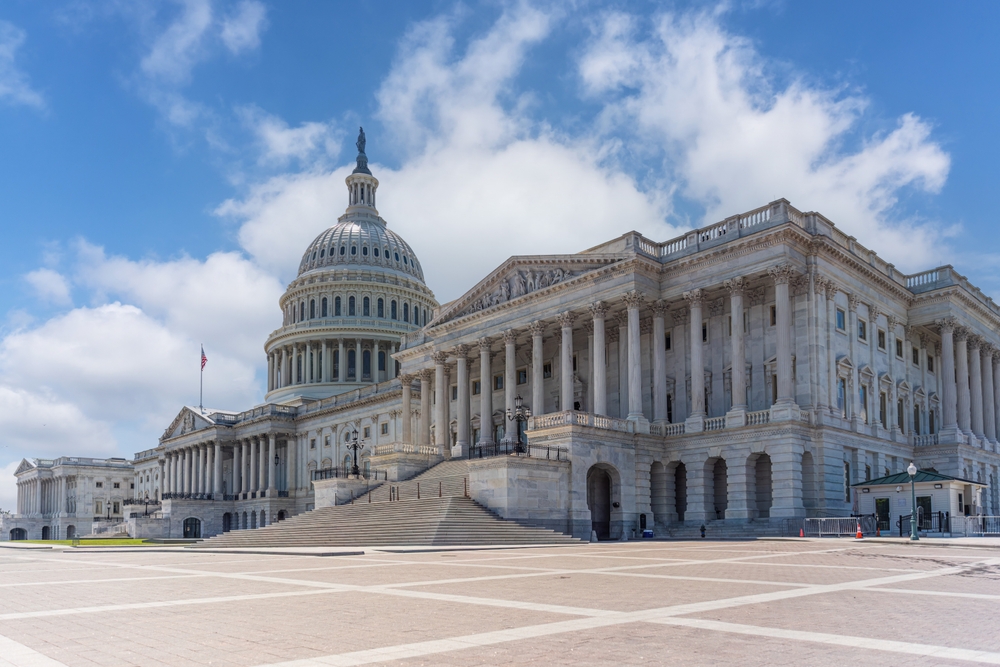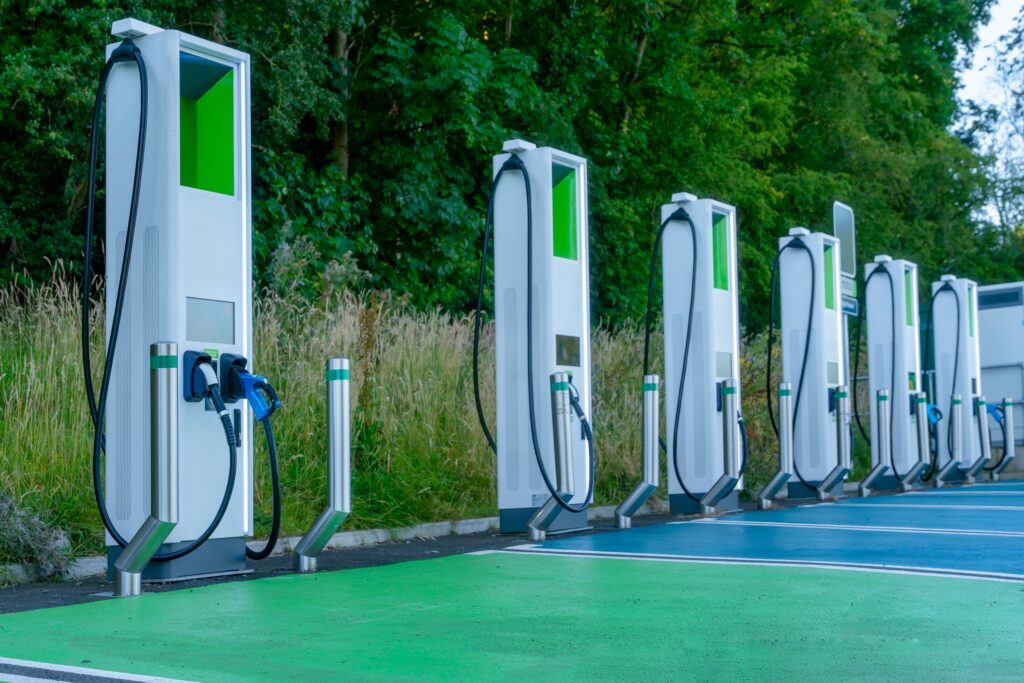
Four years ago, Congress made a $7.5 billion bet on America’s clean-transportation future through the bipartisan Infrastructure Investment and Jobs Act. The largest share—$5 billion for the National Electric Vehicle Infrastructure (NEVI) program—was dedicated to installing fast chargers along America’s highways. The companion $2.5 billion Charging and Fueling Infrastructure (CFI) program expanded the focus, funding not only highway and community chargers but also hydrogen, natural gas, and propane fueling stations.
Together, these initiatives were designed to jumpstart the EV economy, link corridors from coast to coast, strengthen system reliability, and make the great American electric road trip a reality.
It was a compelling vision—fast, visible, transformative.
I say that as someone who had both a front-row seat and a pen in hand. I helped craft NEVI’s framework in Congress and guide its implementation at the U.S. Department of Transportation. I believed then—and still do—that the program fills a critical market gap: reducing range anxiety, building where the private sector otherwise might not, and proving that America can deliver infrastructure for a modern economy.
But NEVI revealed something larger than the slow pace of charger installation. It exposed a capacity gap, especially at the state level, where most of the delivery responsibility lay. It stress-tested our ability to deliver complex, 21st-century infrastructure at speed and scale, and revealed a hard truth: our policy ambitions are outpacing the institutions we rely on to achieve them.
By 2024, NEVI’s delays had become media fodder: billions committed, little to show, bureaucrats “in the driver’s seat” but going nowhere. That narrative was only half-right. The rollout was undeniably slow–but not because of bad faith or partisan squabbling. The real challenge was execution. Once the program turned into political football, even the best technical assistance couldn’t move the chains. The slowdown came from a mismatch between what we wanted to build and the institutional machinery we had to build it.
If we treat NEVI as a one-off, we’ll repeat the same mistakes on every big project to come, whether its high-voltage transmission to power hyperscaler data centers, autonomous freight corridors to move goods faster and safer, or advanced air mobility ports to connect cities in new ways. Treat it as a blueprint for retooling our public delivery systems, and we can turn to “Can we build it?” into “Of course we can.”
When process becomes the product
NEVI borrowed from the logic of the interstate highway system: Washington sets the rules, funds most of it, and leaves day-to-day delivery to the states. But Congress never intended for NEVI to function as a standard highway or bridge program. It was designed to be a public–private partnership, in which states would select the sites, enforce minimum design standards, coordinate with utilities, and use federal funds to attract private investment—not own or operate chargers themselves.
This structure was explicit from the start. As the Federal Highway Administration (FHWA) stated in the original February 2022 NEVI program guidance: “FHWA anticipates that in most instances States will elect to contract with private entities for the installation, operation, and maintenance of EV charging infrastructure.” The expectation from day one was that the states would lean on the private sector to build, operate, and maintain the network, not try to stand up in-house charging operations.
On paper, it was an elegant adaptation. In practice, old habits took over. Many state DOTs treated NEVI like a bridge replacement project—running it through the same procurement templates, multi-layered reviews, and risk-averse checklists refined over decades for asphalt and concrete. The result was a cutting-edge infrastructure program forced through the mold of mid-20th-century project delivery.
The federal side wasn’t immune. Guidance from FHWA and the newly created Joint Office of Energy and Transportation required extensive stakeholder consultation, annual state plans, and overlapping technical, procedural, and legal standards. Each requirement—Buy America rules, workforce training mandates, robust community engagement requirements, and other performance standards—had a rationale. But when applied to a still-nascent industry and layered with additional state-imposed reviews and documentation, they hardened into something closer to procedural amber: beautiful in theory, rigid in practice.
Even the federal coordination designed to speed things up fell victim to institutional muscle memory. At the outset, just standing up the Joint Office was a test of interagency politics. USDOT and DOE had agreed on paper to create it, but getting them to actually lend staff was another matter. Each agency guarded its talent and its turf, leaving vacancies unfilled for months. In practice, the “joint” was more aspirational than real.
Over time, this dynamic shifted and recruiting brought in some of the best and brightest from the private sector alongside equally exceptional public servants. Together, they learned to navigate both the bureaucracy and the technology, bridging two very different worlds in a way that kept the program moving forward. But those early turf wars left a mark, slowing momentum at the exact moment NEVI needed to be sprinting.
That’s emblematic of NEVI’s central challenge: it was designed to move at the pace of technological change, but it kept getting pulled back into the comfort of process over progress. The tension between a mandate for speed and a system built for caution wasn’t just a Washington problem. The real choke point emerged where federal vision clashed with the states’ limited capacity.
Federal vision meets the states’ capacity
Much of the public blame has (not unreasonably) fallen on the federal agencies. Still, NEVI was always a state-led program. The money was there. Federal program guidance arrived within 90 days of the law’s passage. Private-sector partners were ready to build. A brand-new Joint Office stood ready to help.
But the states lacked the institutional ability to turn that into chargers in the ground. State DOTs weren’t ignoring NEVI; they were running flat out within the limits of the playbooks and tools they already had. Most were built for traditional infrastructure: resurfacing roads, inspecting bridges, running environmental reviews. NEVI asked them to operate more like venture-backed startups—designing performance-based procurements, managing digital infrastructure contracts, coordinating across utilities, software vendors, and private operators. That’s a leap even the best-run DOTs weren’t staffed or structured to make overnight.
Some adapted fast. Hawaii utilized a pre-existing contract. And Ohio initiated vendor RFIs, coordinated utilities upfront, and took NEPA clearance in-house, leading to the nation’s first operational NEVI site in December 2023. Pennsylvania deployed aggressively through multiple rounds and extensive site mapping, delivering over 90 projects across 43 counties in about a year. These examples underscore that, with strategic planning and dedicated staff, state institutions can scale innovation, but only when procurement and project delivery efforts are aligned.
Most states were unable to adapt as quickly—not because of politics, but because their playbooks and staff expertise weren’t yet built for it. Few had pre-approved vendor lists, tailored procurement templates, or full-time technical leads. A handful of states recognized those inherent limitations. For example, New Jersey, Rhode Island, Oklahoma, Oregon, and Vermont, among others, sought waivers under FHWA’s Special Experimental Project No. 14 Authority (SEP-14), which allows states to deviate from federal low-bid, highway construction-style contracting rules in favor of comparable state-administered performance-based approaches. But most states were too limited in capacity or too rigid and thus fell behind the aggressive timeline we would hope to achieve in ambitious infrastructure programs.
NEVI became one of dozens of new IIJA programs competing for attention, and in that scramble, the safest option was often the slowest one. And over it all loomed the federal–state dynamic: Washington could urge states to move faster but couldn’t direct them to prioritize NEVI over other projects. That may protect state sovereignty, but it also leaves billions idle while the public waits for results. This tension between state autonomy and federal priorities isn’t unique to NEVI, but too often it is where the delays live.
Congress bears part of the blame. The statute embraced a performance-based model with chargers built and operated to national standards by private partners, but never equipped states with the tools to deliver on it. Lawmakers were clear on outcomes but silent on how to streamline procurements, address grid integration and transformer delays, or preempt the local zoning and permitting barriers.
At the same time, Congress wanted federal agencies out of the way and on the hook: urging deference to state delivery while micromanaging design details and blaming the agency when deployment lagged. That contradiction left states squeezed between outdated procurement rules, local barriers, and an uneven federal role.
Building the capacity to deliver
The lesson from NEVI isn’t that the vision was wrong, it’s that our delivery architecture wasn’t built for it. We tried to run a modern infrastructure program through outdated machinery, and the machinery won. The good news: the gaps NEVI revealed are fixable. We’ve seen what slows projects down, and we’ve seen what works when delivery teams are structured and empowered to succeed. If we want the next wave of national projects to succeed, we need to design for delivery from day one:
- Dedicated technical teams – Large-scale innovation can’t be delivered by people juggling it alongside bridge inspections, transit operations, or snow removal plans. These programs need staff with the right expertise—engineers who understand networked hardware, contract managers who can negotiate performance-based agreements, and program leads empowered to solve problems in real time rather than firefight crises after the fact.
- Procurement designed for technology – Networked hardware, software, and ITS systems evolve faster than traditional public works. Contracts should reward performance, build in flexibility for evolving standards, and avoid the reset-button delays of rigid low-cost bid models. The public sector has to get comfortable buying outcomes, not just equipment.
- Right-sized processes – Charging stations aren’t multi-lane highways or multi-state bridges, and they shouldn’t be treated like them. Yet utility coordination followed the same layered reviews used for highways, forcing DOTs, energy offices, commissions, and zoning boards through slow, sequential steps instead of faster, parallel approvals. Procurement defaulted to low-bid construction contracts that fit bridges but not chargers, where performance guarantees and software integration matter more than unit cost. And compliance systems like Buy America were applied at the same intensity as for multi-state infrastructure, even though the projects were a fraction of the scale. In every case, the process was heavier than the project. Permitting, interagency reviews, and contracting should be tailored to the complexity and risk of the project, not default to the slowest common denominator.
- Templatized contracts – Pre-approved, plug-and-play agreements can let states pass funds directly to qualified private operators to build, operate, and maintain chargers without reinventing the wheel. Standardized templates cut months from procurement cycles and remove the guesswork for both public and private partners.
- Integrated delivery partnerships –The public–private model only works if the two sides are aligned from the start. Before NEVI, most states had little direct experience with charging; earlier deployments (e.g., Electrify America’s VW settlement buildout) were typically handled by environmental or energy agencies. But because public charging is now core to transportation, state DOTs needed to be initiated into the space–and that takes time.
NEVI’s lesson is clear: these partnerships can’t be improvised. They have to be built early and deliberately if they’re going to deliver at scale. These are the baseline conditions for closing the capacity gap and building modern infrastructure at speed and scale. And these lessons aren’t limited to EV charging. Every one of our next national infrastructure pushes will run headlong into the same bottlenecks unless we apply NEVI’s lessons now.
NEVI was never going to be perfect—it was meant to prove what’s possible. And in doing so, it revealed exactly where our delivery systems excel and where they break under pressure. That’s a gift if we choose to use it. We now have a clear roadmap for closing the capacity gap: dedicated expertise, smarter procurement, right-sized processes, ready-to-go contracts, and stronger public–private alignment.
The great American electric road trip was just the beginning; the real test is whether we can carry that same ambition—and ability to deliver—to the next transformative project America chooses to build.
Author Bio
Andrew Rogers served as Chief Counsel and Deputy Administrator of the Federal Highway Administration and as Chief Counsel to the Senate Environment and Public Works Committee, where he was a principal architect of the Infrastructure Investment and Jobs Act, including the NEVI program during its development in Congress. He is now managing partner at Boundary Stone Partners, a strategic advisory firm focused on infrastructure, energy, and technology policy.