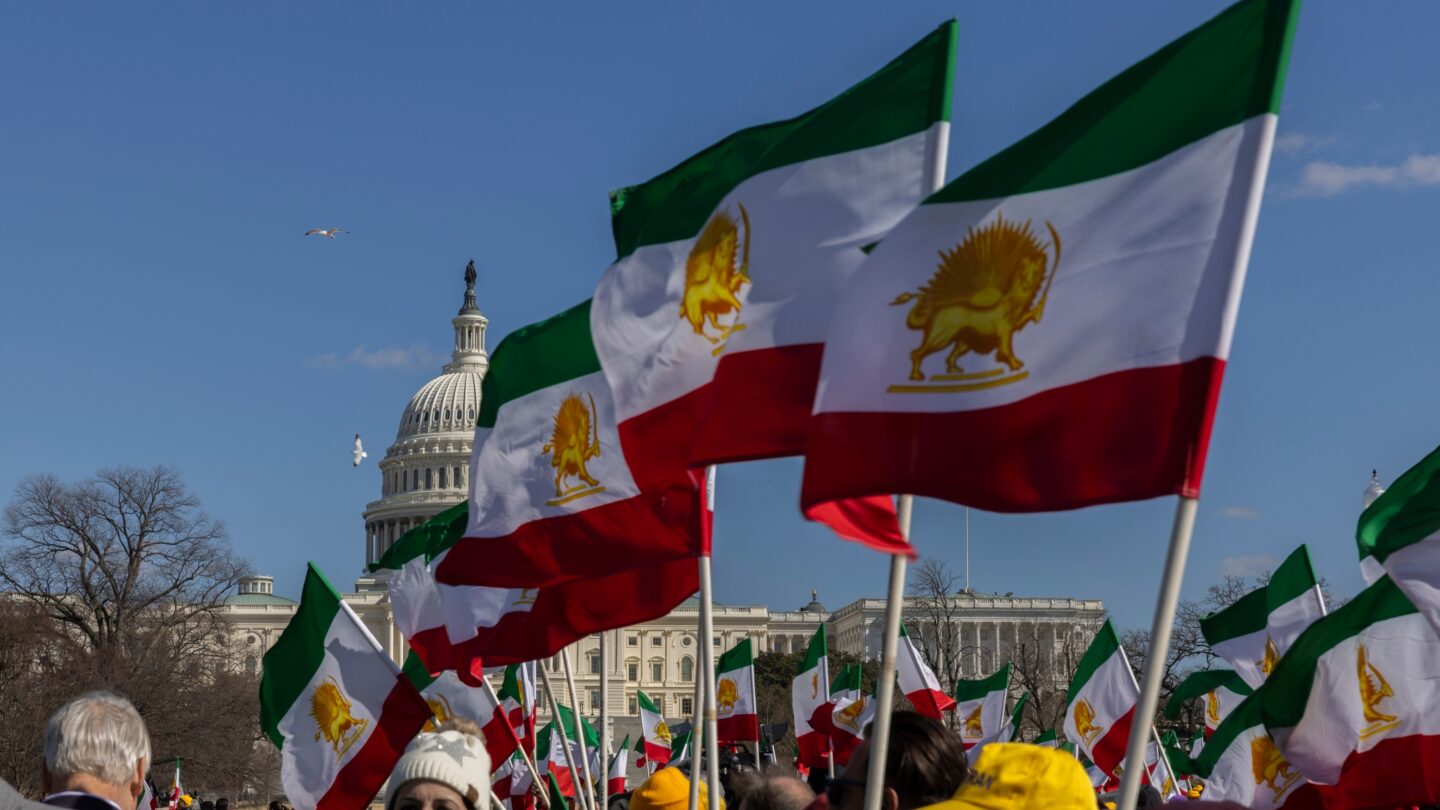
Over the past several weeks, protests have once again erupted across Iran, driven by a deepening economic crisis and broader demands for political accountability. In response, the Trump administration has issued strong rhetorical support for Iranian protesters and sharply criticized Tehran’s heavy-handed repression. President Trump and senior officials have repeatedly framed the demonstrations as evidence of the regime’s illegitimacy and brutality toward its own people.
Yet there is a striking contradiction at the heart of the U.S. response. Even as the administration condemns Iran’s treatment of its citizens, it has suspended asylum hearings, maintained sweeping travel restrictions, and deported Iranian nationals from the United States. These actions undercut Washington’s professed concern for human rights and weaken the credibility of its support for protesters inside Iran.
If the United States wishes to align its policies with its rhetoric, it should take an immediate and concrete step: designate Iran for Temporary Protected Status (TPS) and fully reinstate asylum procedures. Doing so would not only provide humanitarian relief to vulnerable individuals, but would also send a clear signal that U.S. support for human rights extends beyond words.
What Temporary Protected Status is — and why it matters
Temporary Protected Status is a humanitarian program that Congress authorized to allow nationals of designated countries to remain and work legally in the United States when conditions in their home country make return unsafe. TPS is typically granted in response to armed conflict, natural disasters, or extraordinary and temporary conditions such as political instability and widespread repression.
TPS does not provide permanent residency, nor does it offer a pathway to citizenship. It is, by design, a limited and reversible measure, but it can be lifesaving. For individuals already in the United States, TPS offers protection from deportation, provides work authorization and the ability to live without fear while conditions in their home country remain dangerous.
The current situation in Iran clearly meets the threshold for TPS designation. Protesters have faced mass arrests, violent crackdowns, and internet shutdowns. This is occurring at a time when the Iranian economy is in freefall. Political dissent, whether expressed on the streets, online, or abroad, has been treated as a criminal offense, with protesters being called “enemies of God.” For Iranians who have participated in protests, expressed opposition to the regime, or are simply associated with diaspora activism, forced return carries significant risk.
The gap between rhetoric and policy
The Trump administration has framed itself as a defender of Iranian civil society, issuing direct language to condemn the regime. This rhetorical stance suggests an awareness that U.S. credibility on Iran depends on aligning itself with the Iranian people in this time of flux.
However, domestic immigration policy tells a different story. In recent months, the administration has suspended or delayed asylum hearings, leaving Iranian asylum seekers in legal limbo. It accelerated deportations of Iranian nationals last year. And it has kept longstanding travel bans and visa restrictions in place, reinforcing the perception that it views Iranians primarily as security threats rather than as individuals fleeing persecution.
Why TPS would strengthen US credibility
The administration has moved aggressively to terminate TPS designations for other countries, arguing that the program has been misused to provide indefinite relief rather than temporary protection. Iran presents a distinct case because the administration’s own characterization of the regime as uniquely brutal and unstable suggests that conditions genuinely are extraordinary and temporary — making Iran precisely the kind of situation TPS was designed for.
TPS would bolster American credibility in a number of ways.
First, it would offer immediate protection to Iranian nationals already in the United States who may face retaliation if forced to return. This includes students (who also should be considered for Special Student Relief), scholars, journalists, and family members who have been politically active or simply associated with opposition networks.
Second, TPS would demonstrate that U.S. concern for human rights is not selective or purely symbolic. Unlike sanctions or rhetorical condemnations, which often have indirect or ambiguous effects, TPS directly benefits individuals affected by repression. It is a tangible policy that aligns humanitarian principles with foreign-policy messaging.
Third, TPS would impose little cost on the United States. The Iranian-born population in the U.S. is relatively small, highly educated, and economically integrated. Allowing these individuals to remain and work legally would not strain public resources; in many cases, it would do the opposite by enabling continued participation in the labor market.
Reinstating asylum is equally essential
TPS alone is not sufficient. The administration should also reinstate full asylum processing for Iranian nationals. Asylum is a core commitment under both U.S. law and international refugee conventions. Suspending or delaying hearings during periods of heightened repression effectively denies protection to those most in need.
Importantly, asylum and TPS serve different functions. TPS provides blanket, temporary protection based on country conditions, while asylum offers individualized protection to those who can demonstrate a well-founded fear of persecution. Reinstating asylum procedures would ensure that Iranians with strong claims — such as political activists, religious minorities, or journalists — have access to durable legal protection.
Together, TPS and asylum would form a coherent humanitarian response: immediate protection for many, and long-term solutions for those facing the gravest risks.
Aligning values with action
At its core, the case for TPS for Iranian nationals is about credibility. The United States cannot convincingly claim to stand with Iranian protesters while simultaneously deporting Iranians to a country that it vociferously condemns as repressive. Words of solidarity ring hollow when paired with policies that expose people to harm.
Temporary Protected Status and the reinstatement of asylum procedures would not resolve the complex challenges facing Iran or U.S.–Iran relations. But they would represent a clear, humane, and achievable step toward aligning American actions with American values.


