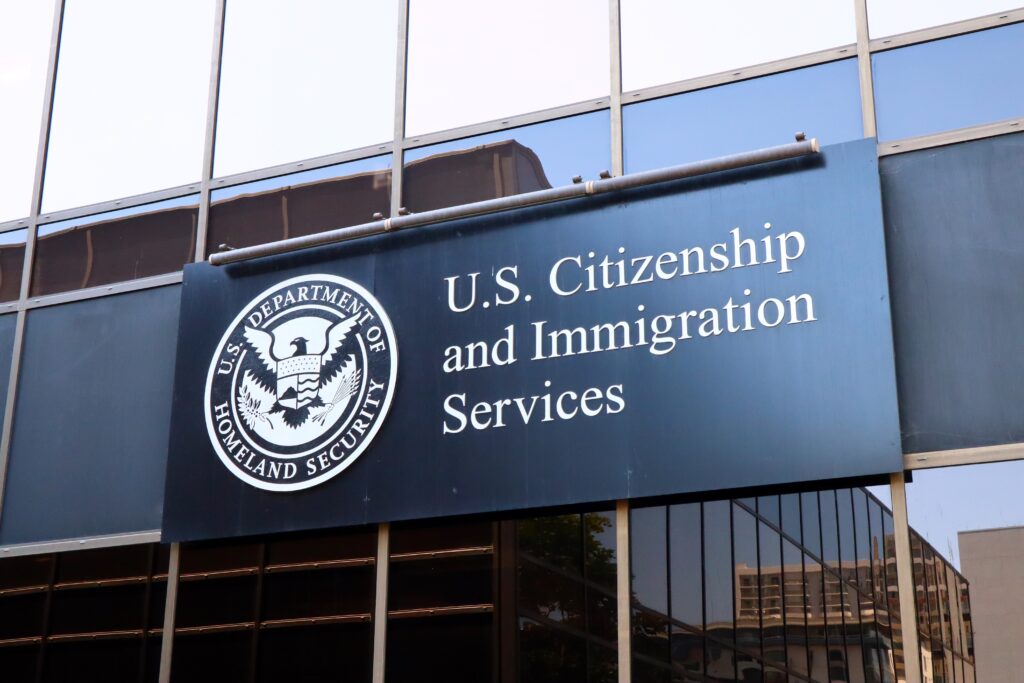
On February 23, 2026, the Department of Homeland Security published a proposed rule titled, “Employment Authorization Reform for Asylum Applicants.” The rule would change when asylum applicants can seek work authorization and how U.S. Citizenship and Immigration Services handles those applications.
In the public comment below, Niskanen’s Senior Immigration Policy Analyst, Cecilia Esterline, discusses the shortcomings of the proposed changes and offers alternative recommendations to address the issues identified in the proposal.
Andrew Good
Chief, Office of Policy and Strategy
Attn: Division of Humanitarian Affairs
Department of Homeland Security
U.S. Citizenship and Immigration Services
Dear Mr. Good:
I write on behalf of the Niskanen Center to provide comment on the United States Citizenship and Immigration Services’ (“USCIS”) notice of proposed rulemaking, Employment Authorization Reform for Asylum Applicants, 8 CFR Parts 208 and 274a (February 23, 2026) (“Proposed Rule”).
The Niskanen Center is a nonprofit public policy organization that advances a vision of American governance that draws on ideas from across the ideological spectrum. We advocate for a government that provides social insurance and essential public goods, fosters market competition and innovation, invests in state capacity, and does not impede productive enterprise. We are committed to the principles of liberal democracy and an open society.
We also recognize that immigration is a cornerstone of U.S. economic, civic, and cultural strength. It has allowed us to attract the brightest minds and hardest workers, helped usher in unprecedented U.S. innovation and dynamism, and helped fill critical gaps in our domestic workforce.
Our asylum program has also been an essential tool for fulfilling international humanitarian commitments. However, like much of the American immigration system, it is in need of reform. While we continue to encourage bipartisan legislation that can modernize the entirety of the American immigration system, we welcome this opportunity to comment on the proposed changes to asylum applicant work authorization.
I. Shortcomings of the proposed reform
The proposed rule would delay initial work authorization eligibility to one year after the receipt of an asylum application, extend USCIS processing times from a maximum of 30 days to 180 days, require repeat biometrics for applicants renewing their work authorization, and suspend initial asylum applicant work authorization filings until affirmative asylum processing times fall below 180 days– a benchmark the rule itself estimates could take 14 to 173 years to meet.
These proposed reforms are premised on a valid concern: prolonged asylum backlogs have created incentives for some economic migrants to file non-meritorious claims in order to obtain work authorization. In turn, these claims have increased the burden of work on USCIS and immigration courts and delayed durable protections for those with genuine claims to asylum.
However, the proposed rule does not address these concerns directly. Instead, it focuses on broad changes that create more inefficiency and punish the individuals and businesses playing by the rules along with those acting in bad faith.
The proposed rule creates new inefficiencies in the asylum process, despite recognizing that existing inefficiencies are why the system is vulnerable to exploitation in the first place. For instance, the rule requires that biometric collection be conducted for all (c)(8), or pending asylum-based, work authorization applications, including those requesting renewals. While collecting biometrics for an initial application may be a useful security tool, repeating this process every 18 months creates redundancies that will require substantial USCIS staff time– time that could instead be used to focus on reducing the existing asylum backlog and thereby reducing the program’s vulnerability.
Furthermore, the rule increases the maximum USCIS processing time on initial (c)(8) work authorization applications by 500 percent, jumping from the current 30-day requirement to 180 days. This additional allotment of time may ease pressure on USCIS initially but would extend far beyond the median processing time for any category of work authorization applications over the past three fiscal years.1 The rule highlights “improving the administrative process for issuance of employment authorization documents for aliens with meritorious asylum applications at USCIS” as a secondary goal of the proposal. However, a 500% increase in processing times does not substantively improve the experience of those with genuine asylum claims.
Most concerning, the proposed pause on the acceptance of initial (c)(8) work authorization filings would harm genuine asylum seekers and American businesses without any guarantee of producing the desired effects on those without valid claims to protection.
Suspending these work authorization applications for an estimated minimum of 14 years and expecting it to eliminate all economic benefits of filing a meritless asylum application ignores the many economic opportunities available to immigrants simply because they are in the U.S.
Pending asylum applications, meritorious or not, often provide some level of protection against deportation and removal– if only by delaying or postponing a removal until the case can be closed. Even without work authorization, unmet domestic labor demand, inadequate legal labor pathways, and ineffective employment authorization verification systems continue to create opportunities and demand for unauthorized employment.
If these individuals engage in unauthorized employment, they would likely undercut American workers and sidestep the traditional tax implications of formal employment. Or if, as proposed, they are able to remain in the U.S. but do not work, the extended period of time spent in the United States while of working age would represent a missed opportunity for our economy to reap the benefits of their labor force participation. The best-case scenario is that those who are present in the U.S. for a substantial period of time, and who are not removable, would be legally able to work.
Even from an operational standpoint, the proposal is also counterproductive. USCIS is largely fee-funded, yet when considering strategies to improve efficiency, the proposal does not limit asylum applications with their relatively low filing fees and relatively high demands on staff time for vetting and adjudication. Instead, the proposal highlights the status of that asylum application backlog to justify pausing the acceptance of work authorization applications, which carry higher fees and a relatively lower administrative review burden. Not only is this a counterintuitive use of staff resources, but without the pause, the initial work authorization application fees, along with the fees associated with any renewal applications thereafter, could be leveraged to improve USCIS efficiency and reduce the asylum backlogs that have led to vulnerability within the program.
As written, this rule does not improve the efficiency of the asylum adjudication process, so it is not an effective strategy for addressing the issue at hand.
II. Alternative recommendations
Despite the many deficiencies of the proposed rule, it highlights a real and pressing issue. The inefficiencies and absurd backlogs of the asylum process have been exploited by some economic migrants who do not have valid claims to protection but want U.S. labor market access. However, the proposed reforms are counterproductive and do not meaningfully address the asylum adjudication speeds driving this issue.
Instead of introducing new inefficiencies and creating additional delays, USCIS should defer to Congress and allow legislative reform to effectuate sustainable changes that directly address programmatic loopholes.
USCIS and Congress should collaborate to create a plan to process asylum applications more efficiently and identify meritless cases sooner. If frivolous asylum claims did not provide several years of removal protections and accompanying informal labor market access before a substantive case review is completed, the benefits of filing without merit would decrease considerably. Yet, making that a reality would require modernizing asylum case processing overall to ensure that valid claims are identified swiftly, that those who meet the standard receive durable protections without delay, and that invalid claims are sorted out quickly to minimize undesirable economic and security vulnerabilities.
In parallel, Congress should ensure that the labor demands of American businesses can be met through legal channels. Expanding and modernizing employment-based pathways, strengthening domestic workforce pipelines, and improving work authorization verification systems would reduce reliance on unauthorized labor and address one of the structural drivers of the current system’s dysfunction.
***
The United States is at a pivotal moment for immigration, and for asylum in particular. Border conditions have stabilized, yet longstanding structural weaknesses in our immigration system continue to undermine national interests.
The proposed rule correctly identifies the consequences of asylum system backlogs but fails to address them directly. Rather than restricting work authorization in ways that are likely to prove ineffective and economically harmful, policymakers should focus on improving asylum adjudication efficiency and providing ample legal options for meeting domestic workforce demands.
We urge Congress to take advantage of this moment and make the substantive changes necessary to restore the original intent of the asylum program and protect the economic and humanitarian interests of the United States.
Thank you for your consideration and the opportunity to provide feedback on the proposed rule. If you have any questions or need additional information, please do not hesitate to contact me at cesterline@niskanencenter.org.
Sincerely,
Cecilia Esterline
Senior Immigration Policy Analyst
- U.S. Citizenship and Immigration Services, “Historical National Median Processing Time (in Months) for All USCIS Offices for Select Forms By Fiscal Year”, FY2023, FY2024, and FY2025. ↩︎