Most gun violence in the United States goes unsolved. In a new essay for the Harry Frank Guggenheim Foundation, renowned crime scholar Phil Cook explores some emerging strategies to change that.
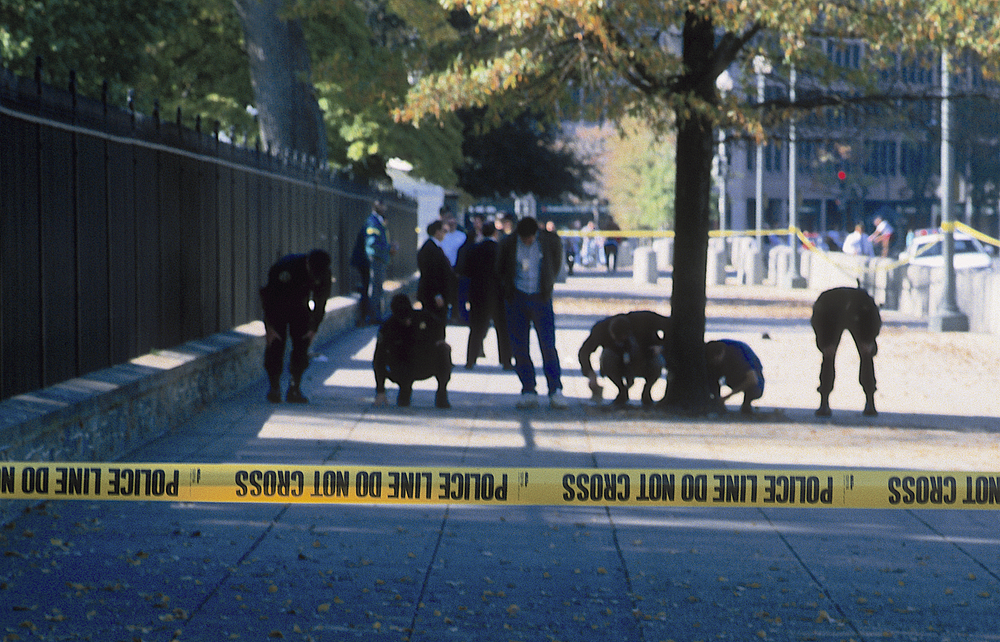
In March, a 29-year-old MTA bus driver was killed in a Queens burger bar by masked gunmen who remain at large. Weeks later in Atlanta, a 16-year-old girl was killed by stray gunfire at an unpermitted gathering; no arrests have been made. In Washington, D.C., another young man was shot and left dying on the pavement, and despite offers of a large cash reward police are still searching for suspects. These stories are tragically common—not only because shootings continue to occur, but because America increasingly fails to solve them.
More than 3,100 people in America were shot and killed in the first three months of 2026 alone. Although that is the lowest first-quarter total in more than a decade, fewer than half of their killers, judging from recent homicide clearance rates, will ever be arrested—let alone convicted. Among nonfatal shootings, fewer than one in five result in an arrest. Victims and survivors go without justice. Shooters remain free to shoot again. And the people and communities bearing the heaviest burden of this failure have the least reason to believe the system works for them.
Solving shootings through arrest and conviction serves two purposes: it provides justice for victims and survivors, and it reduces future crime. It incapacitates offenders, triggers statutory firearm prohibitions for convicted felons after imprisonment, deters would-be shooters when punishment is credible, and reduces retaliatory violence. Firearm regulations and social-service interventions may help prevent violence, but they are not substitutes for solving shootings after they occur.
At the moment effective investigations matter most, many departments are becoming less capable of conducting them. Staffing has steadily declined, so recruitment pipelines haven’t kept pace with retirements and departures. In this environment, how resources are deployed matters enormously. Abysmal clearance rates suggest most departments aren’t deploying them well, but smart reforms can produce meaningful improvements, even within existing constraints.
Boston’s Homicide Clearance Project shows what happens when departments invest seriously in investigations. Between 2007 and 2011, the BPD homicide unit cleared 47.1 percent of its cases. Starting in 2012, the department added a detective to each squad, hired a civilian crime analyst to identify leads in departmental databases, expanded victim and family support, standardized investigative procedures, and introduced peer review of open cases. The clearance rate rose to 56.9 percent—nearly 10 percentage points.
Aggravated assault squads, which investigate non-fatal shootings, received none of those resources and saw no comparable improvement. These shootings should be treated with the same urgency as homicides. Whether a victim lives or dies is usually a matter of luck rather than the shooter’s intent, yet nonfatal cases routinely get fewer investigators and less attention. Because the shooters responsible for nonfatal shootings are often also responsible for fatal ones, catching them solves other cases and prevents future violence. Denver’s Firearm Assault Shoot Team (FAST), which assigned homicide-level resources to nonfatal shootings, saw an immediate jump in arrest rates.
Victim cooperation is another critical constraint, and it’s here that the cycle of impunity becomes most damaging: without witness or victim participation, many cases cannot be prosecuted no matter how hard investigators work.
Indianapolis tried to break that cycle with a dedicated victim-support initiative centered on persistent outreach, retaliation protection, and sustained follow-up, and the investment paid off in better case outcomes. The program was spearheaded by DeAndra Dycus, who became a gun-violence advocate after her teenage son was shot and critically wounded in 2014. Her experience helps her build trust with the families of other young victims—proof that breaking cycles of mistrust requires meeting communities where they are, not waiting for cooperation to materialize on its own.
Technology, meanwhile, is only as effective as the institutions using it. Surveillance footage, ballistics, DNA, and digital forensics matter most when departments can centralize and rapidly integrate them into active investigations. Chicago’s Area Technology Centers (ATCs), launched in 2019, did just that—giving detectives faster, centralized access to digital and video evidence and contributing to measurable improvements in prosecution rates even during a period of surging violence. Within weeks of launch, footage processed through the centers helped detectives identify the gunmen who killed off-duty officer John Rivera in River North; both suspects were arrested within hours and later convicted.
None of this comes cheaply. But a growing number of states have already recognized the need for targeted investments in investigative capacity. Legislatures in Arkansas, Missouri, Tennessee, and Texas have passed bills authorizing grants to local law enforcement agencies, with similar efforts advancing in Michigan, Minnesota, and Pennsylvania. The bipartisan support underscores that improving clearance rates is not an ideologically polarizing objective. Still, only Utah has actually funded its grant program. The political consensus exists; what remains is the willingness to appropriate the money.
America’s gun violence debate is almost entirely focused on prevention. Prevention matters, and solving past shootings is a crucially important form of prevention. A system that rarely solves shootings sends a dangerous message: violence carries little consequence. In too many communities, that message reflects reality. Reversing it requires shoring up the basic investigative capacity to catch violent offenders, deliver justice to victims, and prevent the next shooting.
Read the full essay here.