
State Capacity Pillar 4:
Feedback Loops
From policy design through implementation to impact, effective government requires continuous learning. At every level, what works and what doesn’t must be pushed back upstream to leaders with the ability to make whatever changes are necessary to enable improvement. The problem is that this doesn’t regularly happen in government. Congress passes laws that inadvertently set up implementation for failure, while agencies are not incentivized to share challenges and ask for support.
Objective
The U.S. government consistently adapts and improves by learning from real-world outcomes. Structural and cultural reforms in Congress and the Executive branch help close the loop between policy design, implementation, and impact that result in better public services.
Policy change
Congress adopts best practices for writing implementation-focused legislation. Congressional, GAO, and IG oversight shifts from process compliance to outcomes accountability.
How we’ll get there
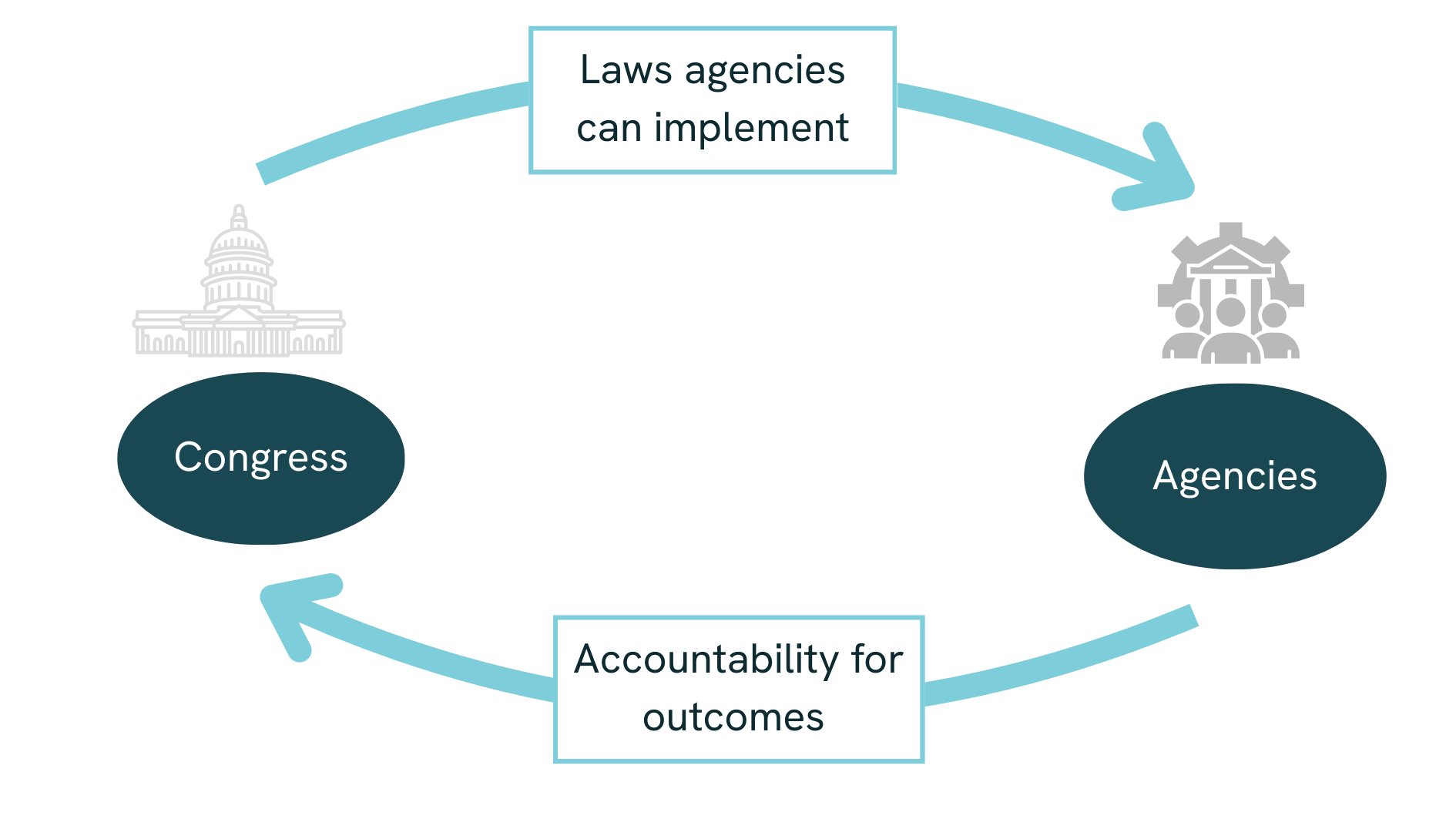
We focus on making the feedback loop between Congress and agencies work better:
- Implementation-focused legislation: Congress writes laws agencies can actually execute, with clear goals, realistic timelines, and necessary authorities.
- Outcomes-based oversight: Congressional committees, GAO, and Inspectors General hold agencies accountable for results, not just process compliance.
This is not a single reform but a shift in practice: changing how Congress writes legislation, and how oversight institutions evaluate agency performance. We are developing tools, model language, and practical resources to help lawmakers and oversight bodies strengthen these feedback loops and ensure federal programs deliver outcomes.
Recent Analysis

Reading the TA leaves: How technical assistance can improve the odds of successful policy implementation

How Oversight Failed: The FBI’s $1 billion tech failure, part 2

Investigating the investigators: Congressional oversight and state capacity

6 ways to make oversight work for state capacity

Capability-based budgeting meets the real world: Navigating today’s pressures, reforms, and risks
