
Bridging the space between temporary technology funding and continuous public services
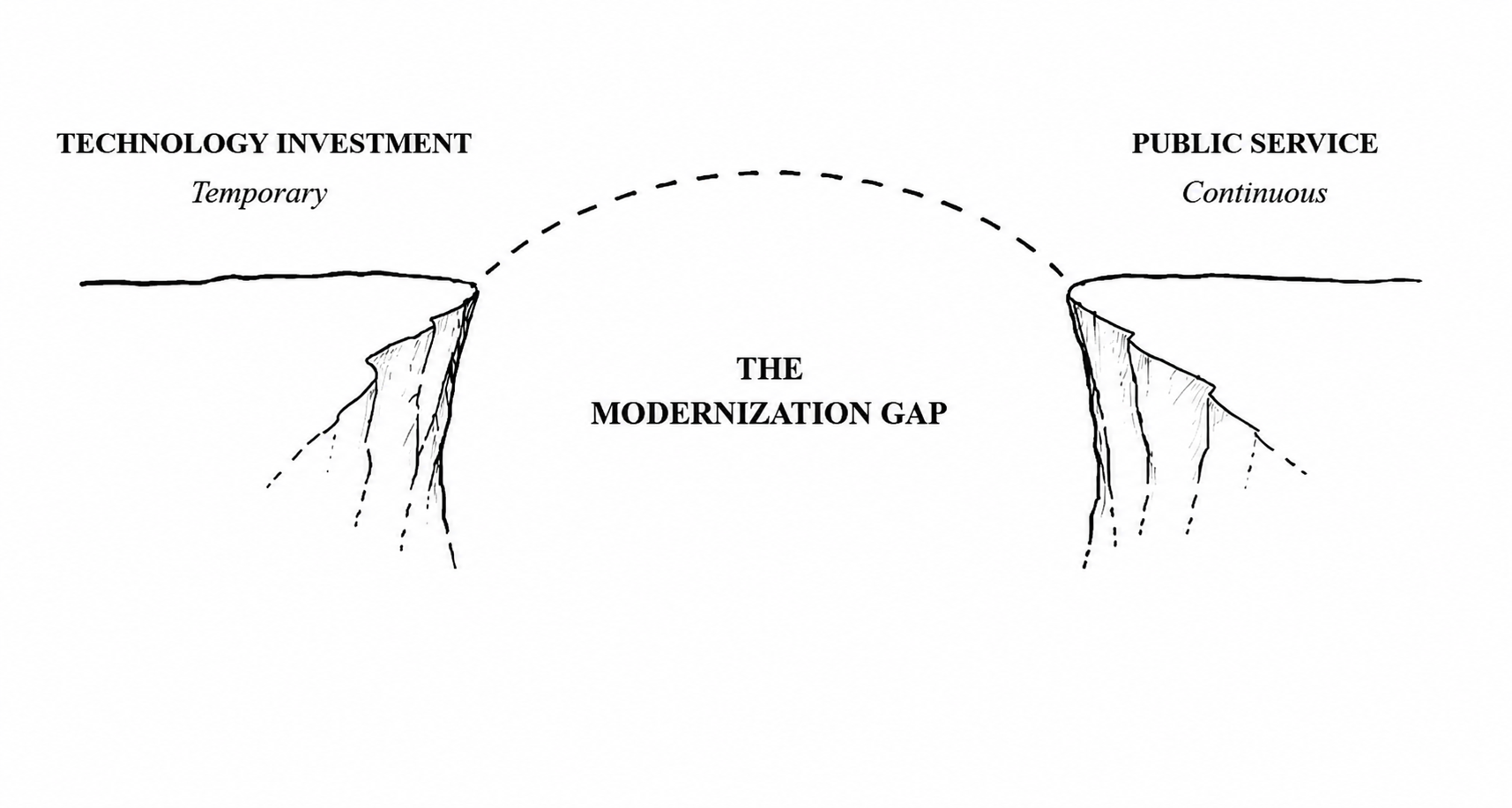
States often find it easier to secure millions of dollars to replace an aging IT system than a few thousand to understand why it no longer works. They can pay a vendor to build a new website, but struggle to hire the staff who decide what to do next.
These problems run deeper than budgeting. The processes that states use to procure and manage technology are largely designed for projects with defined scopes and clear endpoints. That works reasonably well when the work has a clear finish line, but less well for services that need to keep changing after launch, which is the case with most digital services.
If technology cannot evolve, it becomes another legacy system. As discussed in an earlier paper, this is the “Legacy IT trap”: governments defer improvements because aging systems are difficult and expensive to change. The longer they wait, the harder change becomes, increasing the likelihood of another large, risky modernization project. Without a way to sustain improvement after that project ends, states risk repeating the same costly cycle.1
The shift from projects to products is an attempt to solve this mismatch. Rather than treating software as a one-time investment, the product operating model calls for stable and multidisciplinary teams that improve services over time.2, 3 The challenge, though, is how to make that way of working survive inside institutions largely built around projects.
This paper examines how states use dedicated modernization funds and what happens after that funding ends. It reviews all 50 states and reflects interviews with 20 state technology, program, procurement, and budget leaders. The review counts statewide funds or programs created specifically to support technology modernization, including competitive grants, revolving investment funds, capital accounts, or other centralized approaches. It excludes ordinary technology budgets, federal funding, one-time project appropriations, and recurring operating appropriations for standing digital organizations such as CODE PA and the New Jersey Innovation Authority.
This research project identified 22 states with a dedicated modernization fund or formal IT modernization program. Although some of these mechanisms are permanent, they generally finance investments that are expected to end. These programs can do more to support learning and adaptation, but they cannot solve the longer-term problem on their own. Sustaining the service after the initial investment ends requires something more than temporary modernization funding.
How states pay for technology
States generally divide technology spending between building systems and operating them. Capital appropriations, bonds, and federal matching funds can finance new systems or major replacements, while operating budgets pay to run and maintain them after launch. Digital services do not fit neatly into that distinction. As one senior California product official explained, work such as discovery, prototyping, and iterative development can be too small to qualify as a project but still not treated as an operating expense. States can finance a major build and keep the system running, but often lack a reliable way to keep improving it over time.
Even when money is available, annual appropriations, staffing limits, and other constraints make it difficult to shift resources as needs change. Common examples of this include budgets that may pay for a vendor contract but not state staff and grants that provide temporary funding for teams but no long-term way of sustaining them.
What dedicated modernization funds can do
States with dedicated modernization funds have created a specific way to finance modernization, digital transformation, or innovation. At least 22 states have a mechanism that does this; Appendix A summarizes the statutory or programmatic basis for each.
Funding approach | Number of states | What it supports |
Dedicated modernization fund or formal program identified | 22 | System replacement and other defined modernization investments; some programs also support discovery, prototypes, or staged funding. |
No dedicated modernization fund identified | 28 | Agency operating budgets, capital appropriations, internal service funds, federal funds, project-specific appropriations. |
The 22 programs vary in structure and purpose:
- Competitive modernization funds, such as those in California, Minnesota, and Utah, allow agencies to seek funding from a centrally managed pool.
- Dedicated capital accounts set aside money for technology investments through the state’s capital-budget process, while bond programs borrow money to finance larger modernization efforts.
- Revolving accounts provide a standing source of funding that can support investments across agencies over time.
- Central technology appropriations provide funding to central technology organizations that manage a portfolio of modernization investments, as in Georgia and Michigan.
A senior official in a state with no modernization fund described program areas that could justify a major system replacement but could not secure modest funding to understand the problem first. In one case, an agency within the state responded by including more than 200 requirements in a procurement for a fairly typical commercial product. The agency relied on detailed requirements because it lacked the time, capability, and funding to test its assumptions first. It tried to manage this uncertainty by specifying the solution in advance instead of reducing it through research and experimentation.
The common structure of modernization funds
Despite their differences, these programs generally finance defined investments through project-based allocation and oversight. Colorado, for example, requires further legislative approval to use unexpended project funds for work beyond the original scope or design;4 Georgia accounts for each funded project in a discrete account;5 and Maryland permits operations and maintenance costs only during the first 12 months after implementation.6
Arizona, California, Georgia, Iowa, and Vermont have language broad enough to support a wider range of work. Arizona’s fund may “implement, upgrade or maintain” technology projects,7 while Vermont’s supports “business-process transformation.”8 But broader legal authority doesn’t necessarily change how the money is managed. Funding still moves through project approvals, discrete accounts, capped awards, or closeout reporting.
Several statutes explicitly limit how modernization funds can support ongoing operations. Texas prohibits using its fund to replace appropriations for operating and maintaining state technology,9 while Louisiana limits spending to direct project costs.10 Minnesota’s statewide fund can support staff working on a product backlog, but its program guidance also discourages using it for maintenance and support. Instead, agencies are encouraged to use the funding as initial capital to demonstrate value before finding another source for ongoing operations.11
Minnesota also recently created a fund dedicated to modernizing human services systems. The fund addresses several of the limitations described in this paper. It supports multiyear planning, staged investments, and measurable outcomes, and includes a mechanism for replenishing the fund over time. Its scope is also unusual. It focuses on a specific type of program area, human services systems that span state agencies, counties, Tribal Nations, and other partners. But the fund still excludes routine maintenance and day-to-day technology improvements while requiring a plan for funding ongoing operating costs.12
What modernization funds can do better
Modernization funds can give agencies more room to learn before committing to a solution. They can fund discovery, make smaller investments as evidence develops, and release funding in stages rather than requiring agencies to define and finance the entire effort upfront. That gives agencies a chance to test assumptions, adjust course based on what is learned, or even stop weak investments before committing more money. Some existing programs already use aspects of this approach. Maryland reserves part of its fund for expedited projects and authorizes funding for pilots and prototypes;13 and Washington releases funding in stages as projects move through defined gates.14
That flexibility should come with a plan for what follows. Rather than judging success primarily against the original scope, funds could ask what the agency learned and whether the investment improved the service in terms of measurable outcomes. They should evaluate the sustainability of the investment based on who will be responsible for the service, what continuing work it will require, how that work will be staffed and funded, and how the service will continue to improve once the initial funding ends.
Who owns the service?
Someone still has to own the service. That means setting priorities, securing funding, and retaining enough internal capability to direct the work. All of that shifts the question from how states finance modernization to how they organize responsibility for the service over time.
Interviews with state leaders did not point to a single organizational model for doing this. A former Michigan state program leader described technology ownership as part of program stewardship. Program leaders, she argued, have the same responsibility for the systems that operate their programs as they do for the outcomes those programs produce. That requires understanding the funding, vendors, and systems well enough to direct them rather than treating technology as someone else’s responsibility.
In practice, that responsibility is often fragmented. Agencies may receive modernization dollars without the expertise to decide how best to use them. Program leaders remain accountable for outcomes but may treat technology as the CIO’s responsibility, while central IT manages infrastructure, agencies own business processes, and vendors control the code. There are good reasons for responsibility to be shared. A major service may depend on an agency, central IT, federal rules, legislative appropriations, vendors, and call-center operations. That makes the unit of ownership important: A service may be too broad for any one organization to control, while a technology product may be too narrow to capture the processes and operations that determine whether the service works. Ownership has to be defined clearly enough that someone can make decisions and be held accountable for the part they control.
A project assembles all of this temporarily. It establishes a sponsor, budget, team, contract, and governance structure, all pointed at defined outcomes. When it ends, authority, funding, and staff return to their permanent organizational homes. Sustaining the service requires that alignment to survive.
Pennsylvania illustrates a common division of responsibility in state government. Central IT oversees the technology landscape while agencies retain authority over programs, budgets, and priorities. In this kind of model, continuously improving a service depends on coordination across organizations with different authorities and resources.
Maryland Benefits works differently. It funds stable teams against high-level roadmaps and adjusts priorities as needs change. That flexibility comes from its federal Advance Planning Document funding and from the state’s control over delivery. Maryland Benefits acts as its own systems integrator, allowing it to manage both the funding request and the work that goes with it.
What ownership requires
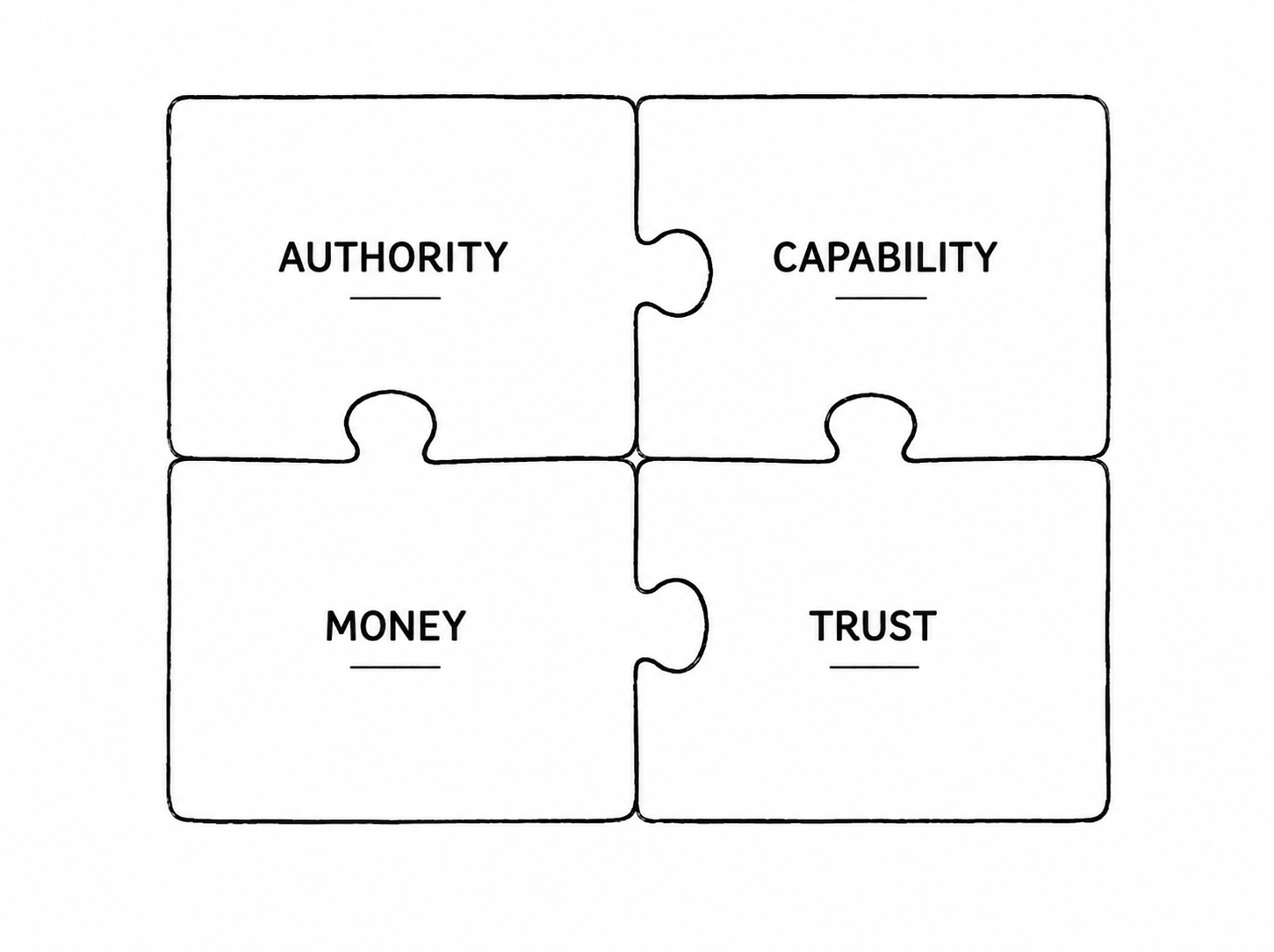
- Authority means some institution has enough formal standing to set direction, commit resources, and change priorities as evidence develops.
- Capability means government retains enough internal expertise to direct the work across product, technology, and operations.
- Money means the service has a recurring source of funding beyond the initial investment.
- Trust means making ongoing service improvement legible to the institutions responsible for funding and oversight. Flexible work still has to demonstrate accountability and results, even when it does not follow a fixed scope.
Authority: Someone must own the service
Authority requires sustained executive sponsorship. Teams are unlikely to succeed if agency leadership treats technology as someone else’s responsibility. Whether that responsibility rests with the agency head or a deputy, a senior leader must remain accountable for the long-term success of the service. That responsibility also has to come with enough authority to act: to set priorities, make tradeoffs, commit resources, and resolve decisions that cross organizational boundaries.
Capability: Government must be able to direct the work
Government needs enough internal expertise to direct vendors and evaluate what they produce. That does not mean performing every technical function in-house; some skills will remain difficult to hire, retain, or justify permanently.
At one state agency, a senior product leader described building small internal teams and using vendors and grants to extend their capacity. The goal is to avoid turning each new program or funding stream into another isolated contract. Even a small internal team can test assumptions, determine whether procurement is necessary, and keep new work connected to the broader service.
Money: Funding the service after the project ends
Ongoing services need ongoing funding. The challenge is finding a recurring source for improvement, not just operations and maintenance.
Washington’s Employment Security Department relies heavily on federal administrative funding for unemployment insurance, but the formula is tied largely to claims workload. It pays for processing claims more readily than operating and improving the systems that process them. ESD’s own analysis reports that, adjusted for inflation, the purchasing power of this funding declined by roughly 20 percent between 2010 and 2024.15 The result is less capacity to maintain and improve systems as technical debt accumulates. A modernization fund could help finance a major investment, but it would not address the recurring funding problem.
Colorado addresses part of this problem through annual depreciation-equivalent payments on new IT capital projects. Legislation enacted in 2024 requires those payments to reserve money for future lifecycle costs.16 The mechanism is still shaped around assets rather than services, but it recognizes the ongoing costs created when the state approves a new system.
Trust: Making continuous work legible to the people who fund it
Product teams need room to change priorities as evidence develops, while legislatures and budget offices need a clear basis for understanding what they are funding and whether it is working. Accountability remains essential, but it cannot depend solely on adherence to a fixed plan.
According to an ESD technology leader, Washington’s Employment Security Department is developing a portfolio approach to oversight. The legislature would approve the service’s broad purpose and investment scope, while the agency would manage releases and sequencing within those boundaries. Teams would retain flexibility to respond to new information, while legislators and budget officials would continue reviewing funding, progress, and outcomes through a recurring oversight process.
Maryland Benefits uses a similar approach. Monthly product reviews bring together demonstrations, releases, budgets, risks, and leadership decisions while there is still time to adjust direction. Product management and executive oversight operate within the same recurring cadence instead of meeting only at the beginning and end of a project.
New Jersey illustrates the political dimension of trust. Its innovation organization did not secure recurring appropriations simply because it argued for a more flexible delivery model. According to a senior state digital leader, it consistently demonstrated measurable results and translated those results into evidence that legislators and agency leaders could use when making budget decisions. That record helped establish ongoing investment in service improvement as a credible public investment and ultimately enabled the organization to become codified in state law.
Conclusion: Funding the transition, owning the service
Modernization funds can help states make better investments, but they cannot by themselves sustain the services those investments support.
There is no single institutional model for sustaining digital services. Responsibility may sit with a central digital organization, an agency team, or some combination of them. What matters is that someone has both responsibility for the service and the means to improve it.
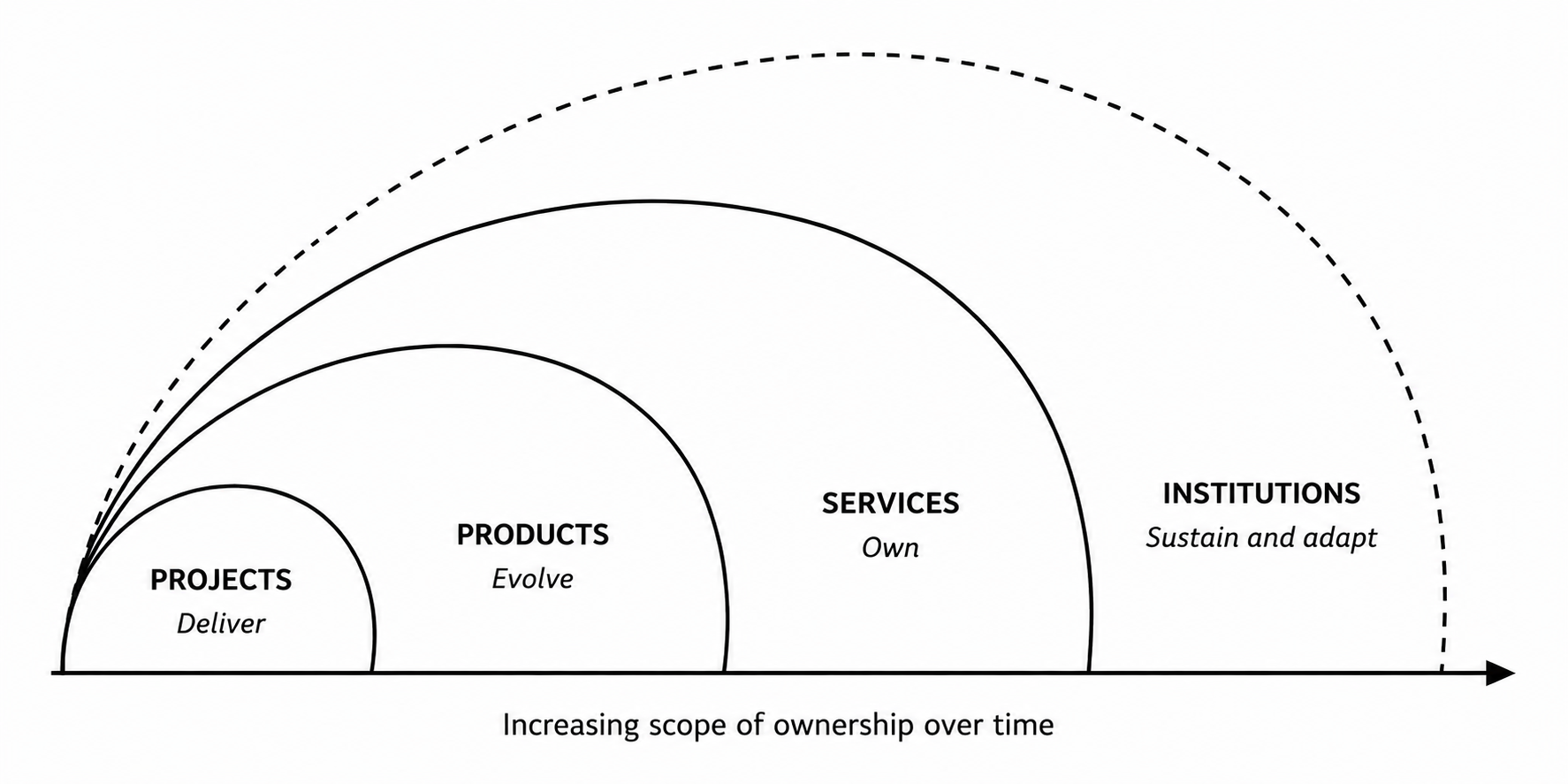
Since the Healthcare.gov rescue, government has learned a great deal about how to build better digital services by adopting practices such as agile software development, user-centered design, and product management. Those advances have largely focused on how teams deliver software. The next challenge is building institutions that allow better ways of working to survive changes in leadership and political priorities.
Appendix A. Dedicated State Technology Modernization Funding Mechanisms
Methodological note. This appendix summarizes the 22 states identified as having a dedicated technology modernization fund, account, or formal program. Classifications are based on statutes, appropriations, executive guidance, and official program materials available as of July 2026.
| State | Mechanism | Key features | Primary sources |
| Arizona | Automation Projects Fund | Standing statutory fund supporting automation projects through annual expenditure plans and per-project subaccounts. Eligible uses include implementation, upgrades, and maintenance of automation and IT projects, subject to ITAC review and quarterly JLBC reporting. | Statute: A.R.S. § 41-714Guidance: Arizona Strategic Enterprise Technology Office |
| California | Technology Modernization Fund; Technology Stabilization Fund | Competitive funding for modernization, cybersecurity, cloud migration, and technology stabilization, established through the Budget Act and administered by CDT. Awards support approved modernization investments rather than recurring operations; Gov. Code § 11546.45 supplies the prioritization mandate and semi-annual legislative reporting requirement. | Statute: Cal. Gov. Code § 11546.45Program: California Department of Technology — TMF |
Colorado | Information Technology Capital Account | Special account within the Capital Construction Fund supporting major statewide technology investments through Colorado’s capital budgeting process and Joint Technology Committee review; unexpended balances cannot fund work beyond the original project scope without further JTC approval. | Statute: § 24-75-302(3.7), C.R.S.Guidance: Joint Technology Committee |
| Connecticut | Information Technology Capital Investment Program | Statewide capital investment program financed through general-obligation bond authorizations, requiring Technology Investment Briefs for major technology projects and review by the IT Strategy and Investment Committee. | Program: Connecticut OPM — IT Capital Investment Program |
| Georgia | Technology Empowerment Fund | Enterprise modernization fund administered through the state CIO under bipartisan steering-committee oversight, with priority to projects delivering recurring cost savings and improved service delivery through technology and training. Each project is accounted for in a discrete account. | Statute: O.C.G.A. § 50-25-7.1Program: Georgia Technology Authority |
| Idaho | Technology Infrastructure Stabilization Fund | Statutory fund used solely for technology projects requested, recommended, or funded through the annual state budget process, including software development and hardware, with centralized legislative oversight. | Statute: Idaho Code § 67-3532 Budget: Legislative Services Office |
| Illinois | Technology Management Revolving Fund; Capital Facility & Technology Modernization Fund | Combination of revolving financing (agency chargebacks supporting DoIT shared services) and capital appropriations supporting enterprise technology improvements and modernization projects. | Statute: 30 ILCS 105/5.55 (Technology Management Revolving Fund); State Finance Act fund provisions (CFTM Fund)Program: Illinois Department of Innovation & Technology |
| Iowa | Technology Reinvestment Fund | Supports acquisition of hardware, software, software development, telecommunications equipment, and associated maintenance and lease agreements across state government; standing $17.5M General Fund appropriation, typically suspended and funded from the Rebuild Iowa Infrastructure Fund. | Statute: Iowa Code § 8.57CBudget: Iowa Department of Management |
| Louisiana | State Cybersecurity & Information Technology Fund; Louisiana Technology Innovation Fund | Supports statewide cybersecurity and technology initiatives through dedicated project funding; monies may be expended only on direct, project-related expenses for projects reviewed by the Joint Legislative Committee on Technology and Cybersecurity. The Technology Innovation Fund (1997) appears dormant. | Statute: La. R.S. 39:15.7; Louisiana Technology Innovation Fund (Act 481 of 1997)Program: Division of Administration |
| Maryland | Information Technology Investment Fund (formerly Major Information Technology Development Project Fund) | Finances major IT development projects; operations and maintenance costs are eligible only for the first 12 months after implementation. Renamed effective July 1, 2024 (HB 1188/SB 982), which also set aside at least 20% of the Fund for expedited projects and authorized up to $1M annually for pilots and prototypes; 2026 legislation (Chs. 436/437) expanded eligible uses to state communication sites and telecommunications equipment. | Statute: Md. Code, State Fin. & Proc. § 3.5-309Session law: HB 1188 (2024)Guidance: Maryland DoIT fund reports |
| Massachusetts | FutureTech Act | $1.23 billion bond authorization financing statewide digital modernization, cybersecurity, AI and emerging technology, and major health-and-human-services business applications (plus $400M in federal-spending authorization); municipal fiber and community compact grant programs address local connectivity. | Law: Chapter 139 of the Acts of 2024 (H.4889, FutureTech Act)Guidance: EOTSS FutureTech bond brief |
| Michigan | IT Investment Fund | Annual appropriations supporting a portfolio of enterprise technology modernization projects, reauthorized each year through DTMB budget boilerplate (e.g., Sec. 1002, PA 22 of 2025); appropriation levels vary substantially by year. | Budget: Michigan budget acts (DTMB boilerplate)Program: DTMB — IT Investment Fund reports |
| Minnesota | Technology Modernization Fund; Human Services Systems Modernization Fund | The statewide Technology Modernization Fund supports personnel and technology for activities that create efficiencies, secure state systems, or address project or product backlogs; program guidance discourages using one-time funding for ongoing maintenance and support. In 2026, Minnesota also created a Human Services Systems Modernization Fund to support multiyear modernization across state agencies, counties, federally recognized Tribes, providers, and other program partners. The new fund excludes routine maintenance and minor day-to-day technology improvements and requires planning for ongoing operating costs. | Statute: Minn. Stat. § 16E.21 Statute: Minn. Laws 2026, ch. 120, §§ 1–3 Program: Minnesota IT Services |
| Montana | Long-Range Information Technology Program | Consolidates major technology investments as long-range capital projects appropriated biennially through HB 10, with statutory reappropriation rules for IT capital project funds; O&M costs flow separately through the general appropriations act. | Statute: MCA § 2-17-560; MCA § 17-7-123 (IT budget presentation)Program: State Information Technology Services Division |
| New Mexico | Computer Systems Enhancement Fund | Appropriations-act construct (recurring IT special appropriations of the General Appropriation Act, originating in Laws 1994, ch. 147) supporting enterprise technology projects with DoIT certification and DFA administration; unspent authorizations are void absent certification and revert. | Authority: Annual General Appropriation Act IT special appropriationsGuidance: NM DoIT — Agency IT Special Appropriation Guidance |
| New York | ITS Capital Innovation Fund | Recurring capital appropriation ($130.7M in the FY2027 Executive Budget) funding enterprise technology projects and infrastructure upgrades designed to increase efficiencies, improve automation, and expand online services. | Budget: FY2027 Executive Budget — General GovernmentProgram: Office of Information Technology Services |
| North Carolina | Information Technology Reserve | Legislative reserve funded with nonrecurring dollars and continued in successive budget acts; the state controller transfers reserve funds to agencies for information technology projects, appropriated in the year transferred. | Session law: S.L. 2021-180, § 2.2(h); continued in S.L. 2023-134 and subsequent budgetsBudget: Office of State Budget and Management |
| Texas | Technology Improvement and Modernization Fund | Dedicated special fund supporting technology improvement and modernization projects, including legacy system and cybersecurity projects; by statute, fund money may not be used to replace or reduce appropriations for operating and maintaining agency information resources. Companion oversight committee (§ 2054.578) expires September 1, 2026. | Statute: Tex. Gov’t Code § 2054.577Session law: H.B. 4018, 87th Leg. (2021) |
Utah | Technology Innovation Restricted Account | Competitive, nonlapsing restricted account funding technology proposals that will result in greater efficiency in a government process or cost savings in service delivery, subject to board approval. | Statute: Utah Code § 63A-16-901 et seq.Program: Division of Technology Services |
| Vermont | Technology Modernization Special Fund | Funds business process transformation and the purchase, implementation, and upgrade of technology platforms, systems, and cybersecurity services; expenditures may be made only through appropriation and project authorization by the General Assembly. | Statute: 3 V.S.A. § 3306 (Act 185 of 2022)Program: Agency of Digital Services |
| Washington | Information Technology Investment Revolving Account (“IT Pool”) | Revolving account supporting approved enterprise technology investments through centralized OFM review and gated funding releases tied to biennial budget provisos; expenditures require OFM authorization but not appropriation. | Statute: RCW 43.41.433Program: Office of Financial Management |
| Wisconsin | Information Technology Investment Fund | Nonlapsible statutory trust fund consisting of fees, gifts, grants, and transfers for information technology development purposes, appropriated for IT development projects under § 16.971(5). | Statute: Wis. Stat. § 25.61; § 16.971(5)Program: Wisconsin Department of Administration |
Notes
Definition. A dedicated modernization mechanism refers to a named fund, account, or formal program established primarily to finance technology modernization, digital transformation, innovation, or enterprise technology investments. The definition excludes ordinary agency operating budgets, internal service funds, federal formula grants, one-time appropriations not tied to an enduring funding mechanism, and recurring operating appropriations supporting standing digital organizations.
About the author
Larry Bafundo is a civic technologist who has led technology modernization efforts across federal, state, and local governments. He previously served as Executive Director of the U.S. General Services Administration’s Technology Modernization Fund, where he helped oversee a government-wide fund for federal technology modernization. Before that, he led a $2 billion initiative at the U.S. Department of Labor to help states modernize the nation’s unemployment insurance systems. Earlier in his career, he held leadership roles at Ad Hoc, 18F, and Code for America.
Acknowledgments
I am grateful to the state technology, program, procurement, and budget leaders who shared their experiences for this research, and to the public servants working every day to make government services work better for the people who rely on them. I also thank the Niskanen Center team for their thoughtful feedback and guidance. Any errors or omissions are my own.
- Larry Bafundo, The Legacy IT Trap (Niskanen Center, 2026). ↩︎
- Jennifer Pahlka and Ann Lewis, The Product Operating Model: How Government Should Deliver Digital Services (Niskanen Center, 2025). ↩︎
- Federation of American Scientists, Better Digital Services: A Guide to Building Teams That Deliver (2026). ↩︎
- Colo. Rev. Stat. § 24-75-302(3.7)(a) (Information Technology Capital Account) (providing that unexpended balances may not be used for additional projects beyond the scope or design of the original project without further approval by the Joint Technology Committee). ↩︎
- O.C.G.A. § 50-25-7.1(c) (Technology Empowerment Fund) (requiring each funded project or initiative to be accounted for through a discrete account established for the individual project or initiative). ↩︎
- Md. Code Ann., State Fin. & Proc. § 3.5-309(i)(3) (Information Technology Investment Fund) (authorizing Fund expenditures for the first 12 months of operation and maintenance of a major information technology development project). ↩︎
- Ariz. Rev. Stat. § 41-714(B) (providing that monies in the Automation Projects Fund may be used to “implement, upgrade or maintain automation and information technology projects” for state agencies). ↩︎
- 3 V.S.A. § 3306(a) (providing that monies in Vermont’s Technology Modernization Special Fund may be used to fund “business process transformation” and to purchase, implement, and upgrade technology platforms, systems, and cybersecurity services). ↩︎
- Tex. Gov’t Code §§ 2054.577–2054.582 (Technology Improvement and Modernization Fund) (prohibiting fund money from replacing or reducing appropriations for operating and maintaining agency information resources). ↩︎
- La. Rev. Stat. § 39:15.7 (State Cybersecurity and Information Technology Fund) (limiting fund expenditures to direct, project-related expenses). ↩︎
- Minn. Stat. § 16E.21 (authorizing expenditures for personnel and technology supporting activities including project or product backlogs); Minnesota IT Services, Technology Modernization Fund Guidance (discouraging use of one-time modernization funding for ongoing maintenance and support and encouraging agencies to seek continuing funding through the regular budget process). ↩︎
- Minn. Laws 2026, ch. 120, §§ 1–3 (establishing the Human Services Systems Modernization Fund and providing for multiyear planning, phased implementation, measurable outcomes, fund replenishment, eligible and ineligible uses, and planning for ongoing operating costs). ↩︎
- Md. Code Ann., State Fin. & Proc. § 3.5-309(j), (l) (authorizing up to $1 million annually for pilots and prototypes and requiring at least 20 percent of annual Fund appropriations to be reserved for expedited projects). ↩︎
- Washington Technology Solutions, IT Project Oversight: Gated Funding Projects; Washington Office of Financial Management and Washington Technology Solutions, End of Biennium Gated Funding Release for Information Technology Projects (May 16, 2023) (describing funding withheld and released as projects successfully complete defined gates). ↩︎
- Washington State Employment Security Department, Federal Funding Shortfall (2024). ↩︎
- Colo. Rev. Stat. § 24-37.5-125 (requiring annual depreciation-lease equivalent payments for qualifying information technology capital projects to support technology life-cycle costs). ↩︎