Executive summary
Prohibition has well-known drawbacks, and many experts believe that for cannabis, the drawbacks outweigh the benefits. Decades of criminalization have failed to eliminate demand, depressed investment in harm reduction, and generated well-documented social costs that have fallen disproportionately on lower-income communities and communities of color. With good design and implementation, cannabis legalization can do what prohibition cannot: reduce harm without producing a parallel criminal economy.
But legalization is not a single policy event. It is a bundle of design choices. A state that legalizes cannabis but sets taxes too high, licenses too few retailers, or builds an unworkable track-and-trace system has not solved the prohibition problem; it has created a different one in which a legal market exists on paper but an illicit one dominates in practice. Despite having expanded legalization, most states’ adult-use markets are underperforming. Illicit markets persist and, in some markets, capture a substantial share of sales. Legal businesses face financial fragility. Public health protections remain inconsistent.
In this paper, we identify five core problems facing adult-use cannabis markets: regulatory fragmentation and resulting market fragility; illicit market persistence; business compliance barriers; pricing and tax design failures; and inconsistent public health protections. A sixth force runs through and shapes all five: cannabis governance structures in most U.S. states have not been designed to insulate technical and enforcement decisions from commercial influence. Licensing bodies, rulemaking processes, and enforcement priorities have been systematically accessible to well-resourced industry actors, while public health and consumer protection constituencies lack equivalent standing or sustained organizational capacity to counterbalance them.
Drawing on these problems, we offer guiding principles for regulation: policies should align with the cannabis market on its own terms rather than copying alcohol or tobacco frameworks; clear objectives for reducing harm and protecting users should be built into the regulatory framework from the outset; the legal market should be actively supported so businesses can thrive and transition away from illicit channels; regulations should be designed with social equity and justice in mind; and regulators should commit to continuously learning and adjusting based on evidence.
We then provide specific recommendations organized from the top down, from federal to state to local, covering 11 domains: market architecture; implementation; pricing, taxes, and revenue allocation; sequenced and focused enforcement to shrink the illegal market; product safety, testing, and label integrity; public health guardrails; driving, workplace, housing, and corrections; retail interface professionalization; delivery, retail siting, and access; consumption, nuisance, and venues; and evaluation.
At the federal level, we propose a division of authority that draws on the alcohol regulatory framework as a reference point: reserving a narrow set of federal powers necessary for national health and security objectives, including a minimum legal age, product safety standards, THC thresholds, packaging and labeling requirements, banking access, and excise taxation, while delegating operational market governance to states and localities.
On state regulatory structure, we recommend legalization via legislative authorization rather than ballot initiatives where politically feasible, and consolidating cannabis oversight under a designated lead agency with clear statutory authority and formal interagency coordination mechanisms. Centralization is necessary but not sufficient for success, and New York’s experience shows that structural coherence does not guarantee smooth rollout without adequate enforcement capacity and licensing infrastructure.
On market architecture, we recommend a three-tier structure separating producers and processors, distributors, and retailers, with a limited number of accountable distributors serving as the system’s primary compliance chokepoint. We believe jurisdictions should avoid vertically integrating production and retail. To prevent the market fragility and consolidation patterns observed in California and elsewhere, jurisdictions should impose entry conditions, such as proof of working capital and basic internal controls at both licensing and renewal.
On taxation, we suggest a transitional tax path that keeps effective burdens moderate in early phases while granting regulators explicit authority to adjust rates as the market matures, with potency-based taxation as the long-run target. We propose considering a minimum unit pricing linked to THC content, implemented at the distributor level and paired with regulated markups, as a safeguard against cheap high-potency products undermining public health goals through discounting. We identify volume discounts, loyalty programs, and time-limited promotions as practices that should be restricted or banned.
On enforcement, we argue that the timing of illicit-market suppression is critical. Enforcement against unlicensed operators is largely counterproductive until the legal market can absorb consumer demand; premature crackdowns push consumers toward clandestine channels without producing meaningful market transition. Once the legal market is stable and accessible, administrative tools are both more proportionate and more effective than carceral approaches for the illicit-market operators who persist after legalization. We view synthetic cannabinoids as an exception, warranting immediate and prioritized enforcement from the outset regardless of where the broader legal market stands.
On product safety, we argue that the credibility of the legal market rests on the ability of consumers and regulators to trust what is on the label. Independent sampling authority, rigorous laboratory accreditation, regular proficiency testing, publicly available lab scorecards, and swift penalties for fraud are foundational conditions for the viability of a legal market.
On public health guardrails, we believe that protecting young people from cannabis-related harms is not reducible to age verification at the point of sale, but rather a systemic obligation that runs through market design, product regulation, marketing restrictions, and public health investment. We recommend purchasing limits calibrated to THC content rather than to weight, enforced through integrated track-and-trace systems, as a tool to better serve both public health and antidiversion goals.
On retail professionalization, our study identifies a core vulnerability in today’s legal cannabis markets: the budtender remains essentially a sales role rather than a health-facing, risk-screening, guidance-providing professional. We propose a uniform, portable budtender license covering basic pharmacology, dosing guidance, contraindications, recognition of cannabis use disorder symptoms, and brief-intervention techniques as a structural response to this gap. We identify tipping and quota-based compensation models as practices incompatible with a genuine duty of care.
On delivery and retail siting, we recommend that states address access gaps created by local opt-outs and uneven permitting through statewide delivery authorization rather than by overriding local discretion entirely, paired with strong operational guardrails. We recommended storefront siting rules to move away from fixed straight-line distance buffers toward travel-based proximity assessments and structured waiver processes that weigh unmet demand, illicit-market presence, and equity considerations.
On evaluation and adaptive regulation, we recommend quarterly public dashboards tracking market development, regulatory compliance, public health outcomes, public safety, and business stability, alongside independent biennial evaluations assessing whether the legal market is meeting its stated goals. When adjusting rules, states should maintain transparent change logs documenting what was changed, why, and with what expected effect, so that regulation remains accountable. We recommend that key regulatory parameters, including tax rates, potency thresholds, testing protocols, and marketing restrictions, carry built-in sunset dates requiring periodic review and reauthorization, so that rules must be affirmatively justified rather than allowed to persist unchecked.
The recommendations in this paper are options, not a single prescription, meant to be calibrated to each state’s objectives and capacity, and to support meaningful progress on the problems that most consistently undermine the performance and public health outcomes of legal cannabis markets. Every state will take a different path based on its needs, political constraints, and existing market conditions. The goal is not full compliance with a single model but a serious, evidence-grounded effort to get the design choices right.
Definitions
Ad valorem tax A tax calculated as a percentage of the price of a good at a given point in the supply chain.
COA (Certificate of Analysis) A document issued by a licensed testing laboratory reporting the results of potency and contaminant testing for a specific cannabis product batch.
Delta-8-THC A psychoactive cannabinoid that is a structural isomer of delta-9-THC, differing only in the location of a double bond on the carbon chain. It occurs naturally in cannabis in trace amounts and is commercially produced by chemically converting hemp-derived CBD. It binds to the same receptors as delta-9-THC but with lower affinity, producing milder psychoactive effects.
Delta-9-THC The primary psychoactive compound in cannabis, naturally abundant in the plant, and the main driver of intoxication. It produces its effects by binding to cannabinoid receptors (CB1) in the brain. Unless otherwise specified, “THC” refers to delta-9-THC.
Diversion Unlawful channelling of regulated cannabis from legal sources to the illicit market.
DRE (Drug Recognition Expert) A law enforcement officer trained to identify drivers impaired by drugs other than or in addition to alcohol, using a standardized 12-step evaluation protocol.
Excise tax A tax levied on the production or sale of a specific good, collected at a defined point in the supply chain rather than at the final point of sale.
FinCEN (Financial Crimes Enforcement Network) A bureau of the U.S. Department of the Treasury that administers the Bank Secrecy Act and collects financial transaction data to detect money laundering and other financial crimes, including from cannabis-related businesses.
Focused deterrence An enforcement strategy that targets the small number of actors driving the most serious illicit market activity.
FSMA (Food Safety Modernization Act) A 2011 federal law (P.L. 111-353) that granted the FDA authority to establish science-based preventive controls, mandatory testing protocols, and contaminant thresholds for food products.
Gray markets Unregulated cannabis trade within the framework of decriminalized or legal cannabis markets.
HHI (Herfindahl-Hirschman Index) A measure of market concentration calculated by summing the squared market shares of all firms in a market; higher values indicate greater concentration and less competition.
Illicit markets Producers and suppliers who operate outside of the legal framework or who regularly and purposefully violate the rules of the legal framework.
Inversion Unlawful channelling of illicitly cultivated cannabis to legal supply chains.
Lab shopping The practice of submitting samples to multiple testing labs and selectively reporting results from whichever returns the most favorable findings.
Looping Multiple same-day purchases at the same store.
Market saturation A condition in which the number of licensed operators exceeds what the legal market can sustain, leading to price compression, operator attrition, and tax noncompliance.
Microbusiness A license type that allows a single operator to engage in activities across more than one supply chain tier, subject to size and volume limits.
Minimum unit pricing A regulatory floor on the price per unit of THC, set at the distributor level to prevent discounting from making high-potency products cheap.
Pigovian tax (sin tax) A tax designed to make the price of a good reflect its true social cost, including harms to third parties not captured by the market price.
Price floor A minimum price below which a product cannot legally be sold.
SAFER Banking Act (Secure and Fair Enforcement Regulation Banking Act) Proposed federal legislation that would prohibit regulators from penalizing financial institutions for serving state-licensed cannabis businesses and require that income from those businesses be treated as lawful.
SAMHSA (Substance Abuse and Mental Health Services Administration) A federal agency within the Department of Health and Human Services that leads public health efforts on substance use and mental health, including surveillance, treatment programming, and grant funding to states.
SBIRT (Screening, Brief Intervention, and Referral to Treatment) A public health framework for identifying people at risk of substance use disorders, delivering a short counseling intervention, and connecting those with more serious needs to specialized treatment.
Seed-to-sale tracking A state-mandated system that records the movement of cannabis from cultivation through processing, distribution, and retail sale.
Smurfing Multiple same-day purchases across different stores.
Social equity license A cannabis business license issued through a program designed to give priority access to the cannabis industry to individuals and communities that were disproportionately harmed by drug prohibition enforcement.
Synthetic cannabinoids Human-made chemicals that mimic THC’s psychoactive effects but are not derived from the cannabis plant; associated with more severe and unpredictable health risks than plant-derived cannabis.
Three-tier structure A market design that separates the cannabis supply chain into three distinct licensed stages: producers/processors, distributors, and retailers.
Track-and-trace See Seed-to-sale tracking.
TTB (Alcohol and Tobacco Tax and Trade Bureau) A bureau of the U.S. Department of the Treasury that administers federal excise taxes and supply chain conduct rules for alcohol and tobacco under the Internal Revenue Code and the Federal Alcohol Administration Act.
Vertical integration Ownership or control of more than one tier of the cannabis supply chain by the same operator (e.g., a firm that both cultivates and sells at retail).
Weed desert A geographic area where legal cannabis retail is absent or severely limited due to local zoning restrictions or market clustering elsewhere.
Chapter 1: Introduction
Cannabis prohibition has well-known drawbacks, and many analysts believe that they outweigh the benefits. Decades of criminalization have failed to eliminate demand, depressed investment in harm reduction, and generated well-documented social costs that have fallen disproportionately on lower-income communities and communities of color (Csete et al., 2016). Targeted incentives based on price, product characteristics, and availability can, in theory, be more effective tools for reducing harm while meeting public health and market goals. Well-calibrated taxes and minimum prices could steer consumers away from the most harmful products without pushing them toward illicit sources. Product standards, potency limits, and packaging rules shape what consumers are exposed to. Retail access rules determine whether the legal market is convenient enough to compete. With good design and implementation, these levers can do what prohibition could not: reduce harm without generating a parallel criminal economy.
Legalization is not a single policy event but a bundle of design choices. These design choices, including fundamental strategy (e.g., whether selling will be by the government, nonprofit, or for-profit organizations) and the details of implementation, determine whether legal markets succeed or fail. A state that legalizes cannabis but sets taxes too high, licenses too few retailers, or builds an unworkable track-and-trace system has not solved the prohibition problem, it has created a different one, in which a legal market exists on paper but an illicit one dominates in practice. The research literature is clear on this: treating different regulatory regimes as equivalent by coding them as simple on/off indicators produces inconsistent findings precisely because the underlying policy details vary so fundamentally (Pacula & Smart, 2017; Caulkins et al., 2015). What works in Colorado may not work in New York; what was feasible in 2014 may not be feasible for a state beginning implementation in 2026 amid different federal conditions, different market dynamics, and different political environment.
Every state will take a different path based on its needs. This is not regulation in a perfect world; it is regulation in the real world. The goal is not universal adoption of a single model but progress on the problems that most consistently undermine legal market performance and public health and safety outcomes. Because conditions differ across states and shift over time, regulation cannot be set once and left alone. It has to be treated as adaptive: states should build in ways to observe how the market is developing, learn what is working, and adjust rules as evidence accumulates rather than locking in today’s assumptions.
The U.S. federal cannabis policy landscape is at an inflection point. Recent developments, including the rescheduling of certain approved cannabis products (Office of Public Affairs, 2026) and the repeal of the hemp carveout in the 2025 Farm Bill, are reshaping the regulatory environment in ways that have direct consequences for state-level regulators. Rescheduling cannabis from Schedule I to Schedule III represents a meaningful shift: it acknowledges that cannabis has accepted medical uses, eases the path for FDA oversight, will facilitate more robust clinical research, and will remove some of the barriers that have kept financial institutions out of the industry (Congress, 2025). What it does not do is legalize adult-use cannabis at the federal level; automatically decrease penalties for cannabis misuse; resolve the banking access problem that state-licensed businesses face; preempt state laws; or automatically lift Section 280E of the Internal Revenue Code, which prohibits cannabis businesses from deducting ordinary business expenses from their federal income tax returns (Congress, 2023).
The Continuing Appropriations Act, 2026 will close the loophole in the 2018 Farm Bill that has allowed delta-8-THC and other intoxicating hemp-derived cannabinoids to be sold, often without age verification, safety testing, or marketing restrictions, for nearly seven years (Congress, 2025a; Congress, 2025b). Closing that loophole removes a significant source of regulatory arbitrage but also creates transition pressures for states with existing hemp markets. Closing the Farm Bill loophole is in many respects the more consequential federal action of the two, since rescheduling does not legalize current state-licensed adult-use products (virtually none of which meet Schedule III’s prescription, pharmacy, and GMP requirements). It therefore leaves the FDA with significant discretion over whether to bring enforcement against an industry that is technically still operating outside federal law. In fact, the April 2026 order covers only FDA-approved products and state-licensed medical cannabis; adult-use cannabis remains in Schedule I pending separate administrative hearings that began on June 29, 2026 and will continue through July (DEA, 2026b).
These federal changes create both opportunities and risks at the state level, and states need to anticipate how new federal regulatory baselines will interact with existing state frameworks. While the rescheduling rulemaking process was approved in April, an administrative hearing scheduled for June 2026 will give shape to policies around the new designation. Thus, regulation is not fully formed (Office of Public Affairs, 2026). Claims about the status of federal cannabis policy in this paper should be read accordingly. After more than a decade, we are still at the bleeding edge of cannabis policy.
Despite widespread legalization, most state adult-use markets are underperforming. Illicit markets persist, and in some jurisdictions they capture a substantial share of sales. Legal businesses face financial fragility. Public health protections remain inconsistent. These are the predictable consequences of specific market design choices. A core tension runs through all such choices: taxes and compliance costs must be calibrated so that prices of legally sold cannabis remain competitive with those of illicit sources while still generating enough revenue for public health programming and regulatory infrastructure.1 Regulatory fragmentation across states compounds the consequences of these tradeoffs by discouraging the adoption of best practices and limiting federal agency involvement in oversight and enforcement.
A few caveats are necessary at the outset. First, more than a decade into state legalization, outcomes have been mediocre to poor on most public health and rule-compliance dimensions, and we are humble about predicting whether further policy refinement will reverse that trajectory or about predicting what role the federal government will play. Second, regulatory capture is not a residual concern but a structural one: in nearly every U.S. state with a cannabis market, the cannabis industry has more political clout than do public health and consumer protection constituencies, and regulators have tended to deliver the system that their most persuasive stakeholders prefer rather than the one that best serves the public interest. Third, simplicity has independent value. Overly engineered schemes, even evidence-grounded ones, can collapse in implementation, impose compliance costs that fall hardest on smaller operators, and prove easy for capture-prone agencies to selectively enforce. Some of the most durable guardrails in legalized markets may come from culture and norms rather than from rules. The recommendations that follow describe what a serious, well-resourced regulator would do. Whether a given state has the political will or institutional capacity to do those things is a separate question. Our recommendations should be read as a menu calibrated to ambition and capacity, not a prescription every state should follow in full.
We identify five core problems facing adult-use cannabis markets:
- Regulatory fragmentation and market fragility
- Illicit market persistence
- Business compliance barriers
- Pricing and tax design failures
- Inconsistent public health protections
A sixth force runs through and shapes all five: regulatory capture. In most U.S. states the cannabis industry has more sustained political and lobbying capacity than do the public health, consumer protection, and equity constituencies that nominally inform regulation, and any honest reading of the past decade has to treat capture as a structural feature of the policy environment rather than a contingent risk.
Drawing on these problems, we offer five guiding principles for regulation grounded in evidence. We then provide concrete federal- and state-level recommendations organized around market architecture, pricing and taxation, enforcement, product safety, public health guardrails, and retail professionalization. Throughout, we emphasize capacity building given that states would need dedicated regulatory infrastructure, data systems, enforcement resources, and interagency coordination to implement these recommendations effectively. Good policy design is necessary, but implementation determines outcomes.
Chapter 2: Problems facing legal cannabis markets and guiding principles of regulation
1. Regulatory fragmentation and market fragility
The current U.S. cannabis landscape lacks a federal regulatory framework, leaving states to develop their own rules for cultivation, packaging, testing, labeling, and branding. This patchwork discourages the adoption of harmonized best practices and leaves gaps around laboratory accreditation, product standards, and consumer information (Geiger-Oneto & Sprague, 2021). Under federal law, state-authorized adult-use markets are operating illegally and are spared enforcement only by agency discretion. Even after rescheduling to Schedule III, virtually no state-licensed products will meet the federal legal requirements for Schedule III drugs (prescription, DEA-licensed pharmacy, GMP manufacturing). The operative questions, then, are whether and how the FDA and other federal agencies will choose to enforce federal law against the state-licensed industry.
Rollout frictions (e.g., licensing delays, overlapping or unclear authority, and uneven enforcement) have further eroded confidence in the legal system among both consumers and compliant operators (Geiger-Oneto & Sprague, 2021). These implementation problems have produced undersupply in some legal markets, leading to persistence of illicit markets.
California’s market, on the other hand, illustrates a different failure mode: the principal driver of illicit-market persistence might not be a restrictive regulatory environment for licensed adult-use sellers (California has thousands of licensed retailers), but rather the near-total neglect of enforcement against unlicensed suppliers. Operators that do not pay excise taxes, withhold payroll taxes, comply with environmental rules, or follow general business obligations have a structural cost advantage over compliant licensees when enforcement against them is sporadic, and that asymmetry, more than licensing friction, has shaped California’s outcomes (Kaste, 2024). In California, the illicit market continues to thrive and may still capture a larger share of sales than licensed stores (Kaste, 2024; Unger et al., 2020).
A core lesson from the research literature is that “legalization” is not a single policy intervention but a bundle of design choices whose effects depend heavily on statutory detail and implementation. Reviewing decades of evidence on decriminalization and medical cannabis laws, Pacula and Smart (2017) argue that inconsistent findings across studies reflect the fact that researchers and policymakers often treat fundamentally different regulatory regimes as equivalent by coding them as simple on/off indicators. In practice, states differ markedly in who can access cannabis, how it is supplied, what products are allowed, and how quickly legal markets become functional, all of which shape real-world outcomes. This heterogeneity implies that regulatory fragmentation is not merely an administrative inconvenience but a central determinant of market performance and policy effectiveness.
At the same time, key design choices in market structure, such as vertical integration rules and license caps, shape who can participate and how resilient the legal market is. Only Washington state prohibits vertical integration outright (Pratt et al., 2025), while others mandate it in medical programs (Cannabis Business, 2026) or restrict it to specific categories such as micro- and medium-size businesses and hemp operators, as in Minnesota (Marijuana Policy Project, 2023). Advocates of vertical integration argue that by controlling multiple stages of the supply chain, companies can reduce production costs and reliance on third-party suppliers, enhance quality control due to greater oversight, and show higher adaptability to preferences and market trends (Cannabis Business, 2026).
Evidence suggests that mandatory vertical integration has pushed a significant share of smaller medical operators out of business; increases costs, risks, and financial and technical barriers to enter the market; and limits farmers’ ability to diversify their crop portfolios even as it can dampen price volatility by tying cultivation and retail together (Stoa, 2017; Transform Drug Policy Foundation, 2022). License caps, on the other hand, may ease administrative burdens for regulators and allow states to carefully select licensees but also restrict entry and concentrate opportunities among better-capitalized market participants (Stoa, 2021).
The long-running study of Americans from adolescence through adulthood conducted by Monitoring the Future (MTF) highlights a practical governance problem for fragmented systems: new substances and new delivery devices continually emerge, and public health measurement must adapt quickly because “new substances” have historically been added faster than they have been removed (Miech et al., 2024).
2. Illicit-market persistence
Even after legalization, producers and suppliers who operate outside of the legal framework or who regularly and purposefully violate the rules of the legal framework persist, as they are flexible and adapt quickly to changes. Evidence from the U.S. and Canada identifies the factors that push and pull consumers between legal and illegal sources: high prices, unavailability, and inconvenience drive people away from legal sources (Goodman et al., 2022), while higher product quality, lab testing, shorter distances to sellers, higher THC levels, and lower prices draw them back (Xing & Shi, 2024).
Local restrictive zoning rules and market clustering produce uneven storefront access, which in some accounts contributes to demand for unlicensed delivery and informal sellers in so-called weed deserts. The magnitude of this effect on demand should not be overstated, however, since cannabis is light, nonperishable, and easily delivered, so authorized delivery services could reach underserved areas where storefronts are absent. In California, about 57 percent of cities and counties (representing 52 percent of the total state population) do not allow any cannabis retail business, and 53 percent (representing 49 percent of total state population) do not allow any type of cannabis business (Department of Cannabis Control, 2026). Some cities are cutting back on the number of licenses granted, with some claiming that businesses are unable to comply with tax burdens (Roberts, 2025). Moreover, stores are usually clustered in big cities. In a web-scraping study of cannabis stores in Los Angeles County, the authors found that more than 80 percent were in Los Angeles City, particularly clustered in the downtown area, and licensed stores are likely to be closer to major commercial areas (Pedersen et al., 2020).
Countries with a long history of legalized cannabis markets, such as Uruguay, which legalized adult use in 2013, have experienced the rise of firms that produce cannabis legally but end up diverting their product through illicit channels. Diversion allows sellers to tap into supply that is cheaper to produce and move than fully illicit supply (in particular, it carries lower enforcement risk and reduces the need for costly risk-mitigation strategies), while still avoiding the obligations that make legal markets more expensive, such as taxes, product testing, seed-to-sale tracking, and age-gating. In that sense, legalization without effective regulation can inadvertently support the illicit market, rather than equalize competition between licit and illicit supply.
According to Repetto et al. (2025), grey markets in Uruguay are divided as follows: (i) cannabis that is produced legally, mainly via home cultivation but also though cannabis clubs and pharmacies, and is then distributed illicitly through personal networks without a profit-seeking objective; (ii) cannabis distributed for profit among social networks that are known to producers and distributors; and (iii) cannabis that falls into drug trafficking networks seeking high profits (Repetto et al., 2025).
In the U.S., diversion has been observed to happen in at least three different ways. First, diversion can occur through home cultivation when legal personal cultivation enables more supply to exist outside tightly monitored commercial channels, creating opportunities for some growers to illicitly transfer or sell surplus into unauthorized markets (including cross-border to nonlegal states), even where state law sets plant limits and bans sales of homegrown cannabis (DEA, 2016). Second, diversion can occur directly through licensed supply chains when retail transaction limits are evaded. Even when statutes set per-day or per-transaction caps, buyers can circumvent them via “looping” (multiple same-day purchases at the same store) or “smurfing” (multiple same-day purchases across different stores), to be sold into nonlegal states or to buyers who have exceeded their purchasing limit or don’t have access to legal stores. In Denver, law enforcement found that a single firm’s revenues depended heavily on looping, estimated at roughly 30 percent to 50 percent of income in some locations, and calculated around $7 million in looping-related sales at three outlets before regulators suspended and moved to permanently revoke the company’s licenses (Mikos, 2018).
A third practice, known as inversion, involves moving illicitly produced cannabis to the legal supply chain. Rather than licensed growers selling excess product out the back door, this involves organized groups using licensed facilities as fronts to launder illicit product into the regulated market or to divert legally grown cannabis out of it while manipulating track-and-trace records to conceal both movements. The incentive is the cost gap embedded in the scheme itself: hemp-derived THC converted through unregulated processes carries none of the licensing, testing, or excise tax costs of legal cannabis, yet commands legal-market prices once laundered through a licensed facility. In Colorado in 2025, a lawsuit in the state court alleged that certain operators used “ghost facilities,” or licensed premises conducting minimal actual cultivation, to transfer track-and-trace tags to illicit or noncompliant product, while diverting legally grown cannabis to out-of-state markets where prices were higher, costing the state over $100 million in excise tax revenue (Roberts, 2025). Academic review of Canada’s postlegalization experience similarly found that the primary long-term threat to regulated markets comes not from fully separate illicit market participants but from organized diversion and inversion within the licensed sector, and that self-reporting track-and-trace systems are insufficient to detect these schemes without independent verification (Bouchard, 2025).
Overall, the literature suggests that reducing illicit market activity by addressing core obstacles to legal access, especially price, availability, and convenience, might be more effective than relying primarily on punitive disruption. The relevant enforcement analogy here is not the suppression of illegal drug markets but the historical transition from laissez-faire commerce to regulated consumer markets — child-labor laws, food safety enforcement, fair-labor enforcement against sweatshops, and similar Progressive-era and modern equivalents in industries such as construction, nail salons, and meat packing. The illicit cannabis sector that persists after legalization is mostly a domestic, entrepreneur population rather than a network of clandestine drug traffickers, and the appropriate enforcement model is administrative and economic (e.g., license suspensions and revocations, asset seizures, civil fines, back-tax collection) rather than the interdiction-and-arrest model historically associated with drug enforcement. Strategies that apply focused deterrence through threats of administrative sanctions against prolific offenders rather than across-the-board enforcement have shown promise in similar drug market contexts, though the evidence base remains thin (Braga & Weisburd, 2012).
3. Business limitations and compliance barriers
Legal cannabis businesses operate under conditions of pronounced instability, although some caveats are in order. The cannabis “green rush,” like prior industry expansions following major legal or technological openings, attracted entrepreneurs of widely varying ability and capitalization; the high attrition and consolidation that followed is the normal trajectory for new industries and not, by itself, evidence of regulatory failure. Many business burdens cited as ‘cannabis-specific’ are in fact general small-business obligations (labor law, environmental compliance, payroll tax) that would persist even in the absence of cannabis-specific rules. With those caveats noted, several conditions unique to legal cannabis compound the ordinary startup risks; rapid price declines and market dynamics, combined with high compliance costs and complex tax obligations, place particular strain on smaller operators (Black, 2025; Stoa, 2023).
In some places, operators attribute perceived “market saturation” to excessive licensing in particular jurisdictions, while other examples point to noncompliance with payments and regulations as a key driver of license attrition (MJBizDaily, 2025). Data from California illustrate these two points. In 2023, about 15 percent of the cannabis operations in the state were over $240 million in default of their sales and cannabis excise tax obligations (Lange, 2024). In 2025, tens of thousands of licenses became inactive. In fact, today there are more inactive than active licenses. While 1,071 of those licenses are inactive due to market consolidation, most are related to cannabis cultivation, which experts attribute to small farms’ struggles to compete with large-scale operations (Black, 2025).
Compliance and enforcement patterns reinforce these barriers. Because licensed firms are visible and routinely inspected, formal enforcement actions often fall disproportionately on the regulated sector, while enforcement against unlicensed operators is more resource-intensive and can be short-lived as operators relocate or reconstitute. State agencies have ramped up citations, fines, suspensions, and revocations for a wide range of violations, including failures to meet environmental requirements, storage and security rules, track-and-trace obligations, testing and sampling protocols, and labeling standards. In 2024, states issued nearly 2,500 violations; the main reasons were issues related to operating without a license, improper record keeping and inventory, and a smaller proportion related to factors such as security (e.g., alarm and surveillance systems), point of sale infractions, selling to a minor, and packaging (Stracqualursi, 2025).
Testing requirements can also impose high costs for licensed cultivators. An analysis of the California market estimated that meeting testing requirements represents about 10 percent of wholesale prices, but costs can be much higher if batches fail multiple rounds of tests. Retesting happens in about 25 percent of cases, and evidence of inconsistent results exists across laboratories (Valdes-Donoso et al., 2020).
The reliability of lab tests can also influence whether customers choose licensed or unlicensed sources by signaling higher quality (Xing & Shi, 2024), but the market of third-party labs is not always reliable. Some companies have decided to run their own laboratories after authorities found contaminated products in authorized stores (Casacchia, 2024). Others have sought out laboratories willing to falsify results, declare products free of pesticides, or inflate THC percentages. These “dry labs” have put pressure on honest operators (Roberts, 2024a). The testing-fraud problem appears to have improved modestly over the last year, however, as state agencies have begun decertifying repeat offenders and tightening proficiency-testing requirements (WA LCB, 2024a; WA LCB, 2024b). Some states have decided to establish “reference laboratories” by hiring third-party labs to verify that licensed laboratories comply with safety requirements and standardize methods for measuring THC and other elements (Becker, 2024; Roberts, 2024b).
4. Prices and taxes
Prices and tax structures are central to whether businesses can thrive and legalization can displace illicit markets while also meeting public health goals (Auxier & Airi, 2022; CPEAR, 2023). Pigovian taxes, also called sin taxes, are designed to internalize external costs not reflected in market prices, so that consumers face prices closer to the true social costs created by their consumption of a given good (Boesen, 2024). In the cannabis context, the most policy-relevant externalities are linked to THC exposure because higher-potency products are associated with higher risks of adverse outcomes (Rittiphairoj et al., 2025).
A potency-linked excise tax is therefore sensible, as it ties tax liability more closely to the harm-generating margin than weight- or price-based approaches do. Two important caveats apply. First, there is no consensus estimate of the social cost per milligram of THC, so any potency-based tax rate is a defensible approximation rather than a precisely calibrated Pigovian price. Second, harm depends on more than potency: the same milligram of THC consumed by smoking, vaping, or eating produces meaningfully different exposure profiles, and a single per-milligram rate cannot capture that variation. Potency-based taxation is best understood as a substantial improvement over the alternatives, not as a clean implementation of Pigovian theory.
There are at least two ways to implement this policy. The most direct is a continuous potency-linked excise tax, which creates smooth incentives across the full THC range. Connecticut is the clearest current example: The state charges $0.00625 per mg THC on flower, $0.009 per mg on concentrates, and $0.0275 per mg on edibles, making it the only state to currently apply a true continuous per-milligram THC rate across all product categories (Connecticut Department of Revenue Services, n.d.). New York operated a similar system at the launch of its legal market in 2022. The state implemented a per-milligram THC excise ($0.005/mg for flower, $0.008/mg for concentrates, and $0.03/mg for edibles) (New York State Department of Taxation and Finance, 2025). When the state repealed the tax in 2024 in favor of a flat wholesale excise of 9 percent, it cited administrative complexity and compliance burdens on smaller operators (Schiller, 2024). This retreat does not discredit the Pigovian case; it illustrates that potency-based taxation must be sequenced with investment in testing capacity. States that adopt simpler tax bases early should build in explicit statutory authority to shift toward potency-linked structures as markets and testing infrastructure mature.
A second approach to taxation based on potency is a scaled or tiered tax structure, analogous to how most states tax beer and wine at lower rates than distilled spirits, which is administratively simpler while still penalizing the highest-potency products. Illinois uses a version of this, applying a 10 percent tax on products at or below 35 percent THC and a 25 percent tax on products above that threshold (Illinois Department of Revenue, n.d.). Each approach involves tradeoffs: continuous potency taxes are most precisely aligned with harm but require the strongest testing infrastructure; tiered taxes are more administrable but create cliff effects at the threshold.
Market data from national and state samples highlight how pricing strategies interact with potency and consumption patterns. In Washington, a study using the state’s traceability system showed that retail prices fell sharply between 2014 and 2016, with retail–wholesale margins around three to one. Higher-THC and higher-CBD flower products command higher nominal prices but receive larger discounts, lowering the effective price per unit of THC (Smart et al., 2017). National data from 2022 show that a 10 percent increase in THC is associated with a 1.7 percent higher price, and a 10 percent increase in item weight is associated with a 1.8 percent decrease in price (Han et al., 2025). However, because high-THC products are more expensive, removing them from the market without other changes could allow consumers to purchase larger quantities of low-THC products with the same budget and potentially maintain or increase total THC intake. This has led some authors to recommend potency-based sales limits, or combinations of weight-based limits with product-specific THC caps, to avoid unintended substitution toward larger volumes (Auxier & Airi, 2022; Han et al., 2025).
Existing research also cautions against interpreting price effects without considering market formation and timing. Pacula and Smart note that many studies implicitly assume a stable post-policy environment, even though legal markets often take years to develop meaningful supply, distribution, and competition. During this transition, prices, availability, and product variety may fluctuate substantially, complicating both evaluation and regulation. This reinforces the case for transitional tax paths and adjustable pricing tools that recognize legalization as a phased process rather than a single event, and for avoiding front-loaded tax structures that constrain legal market growth before access and scale are established.
5. Health risks and adverse effects
Health risks and adverse effects are shaped by product potency, patterns of use, and the broader regulatory environment. THC concentrations in legal products have increased over time, and the evidence base on health impacts remains constrained by heterogeneous outcome measures and study designs that limit generalization (Bero et al., 2023). Nonetheless, the literature consistently flags concerns about cannabis use disorder and other long-term consequences, particularly among youth exposed to high-THC products (Firth et al., 2022). Pricing and discounting strategies that lower the cost per unit of THC, especially for concentrates, vape products, and high-potency flowers, may exacerbate these risks (Han et al., 2025b).
Primary harms: Psychoactive and intoxication-related risks
A central set of harms operates through cannabis’s psychoactive effects, with risks that vary by dose/THC exposure, age of initiation, and frequency of use. Systematic reviews show that heavier and more frequent use is associated with higher risk of cannabis use disorder (CUD) and with psychotic outcomes, especially among people who start earlier and use more frequently (National Academies of Sciences, Engineering, and Medicine, 2017). Evidence from multisite European data also links daily use of high-potency products to substantially higher odds of first-episode psychosis compared with never-use, reinforcing the relevance of potency and use intensity for mental health risk (Di Forti et al., 2019).
Beyond psychosis, the literature describes the association between cannabis use and psychological effects such as anxiety, panic, paranoia, and impaired judgment that can generate adverse outcomes during intoxication (including risky driving and other injury risks). The lack of causal mechanisms, however, limit the applicability of these studies (National Academies, 2017).
The literature further suggests that aggregate prevalence measures are a blunt tool for assessing the health risks of legalization. Pacula and Smart (2017) highlight that most studies pool occasional and heavy users, implicitly assuming a stable composition of use, even though policy changes may differentially affect frequency, intensity, and modes of consumption. They also emphasize that route of administration matters: edibles, concentrates, and inhaled products differ substantially in absorption, onset, and typical potency, leading to distinct risk profiles. From a regulatory perspective, this implies that protecting public health requires product-specific rules on potency, serving size, labeling, and marketing, rather than reliance on overall use rates as a proxy for harm.
National youth prevalence data do not show an across-the-board postlegalization surge in use. In Monitoring the Future (MTF), lifetime, past-year, and past-month cannabis use fell sharply from 2020 to 2021 and remained at the new, lower levels through 2023; past-year prevalence in 2023 was 29 percent in 12th grade, 18 percent in 10th grade, and 8 percent in 8th grade (Miech et al., 2023). MTF also cautions against assuming that new consumption technologies automatically expand the number of users: earlier increases in cannabis vaping were not accompanied by increases in overall cannabis use, consistent with substitution away from combustible use and/or use patterns that reduce detection (Miech et al., 2023). Still, cannabis vaping among youth has increased in prevalence even as their use of other methods of ingestion has remained steady or fallen. This is a strong rationale for product- and route-specific guardrails (vape hardware standards, emissions/contaminant rules, youth-appeal marketing constraints), even when overall prevalence is not rising.
Policy regarding operating a vehicle is another area where psychoactive effects and measurement challenges intersect. Alcohol-style per-se THC limits are difficult to justify scientifically because THC pharmacokinetics and measurement are more complex than for alcohol (Hartman & Huestis, 2013). One challenge is that THC can remain detectable in blood long after acute impairment has resolved, so a positive test does not necessarily indicate current impairment. At the same time, vehicle crashes involving combined alcohol and cannabis use may be increasing, which underscores the need for better evidence on synergistic effects and more targeted enforcement approaches (Hartman & Huestis, 2013; Pearlson et al., 2021).
Secondary harms: Parallel markets, physiological exposure, and product-specific risks
Parallel markets for synthetic cannabinoids and hemp-derived compounds such as delta-8-THC introduce additional health concerns. Synthetic cannabinoids were first developed for research purposes in the 1970s but did not emerge as drugs of abuse until the mid-2000s (Castaneto et al., 2014). The most popular are known as K2, Spice, and Kush, but there are hundreds of synthetic cannabinoids manufactured for illicit markets. Certain synthetic cannabinoids have been banned federally, and state and local governments have their own laws. There are health concerns about synthetic cannabinoids due to the lack of standards for their production and sale, and because of occasional contamination with other toxic chemicals (Centers for Disease Control and Prevention, 2023). Evidence indicates that the use of synthetic drugs is sometimes associated with severe adverse effects such as respiratory difficulties, hypertension, tachycardia, chest pain, muscle twitches, acute renal failure, anxiety, agitation, psychosis, suicidal ideation, and cognitive impairment (Bukke et al., 2021).
Delta-8-THC is a psychoactive substance derived from hemp and commercialized through the provisions of the 2018 Farm Bill. By removing hemp from the Controlled Substances Act and defining it solely by its delta-9-THC content (0.3 % or less by dry weight), the law left other psychoactive THC isomers like delta-8 unregulated, so products could be legally sold as long as their delta-9 levels stayed under the cap (Weixel, 2025). Congress moved to close this loophole in November 2025 by shifting to a total-THC standard, with the restriction taking effect in November 2026 (Congressional Research Service, 2026). Research on delta-8-THC use and its effects on health is scarce (Nachnani et al., 2022). It seems to be used as a “less potent,” cheaper, and more available substitute of delta-9-THC, one with no regulations and but similar health effects. However, due to the lack of regulations, special concerns include accidental exposure, youth marketing (LoParco et al., 2023) and contamination (Nachnani et al., 2022). There is no available information about the share of legal sources in the delta-8-THC market versus illicit sources; however, one study found that an overwhelming percentage of websites that sell delta-8 are willing to sell to customers in jurisdictions where cannabis is prohibited or do not verify ID and age (Nali et al., 2024).
MTF’s 2023 data illustrate how the proliferation of novel products made from synthetic or organic cannabinoids can outpace regulatory categories. MTF, which added a delta-8 item in 2023, describes it as a hemp-derived product containing THC-8 (similar to THC-9 in cannabis), with regulation “under development” and not covered by cannabis laws because it is derived from hemp. Past-year delta-8 use was 11.4 percent among 12th graders, substantial for a product that only recently came to market (Miech et al., 2023).
Youth access is shaped less by formal age limits than by leakage from adults and online channels; evidence points to adult-to-minor diversion and weak age verification at delivery as ongoing problems (Nali et al., 2024). Collateral policies in workplaces, housing, and corrections settings that retain punitive responses to cannabis use can undermine the harm-reduction goals of legalization. Section 9 examines each of these domains and how states can address them. Together, these dynamics suggest that safeguarding public health under legalization requires not only product standards and age limits but also careful design of consumption rules and ongoing surveillance systems that can detect emerging use patterns before they become entrenched.
The significant product diversification of the cannabis market over the past few years has direct regulatory implications. Dried flower was historically the dominant form of consumption, but its share has declined steadily in favor of processed products. Data from the International Cannabis Policy Study (ICPS) show that between 2018 and 2020, past-year use of dried flower fell in U.S. legal states (from 78 percent to 72 percent of cannabis consumers), while use of edibles, vape oils, and concentrates increased across all jurisdictions, with nonflower product use consistently highest in legal states (Hammond et al., 2022). Based on commercial data, by 2025 flower still led the U.S. regulated market in dollar sales at around 40 percent of retail revenue, but vape cartridges, edibles, and concentrates collectively accounted for the remaining majority, with pre-rolls also growing rapidly (Krawiec, 2025). The shift is more pronounced among younger consumers, for whom vape pens and edibles are the most prevalent product forms (Hammond et al., 2022).
Processed products differ substantially from flower in pharmacokinetic profile, potency, and risk of overconsumption. Vape oils typically contain 70 percent or greater THC concentration, far above the roughly 20 percent typical of flower, while solid concentrates can be even higher. The THC content of edibles is also highly variable and associated with the greatest rates of adverse events from overconsumption, including accidental ingestion (Hammond et al., 2022). These differences mean that weight-based or price-based tax structures and purchase limits calibrated for flower become increasingly inadequate as processed products grow in market share — and that product-type-specific rules on labeling, dosing, and packaging carry greater public health weight as the market matures (Hammond et al., 2022; Pacula et al., 2021).
These product-specific risks vary by how and even where cannabis is consumed. Emerging evidence on cannabis social clubs and consumption sites suggests that designated, members-only, or licensed venues can provide a supervised environment for cannabis use, offering peer-delivered harm-reduction supports, quality control, and rules against resale or public nuisance, and are intended to reduce reliance on street-level markets and visible public consumption (Decorte & Pardal, 2017).
Taken together, these five problems point to a common conclusion: the difficulties facing legal cannabis markets are not the unexpected residue of legalization itself but the predictable consequences of specific design choices made under specific political and institutional circumstances. Fragmentation, illicit-market persistence, business fragility, mispriced taxes, and uneven public health protections each respond to identifiable regulatory levers, and the gap between the legal markets that states have built and the ones they could have built is mostly a gap in design rather than in available evidence. The principles that follow are an attempt to translate what the past decade has taught us into a coherent starting point for better policy design. They are not a blueprint, since states differ too much in capacity, politics, and existing market conditions for any single template to apply cleanly, but they identify the commitments a regulatory framework needs to make if it is to take the problems above seriously rather than reproduce them.
Guiding principles for regulation and enforcement
People have a right to health and safety. Not all options available for building an adult-use cannabis market are equal as many may actually undermine health and safety. This section summarizes key principles for cannabis regulation and enforcement. It draws on studies that review evidence from the different regulatory frameworks across countries (Transform Drug Policy Foundation, 2022; Kilmer & Pérez-Dávila, 2023), and examines the problems we presented in the previous section.
Policymakers should ensure cannabis policies truly align with the cannabis market
- Cannabis should be regulated on its own terms, not as a copy of alcohol or tobacco, whose regulatory policies neither adequately incentivize healthy behavior nor derive adequate revenue to counterbalance social harms. Federal and state alcohol taxes cover only a fraction of the economic burden excessive drinking imposes — roughly 10 cents on the dollar, according to one estimate (Blanchette et al., 2019). Given the differences across substances, cannabis regulations should be tailored to its specific pharmacokinetics, routes of use, impairment profile, and evolving substitution/complementarity evidence. This includes choosing appropriately sized, product-specific regulations for vapes, concentrates, edibles, beverages, and other product types (Transform Drug Policy Foundation, 2022), as well as making policies around public consumption. All smoking and vaping products should be treated according to their risk profiles.
- Effective cannabis regulation requires a commitment to continuously learning and adjusting based on evidence. Rather than treating legalization as a fixed policy event, regulators should build systems that can detect what is working, what is not, and why. Policy effects operate through identifiable channels, such as perceived risk and harm, social disapproval, legal risk, ease of access, availability, and price, and changes along these margins often precede observable shifts in use or harms (Smart & Pacula, 2019). Regulatory systems that lack timely measurement of these intermediate indicators risk responding too late or misattributing negative outcomes to legalization itself rather than to specific design features.
This means investing in public dashboards that track key market and health indicators in real time, contracting independent evaluators to conduct periodic reviews, and maintaining transparent change logs that document which rules were adjusted, why, and with what expected effect. Critically, the authority to act on evidence should not be limited to legislative cycles. Placing adjustable levers (e.g., tax rates, potency thresholds, testing protocols, marketing restrictions) in regulation rather than statute allows regulators to respond to emerging data without waiting for legislative action. Continuous monitoring of these channels, paired with clear administrative authority to adjust rules, is therefore a prerequisite for evidence-informed cannabis governance.
Policymakers should design regulations with social equity and justice as core objectives
- Cannabis policy should minimize criminal justice involvement and racial disparities in law enforcement, prosecution, and sentencing; avoid back‑door recriminalization via collateral rules; and allow communities to participate in policy development and regulated markets (Kilmer & Pérez-Dávila, 2023; Transform Drug Policy Foundation, 2022).
- Legislation should align legal reforms with stated goals. Many policies labeled as “decriminalization” have in fact retained criminal status or significant collateral consequences, undermining comparisons across states and diluting expected benefits. For regulators, this underscores that reducing penalties without addressing underlying criminalization can preserve long-term harms associated with enforcement and conviction. Clear legal definitions and attention to collateral rules are thus essential to ensuring that regulatory reform translates into meaningful reductions in justice-system involvement.
- Policymakers should combine cannabis marketing, packing, advertising, and branding regulations with prevention measures (Transform Drug Policy Foundation, 2022). To reduce youth access, regulators should conduct retailer compliance checks, apply civil rather than criminal responses to minor possession, and penalize adults who supply minors, while investing in harm reduction, prevention, and education programs.
- Spatial equity requires two separate policy responses. First, jurisdictions that opt out of allowing cannabis retail entirely leave their residents without legal access; this is a problem of access geography best addressed through delivery services and careful use of state authority over local opt-outs. Second, in jurisdictions that do permit retail, licensing criteria, density caps, and siting rules should prevent the clustering of high-volume or high-potency outlets in low-income neighborhoods, a pattern well documented with alcohol retail (Lee et al., 2020; Trangenstein et al., 2020).
Policymakers should introduce clear objectives for reducing harm, mitigating risks, and protecting users
- Cannabis regulation should explicitly account for environmental impacts at every stage of production, distribution, and consumption (Transform Drug Policy Foundation, 2022). Pesticide use, energy intensity of indoor growing, water consumption, soil management, and secondhand exposure from smoke and vapor all represent externalities that a well-designed regulatory framework internalizes. Air quality protections for nonusers should treat cannabis smoke and vapor consistently with tobacco in shared and public spaces. Environmental compliance belongs in licensing conditions and renewal requirements, not merely in initial applications, so that operators remain accountable over time rather than only at the point of entry.
- Enforcement against residual illicit retail is most effective, and most defensible, once the legal market is stable, accessible, and price competitive, as premature suppression tends to push consumers toward more clandestine channels without producing meaningful market transition. Synthetic cannabinoids are a critical exception: their distinct and severe acute health risks warrant immediate, prioritized enforcement and public-facing warnings from the outset of legalization, independent of where the broader legal cannabis market stands.
- The primary goal of cannabis taxing and pricing should not be maximizing revenue but ensuring that prices reflect the true social cost of consumption. A pricing architecture grounded in this principle includes a potency-based excise tax as the long-run target and a minimum unit price tied to THC content implemented at the distributor level. This would prevent cheap, high-potency products from undermining public health goals through discounting and packaging strategies. A transitional tax structure in early market phases that keeps legal prices competitive with illicit alternatives before suppressing them is necessary. Potency limits for specific high-risk product categories complement this pricing architecture by addressing the consumption margin directly, particularly for edibles and concentrates where the evidence on adverse outcomes is strongest (Kilmer & Pérez-Dávila, 2023; Smart & Pacula, 2019).
- Protecting young people from cannabis-related harms is not reducible to age verification at the point of sale. It is a systemic obligation that runs through market design, product regulation, marketing restrictions, and public health investment. Marketing and advertising rules should prohibit content designed to appeal to minors across all channels and product types, with particular attention to digital platforms where age-gating is unreliable and to edibles and beverages that risk accidental consumption by children. Packaging standards should be child-resistant, visually distinct from food and beverage products, and restricted in the use of imagery and color. Prevention programs should be treated as a structural component of the regulatory framework, funded through earmarked cannabis revenues, and grounded in credible, evidence-based information about the specific risks of adolescent THC exposure rather than scare-based approaches, which evidence suggests are ineffective. Because policy changes can alter perceived risk and social norms unevenly across populations and product types (Pacula & Smart, 2019), the most robust youth protection strategy combines tight product and marketing controls with sustained, nonpunitive prevention investment rather than relying on enforcement alone.
Help legal markets thrive and help businesses transition to the legal market
- The credibility of the legal market rests on consumers and regulators being able to trust what is on the label. Testing and labeling integrity is therefore not merely a compliance function but a foundational condition for legal-market viability. Independent sampling authority, rigorous laboratory accreditation, regular proficiency testing, publicly available lab scorecards, and swift penalties for bias or fraud are all expressions of this principle. Where testing systems are weak or susceptible to manipulation, through lab shopping, cherry-picked samples, or inflated THC reporting, the legal market loses its core advantage over illicit supply.
- Regulation and policy should not push socioeconomically marginal entrants into a risky business (Transform Drug Policy Foundation, 2022). A legal cannabis market that concentrates opportunity among well-capitalized market participants while pushing socioeconomically marginal entrants into an unstable, high compliance cost reproduces rather than remedies the inequities of prohibition. Licensing structures, compliance burdens, tax schedules, and enforcement patterns all shape who can realistically participate and survive in the legal market. Overconcentration of retail in disadvantaged neighborhoods, barriers to entry for small operators, and enforcement that falls disproportionately on visible, compliant firms while leaving market participants that don’t comply unchecked, are all regulatory design failures, not inevitable market outcomes. At the same time, removing noncompliant market participants swiftly is essential to protecting legitimate participants from unfair competition and maintaining public confidence in the regulated system.
- Tax structure and regulatory predictability are business survival conditions, not just policy design choices. High effective tax burdens in the early years of a legal market, before supply is stable, consumer adoption is broad, and illicit competition has meaningfully shrunk, may compress margins at precisely the moment when operators are most financially vulnerable. Complicated tax structures add compliance costs that fall hardest on smaller firms without dedicated legal or accounting capacity. And unanticipated regulatory changes, whether midcycle fee increases, abrupt packaging or labeling requirements, or sudden shifts in licensing conditions, create planning risk that can tip marginal operators into insolvency or back toward informal arrangements. A regulatory framework that is serious about supporting legal market participation must phase tax schedules and legal enforcement activities according to the legal market maturity. See Figure 1.
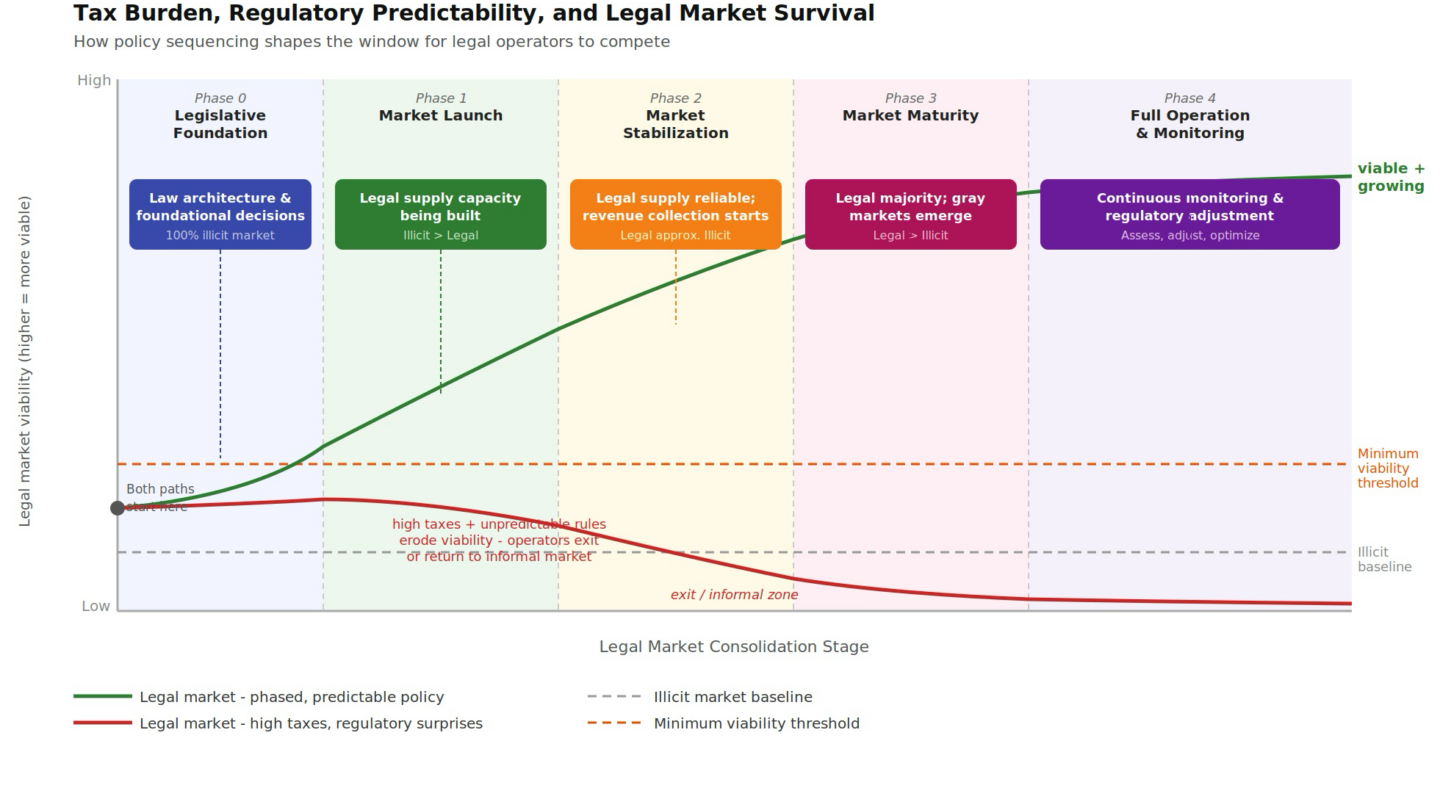
Figure 1. Source: Author’s elaboration.
Chapter 3: Recommendations
The next chapter turns from diagnosis to prescription. It outlines concrete recommendations for policymakers at the federal, state, and local levels, directly linked to the main challenges in cannabis regulation identified and grounded in the regulatory and enforcement principles laid out in Chapter 2. The aim is to minimize cannabis-related harms, both mental and physical, while keeping the system socioeconomically viable, which means reaching a stable balance in which public health protections reduce harm for all involved, and the remaining harms are effectively “paid for” through the costs imposed on the industry (e.g., via compliance, testing, and taxes), without making legal participation so burdensome that it weakens the regulated market or pushes activity back into illicit channels. The chapter is organized from the top down: We deal first with what should be regulated at the federal level (what the federal model should be and which agencies would be involved) then with what should be left to state regulation (what should remain under state control and which state and local entities would be responsible); and finally to what localities should decide for themselves.
1) Federal regulation
There are different existing models of cannabis regulation, from noncommercial jurisdictions where cultivation is meant for personal consumption, such as Luxembourg and Malta (Manthey et al., 2024), to state-led models in which the government is in charge of or has a predominant role in all stages of production and distributions (e.g., Canada and Uruguay), to fully commercial in which the market drives all stages, under government regulation (e.g., US) (See Figure 2).2 Noncommercial models have gained almost no foothold in the U.S. Until recently Washington, D.C. operated the only significant attempt at a noncommercial cannabis market. Initiative 71 (2014) legalized home cultivation and gifting but, due to a congressional appropriations rider, prohibited retail sales. This gave rise to a large informal “gifting storefront” market in which businesses gave away cannabis as a free gift with the purchase of another item, rather than a genuine noncommercial model (RAND Europe, 2023). By 2024, D.C. regulators had begun closing these operations as unlicensed retailers (ABCA, 2024).
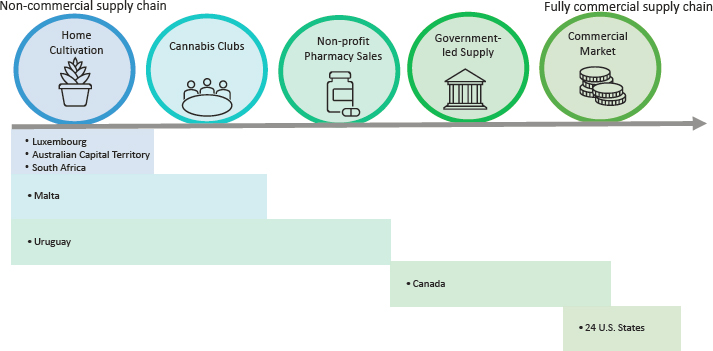
Figure 2. Source (National Academies, 2024, pp 63).
The sole example of a government-run dispensary was North Bonneville, Washington’s Cannabis Corner, which the city operated from 2015 to 2021 before selling it, described as a casualty of an overinflated business model and competition from nearby private retailers (Sabo, as cited in Marijuana Venture, 2020; Lewis, 2018; Seattle Times, 2015).
Most jurisdictions that allow the use or sale of cannabis without a prescription employ a fully commercial model. The lack of a federal regulatory framework has produced a patchwork of state and local regulatory schemes that prevents the adoption of harmonized best practices and limits the role of federal agencies in market enforcement (See Problem 1).
Now that the federal government has acknowledged cannabis’s medical uses and moderate abuse potential, two scenarios remain for adult use: 1) Maintain the patchwork of regulation, where some cannabis product types are restricted to medical use, some are classified as supplements, and some are largely unregulated; and 2) Make all cannabis federally legal for adult use without medical need and regulate it under some uniform scheme. Of these two trajectories, Scenario 1 is the most likely near-term outcome based on President Trump’s April 2026 executive order and the Department of Justice’s and DEA’s orders to make rules for rescheduling, which built on a DEA proposed rule from May 2024 (Lampe, 2025). Full federal legalization (Scenario 2) seems the least likely given that Congress has been unable to pass the SAFER Banking Act. Comprehensive reform, which would also require amending the Federal Food, Drug, and Cosmetic Act and navigating U.S. international treaty obligations, remains a remote prospect (Grosso et al., 2025).
The broader trajectory in consumer product regulation reinforces this possibility as states have increasingly moved to restrict specific formats based on risk profiles: California’s ban on menthol cigarettes and flavored e-cigarettes, state-level restrictions on flavored vaping products (California Department of Public Health, n.d.), and bans on powdered alcohol in some jurisdictions (Garcia, 2017), for example. The recommendations in this paper are designed to be actionable under all three scenarios but are most directly applicable to states operating under the current commercial legalization framework. Where specific recommendations depend on federal action, particularly on banking, taxation authority, and product safety standards, we note this explicitly.
We propose a regulatory model grounded in the political economic principles of U.S. federalism and in the comparative competencies and enforcement capacities of each level of government. Prior work has used alcohol as a reference point to derive cannabis policy recommendations focused on public health outcomes (Pacula et al., 2014). Here, we focus more narrowly on how federal, state, and local alcohol authorities intersect, and how such division of powers can guide a feasible cannabis framework.
At the federal level, alcohol is regulated nationally through taxation and interstate commerce authorities, primarily administered by the Alcohol and Tobacco Tax and Trade Bureau (TTB, 2017a). Federal law also establishes baseline standards for permits, labeling, and advertising under the Federal Alcohol Administration (FAA) Act and the Alcoholic Beverage Labeling Act (ABLA) (TTB, n.d.). For example, the Alcoholic Beverage Health Warning Statement (27 CFR Part 16) is the federal rule that specifies the required health warning for beverages containing more than 0.5 percent alcohol by volume, sets formatting and placement requirements, and preempts states from imposing additional health-warning statements on alcohol container labels. Within this federal framework, Section 2 of the Twenty-First Amendment gives states strong authority to control alcohol transportation into their jurisdictions and to regulate most day-to-day market rules regarding licensing, retail conditions (hours/days), distribution, and enforcement (Library of Congress, n.d.). Finally, many states have adopted local-option laws that delegate limited decision-making to counties and municipalities, often by referendum, over whether and which forms of alcohol sales are permitted. This is what makes “dry counties” legally possible (NABCA, 2017).
One important limit on the alcohol analogy: the Twenty-First Amendment grants states regulatory powers over alcohol that they do not have over cannabis, including broad authority to restrict interstate movement and operate state monopolies. Where the alcohol model relies on those special powers, it cannot be ported directly to cannabis. The discussion that follows uses alcohol as a reference point only where the comparison rests on ordinary commerce and tax-administration authorities, not on powers specific to the Twenty-First Amendment.
This division of authority suggests a practical design principle for cannabis: reserve a narrow set of federal powers that are necessary to achieve national health and security objectives, and delegate operational market governance to states and localities. The alcohol model illustrates how the federal government can establish a national standard without preempting state authority. Rather than directly mandating a national drinking age, which would have conflicted with the Twenty-First Amendment’s reservation of alcohol regulation to states, Congress established a minimum age of 21 through the 1984 National Minimum Drinking Age Act by conditioning receipt of federal highway funds on state compliance (National Minimum Drinking Age Act, 1984). The Supreme Court upheld this conditional-spending mechanism in South Dakota v. Dole (1987), establishing that Congress may use financial incentives to encourage state adoption of federal standards even where it lacks direct regulatory authority. We invoke the 1984 act here only for its mechanism, not as an unqualified policy success: the substantive merits of a uniform drinking age of 21 are contested, and other federations, notably Canada, where Quebec, Manitoba, and Alberta set the legal drinking age at 18 while other provinces set it at 19, have allowed substantial subnational variation in legal ages without obvious harm. For alcohol, the Alcoholic Beverage Labeling Act and its implementing rule, the Alcoholic Beverage Health Warning Statement (27 CFR Part 16), preempts state labeling variation and mandates uniform federal health warnings on alcohol containers (Alcoholic Beverage Health Warning Statement, 27 C.F.R. pt. 16, 1990).
There is already a comparable precedent regarding THC. The 2018 Farm Bill established a product-definition threshold by designating hemp as cannabis containing no more than 0.3 percent THC by dry weight and removing it from Schedule I of the Controlled Substances Act, while leaving higher-THC cannabis federally controlled (U.S. House of Representatives- Committee on Agriculture, 2018).
Product safety standards for consumables is well-established through the Food Safety Modernization Act (FSMA, P.L. 111-353, 2011), which granted FDA authority under the Commerce Clause to establish science-based preventive controls, mandatory testing protocols, and contaminant thresholds for food products (FDA, 2018).
Federal excise taxation authority is likewise well-established. The TTB already administers tiered excise taxes on alcohol and tobacco under the Internal Revenue Code and the Federal Alcohol Administration Act, using product characteristics such as alcohol content, production volume, product type to set rates (Alcohol and Tobacco Tax and Trade Bureau, 2017).
Cannabis businesses currently cannot access federally insured depository institutions because proceeds are treated as the products of unlawful activity under the Bank Secrecy Act and money laundering statutes, regardless of state legalization (Sacco, 2023). Thus, banking access would require federal action. As a result, the vast majority of financial institutions decline to serve cannabis businesses. FinCEN’s data show only around 507 banks, 182 credit unions, and 127 nondepository institutions in 2024 actively filing cannabis-related reports, a small fraction of the more than 10,000 financial institutions operating in the United States (FinCEN, 2025). This forces a multibillion-dollar industry to operate almost entirely in cash. The proposed SAFER Banking Act, which the Senate Banking Committee passed in 2023 with bipartisan support, would resolve this by prohibiting federal regulators from penalizing depository institutions for serving state-licensed cannabis businesses and requiring income generated from state-licensed cannabis business to be treated as lawful income (Sacco, 2023). Despite broad support, the bill has not advanced to a Senate floor vote, and as of mid 2026 no federal cannabis banking legislation has been enacted.
Federally reserved powers should include: 1) national rules on youth access (including a minimum legal age and baseline enforcement requirements); 2) definition of THC products and thresholds for different products (what is low THC versus high THC); 3) product safety standards (testing protocols and thresholds for contaminants such as pesticides, heavy metals, residual solvents, and microbial contamination); 4) packaging and labeling requirements that ensure consumer information and enforceability; 5) banking oversight; and 6) taxation. The federal government should also have clear authority to address criminal violations of federal standards (e.g., fraud in testing, diversion, sales to minors, or interstate trafficking that violates federal rules).
States, by contrast, should control most routine market operations in a manner analogous to alcohol: licensing design and conditions, retail rules (including hours and zoning), distribution architecture, and day-to-day compliance and enforcement. Local governments should retain authority where they have comparative advantage subject to state authorization.
If cannabis is fully legalized or descheduled at the federal level, state labeling requirements will likely need to coexist with federal standards established by agencies such as the FDA or the TTB. Federal frameworks may set baseline standards for safety warnings, ingredient disclosure, potency labeling, and permissible health claims, similar to how alcohol and tobacco products are regulated. States should anticipate this shift by designing labeling requirements that can integrate smoothly with potential federal standards. Where state rules are more restrictive than federal baselines, states may maintain those standards as a floor of consumer protection. However, states should avoid creating requirements that may directly conflict with federal mandates, as this could complicate compliance for multistate operators and create legal uncertainty. Collaboration between state regulators and federal agencies during any transition period will be essential to ensure that labeling remains clear, consistent, and protective of public health without imposing unnecessary burdens on legitimate businesses. Under a full legalization scenario, the following agencies would hold primary regulatory roles, though the precise division of authority would depend on the legislative vehicle used to legalize cannabis:
Several agencies would need to revise existing policies to align with a legal market. The Social Security Administration, HUD, and the Federal Housing Administration would need to address how cannabis use factors into benefits eligibility and federally subsidized housing rules. The Small Business Administration would need to determine whether state-licensed cannabis businesses qualify for loans, grants, and technical assistance programs. The Department of Labor would need to revise drug testing and workplace protection guidance for federal contractors and grantees. These downstream adjustments are frequently overlooked in legalization debates but represent some of the most tangible points where federal illegality affects ordinary people, particularly lower-income renters, disability benefit recipients, and workers in federally funded roles.
2) State regulation
Before designing any regulatory apparatus, states must understand the source and limits of their authority in a newly legalized adult-use cannabis market. Not all legal foundations offer equal flexibility and the ability of states to adjust, correct, or improve their cannabis regulatory framework depends heavily on the way in which legalization occurred.
Legislative statutes provide maximum flexibility, primarily because the legislature is able to amend, repeal, or restructure regulations that apply to the cannabis market, often with a simple majority. For example, the legislature can reorganize agencies, adjust tax rates, add additional license categories, and adopt other regulatory enforcement mechanisms, all without necessarily having to return to voters for approval. Ballot initiatives, on the other hand, often result in a statute or series of established regulatory mechanisms that leaves little space for the legislature to make necessary changes. Specifically, ballot initiatives that codify regulations into a state’s constitution are particularly rigid, often requiring changes to the regulations to be voted upon by the public through constitutional amendments.
Given this, states should prioritize the pursuit of legislative authorization where it is politically feasible. If ballot initiatives are the only viable path, states should strongly prefer statutory initiatives over constitutional amendments. Initiative language should establish broad regulatory goals and authority while delegating specific implementation decisions to an administrative agency with rulemaking power. Detailed provisions, such as specific tax rates, potency limits, license caps, or testing protocols, should not be embedded in the foundational text. These should instead be established through administrative regulations that can be more easily adjusted based on evidence rather than political will.
2.1 Regulatory agency structure
States have taken meaningfully different approaches to organizing cannabis oversight, ranging from dedicated standalone agencies to authority spread across multiple, pre-existing departments. To date, the evidence from early-adopting states suggests that regulatory structures with a centralized agency as the lead, coupled with formal interdepartmental coordination mechanisms, is the most effective model. For example, New York consolidated adult-use, medical, and hemp oversight in the Office of Cannabis Management, an organizational design choice that while administratively coherent on paper has not, in practice, produced a market that should be held up as a model: licensing delays, sustained illicit-retail proliferation, and slow remediation have all been visible features of New York’s rollout. The structural lesson, then, is that consolidation under a designated lead agency is necessary but not sufficient. New York’s Cannabis Control Board supports this office, but is specifically granted rulemaking authority in the state. Similarly, California established the Department of Cannabis Control, effectively merging the functions that had been previously divided across several different bodies within the state. This was a marked departure from its initial regulatory design, which had produced licensing backlogs and confusion regarding the circumstances under which various regulations might apply. In the state of Washington, the Liquor and Cannabis Board serves as the licensing and regulatory authority. This agency was born out of the already-existing Liquor Control Board, which allowed for some operational efficiencies since the agency already had experience and existing infrastructure for licensing, enforcement, and revenue collection.
By contrast, states that distributed cannabis oversight across various agencies, including health departments, revenue agencies, and law enforcement bodies, without designating a clear lead agency, generally struggled with rulemaking, applying inconsistent enforcement mechanisms, and establishing high compliance burdens for new licensees attempting to navigate the new legal market. Maine offers the clearest adult-use illustration of this dynamic. When voters passed the Cannabis Legalization Act in November 2016, different state agencies were allowed to establish regulations for the cannabis industry, and retail sales were scheduled to commence after four months. That timeline proved wildly optimistic. A gubernatorial veto, legislative override, and the absence of a clear regulatory lead combined to delay market launch for nearly four years. The first active adult-use establishment licenses were not issued until September 2020, with retail sales beginning on October 9, 2020, almost four years after voters approved legalization. The structural absence of a designated lead agency meant there was no institutional entity with both the authority and the mandate to drive the regulatory process forward through that political uncertainty.
2.2 Working with other states
Federal law currently prohibits interstate cannabis commerce, which means states must build and operate their regulatory systems in isolation from one another. The practical consequences of this isolation are underappreciated. Product safety failures, diversion patterns, unreliable retailers who lose licenses in one jurisdiction and seek them in another, and pricing differentials that create structural incentives for cross-border arbitrage are all problems that cross state lines even when cannabis legally cannot. States have not yet built the coordination infrastructure to address any of them effectively. Part of what has prevented states from acting at scale is the prevailing assumption that the Dormant Commerce Clause (ArtI.S8.C3.7.1) (Library of Congress, n.d.) does not apply to cannabis given its federal illegality, which has limited interstate cooperation and reinforced parochial market structures. It is worth recalling, however, that California’s market alone is comparable in size to Canada’s, and Canada has built a substantively more coherent national regulatory system than any single U.S. state (Health Canada, 2020). Scale and political authority are not the binding constraint; political will is.
States should use soft compacts and memoranda of understanding with neighboring states to begin building this infrastructure without waiting for federal authorization. Priority areas for coordination include harmonizing core product definitions and testing standards so that a product approved in one state meets the baseline safety requirements of neighboring states; establishing real-time sharing of safety advisories and product recalls so that contaminated or mislabeled products identified in one market can be flagged across borders before they move through illicit channels; creating shared bad-actor registries so that operators who lose licenses for serious violations in one state cannot obtain them in another; and exchanging data on transaction patterns consistent with smurfing and looping, which are by definition cross-jurisdictional behaviors that single-state tracking systems are poorly positioned to detect. Coordination on excise rates and price floors with neighboring states can also reduce the cross-border price differentials that create structural diversion incentives, as wide disparities between adjacent markets have consistently been associated with elevated diversion risk.
None of these arrangements require federal authorization or the creation of new legal entities. They are administrative agreements between regulatory agencies of the kind that state governments routinely use in other domains, from environmental permitting to professional licensing reciprocity. As cannabis markets and their associated regulatory agencies mature, building out this kind of interstate infrastructure should become an explicit regulatory priority.
3) Market architecture
One of the main questions in cannabis regulation is choosing the overall market architecture — in other words, the optimal regulatory design to govern how cannabis is produced, distributed, priced, and delivered to consumers in a way that is feasible, enforceable, and aligned with public objectives. This subsection lays out a proposed structure for a three-tier state-level model with a limited number of accountable distributors to strengthen oversight and reduce diversion.
3.1 Three‑tier structure with limited, accountable distributor
Most restrictive models are structured as two-tier nonvertically integrated models where the supply (cultivation and production/processing) is separated from the retail side. Washington and New York illustrate how vertical-integration rules can shape market structure, and how those rules interact with tax design.
Washington prohibits vertical integration for retailers but not between cultivators and manufacturers. In 2015, Washington passed a reform to eliminate the 25 percent gross receipt tax and replaced it with a 37 percent excise tax at retail. Hansen et al. (2022) found that this reform caused the share of vertically integrated firms to fall by 4.6 percentage points and production to increase by 23 percent. They argue that the gross receipts tax created distortions along the supply chain: smaller firms had “excess capacity” in cultivation relative to processing that they could not profitably use under the earlier tax regime, while larger firms faced relatively higher costs in cultivation than in processing, so the tax change shifted incentives and reallocated activity across stages.
New York also restricts integration between production and retail, but it uses a different structure that incorporates a distributor license as a “separate tier.” The state’s adult-use system is effectively a two-tier model that bars a person from holding both a production license and a retail dispensary license, while still allowing integration between cultivation and processing. The main exceptions are microbusinesses and registered medical operators, which are allowed to integrate more activities. Within that structure, New York offers multiple license types, each tied to a specific role in the supply chain (New York State Office of Cannabis Management, n.d).
New York’s license categories include: an adult-use cultivator license (authorizing cultivation activities and sale to processors, with tiers by size and by cultivation type [indoor, mixed-light, outdoor, or combined]; a nursery license (for production and distribution of clones, immature plants, seeds, and related propagation inputs to licensed growers and certain integrated operators); an adult-use processor license (authorizing packaging, labeling, marketing, and production of certain flower-based products under the processor’s own or a third-party brand, with some extracted/infused products treated differently); an adult-use retail dispensary license (authorizing purchase, possession, sale, and delivery of adult-use products from licensed premises and through licensed distributors, along with certain ancillary items); an adult-use distributor license (authorizing wholesale distribution and transport from licensed cultivators, processors, microbusinesses, cooperatives, and registered operators to retail dispensaries); and an adult-use microbusiness license, which allows a single operator to cultivate and carry out at least one additional activity — processing, distribution, or retail sale and delivery — subject to program limits.
At the other end of the spectrum sit the least restrictive models, which maintain low barriers to entry. Among recreational markets, Colorado’s original design at launch in 2012 is the clearest example. The state allowed unlimited licenses for growers, distributors, and retailers, and its initial rules actually required retailers to be vertically integrated, growing at least 70 percent of the cannabis they sold for the first nine months of operation, ostensibly to prevent black market product from entering the legal supply chain (Seo, 2024). The result was intense price competition and broad access, but also rapid consolidation: large chain operators accumulated dozens of licenses across multiple cities, while smaller independent producers struggled to survive. By the mid-2010s, Colorado’s market was a paradox: more licenses in total than Washington, but owned by far fewer companies, producing a less competitive market with higher prices than the unlimited-license structure suggested (Seo, 2024). Colorado has since moved to tighten its rules.
The difference between Washington and Colorado and how “loose” restrictions were set was reflected in the number of companies in the market (Colorado had roughly three times the number of stores per capita than Washington), the size of the companies (in 2024, one Washington cannabis business owned 1.24 licenses versus 9.6 in Colorado), and their chances of survival (Seo, 2024).
Our recommendation is that regulations should follow a three-tier structure that separates the cannabis supply chain into distinct stages: producers and/or processors, distributors, and retailers, assigning each tier a different role, set of permissions, and compliance obligations. The core idea behind this structure is to prevent any one entity from controlling the entire chain (and thereby evading oversight), while creating a clear “chokepoint” where regulation, testing verification, inventory tracking, and price setting/governance can be enforced consistently. Compared with other models, separating distributors from the rest of the tiers would be most effective.
In the first tier, producers cultivate cannabis while processors convert raw plant material into standardized products (flower, concentrates, edibles, oils) and prepare them for regulated sale based on federal regulations. This tier is where regulators typically focus on licensing requirements, cultivation standards, security protocols, and limits on production capacity. Because upstream decisions shape downstream risks such as potency profiles, product formats, and total volume, this tier often includes tools such as caps on licenses or canopy, and such product-mix incentives as a “THC-based production quota system,” as suggested by Transform Drug Policy Foundation (2022).
The second tier, distributors, functions as the system’s operational and compliance hub. Distributors purchase or take custody of products from producers/processors that complied with cultivation and processing requirements, and move them through regulated channels toward retail. In a well-designed three-tier model, states can conduct oversight at this stage by requesting distributors to verify that products have passed required laboratory testing, maintain chain-of-custody documentation, manage inventory and transport security, and ensure that only compliant products enter the retail market. Distribution is a good place to set regulated wholesale markups to control pricing (see point 2.3 below).
Government-controlled distribution can be one of the simplest ways to capture revenue because it concentrates tax collection and markups at a single chokepoint. Pennsylvania is a clear example. For wine and spirits, the Pennsylvania Liquor Control Board (PLCB) operates the retail stores and is also responsible for the wholesale distribution of wine and spirits to licensees. By contrast, beer is primarily sold through licensed private distributors and through on-premise licensees (e.g., bars and restaurants), under a separate set of rules. A key feature of Pennsylvania’s model is uniform statewide pricing: the PLCB charges the same retail price for a given product across its stores, using a simple statutory pricing formula set in the Pennsylvania Liquor Code. Under that rule, the PLCB applies a 30 percent markup and an 18 percent liquor tax to the wholesale price, with the liquor tax calculated on the consumer price inclusive of markup and certain charges. Seim and Waldfogel (2013) note that, in effect, Pennsylvania’s liquor tax per bottle-level comparison is about 2.3 times the average for other states, illustrating how a control-state structure can generate substantial revenue through a combination of explicit taxes and government markups/profits.
More generally, looking at models across states, evidence comparing “control” (state monopoly) systems to private license systems suggests that government control is associated with lower consumption, while also having the potential to generate two to three times higher alcohol-related revenue, largely because the state captures value through wholesale control (and, where applicable, retail operations). The same literature also notes that revenues in monopoly states are more likely to be earmarked for public purposes such as law enforcement or substance abuse treatment programs (Zullo et al., 2013).
In the third tier, retailers are the consumer-facing endpoint. Retailers purchase from distributors and sell to the public under rules designed to reduce diversion and mitigate health harms. Because retail is where marketing tactics and price promotions can directly increase heavy consumption, the retailer tier is often where regulators restrict loyalty programs, volume discounts, or other inducements that encourage bulk purchasing, and where purchase limits can be implemented, ideally in THC terms, given evidence that THC-based limits can help mitigate risks and harms among heavy users (Pacula et al., 2021).
Across the system, the three-tier separation is usually reinforced by prohibiting vertical integration and banning cross-tier financial inducements, so that compliance incentives remain aligned and regulatory visibility is maintained. See Figure 3.
| Tier | Stakeholders | Exceptions |
|---|---|---|
| Third tier – Retail | Retailers (private or public) | Microbusinesses NurseriesCannabis clubsHome growers |
| Second tier – Distribution | Distributors (private or public) | |
| First tier – Cultivation and production | Cultivators and processors |
Figure 3.
3.2 Entry conditions and competitive safeguards
Legal cannabis markets are prone to structural instability due to high compliance costs and market saturation that can lead to attrition. As noted earlier, in California, roughly 15 percent of operators were in default on tax obligations totaling over $240 million in 2023 (Lange, 2024), and by 2025 inactive licenses outnumbered active ones (Black, 2025). These patterns reflect not just market competition but also inadequate upfront conditions on who enters the market and on what terms. When undercapitalized operators enter a market that is still competing with illicit supply, the result is a fragile licensed sector that is vulnerable to consolidation by better-resourced entities, disproportionate attrition among smaller and equity licensees, and increased pressure on compliant operators to cut corners (Black, 2025; Stoa, 2023).
Rapid consolidation compounds these risks. Vertically integrated firms that control production and retail can cross-subsidize losses across the supply chain in ways independent operators cannot, accelerating shakeouts and reducing the diversity of the licensed market (Stoa, 2017). The tension between license caps as anticonsolidation tools and their potential to create artificial scarcity is well documented. In Florida, there are reports of scarcity created by a limited licensing regime that drove single-license values into the tens of millions of dollars, concentrating the market among large, multistate operators rather than protecting small and medium-sized entrants (Cannabis Public Policy Consulting, 2024). Illinois, which capped total retail licenses at 500, paused new licensing in 2025 precisely to give small and medium-sized applicants time to secure capital before the remaining slots were filled (Roberts, 2025).
Several states have attempted to address capitalization gaps directly. New York’s adult-use retail regulations require applicants to submit certified financial statements or pro forma financials demonstrating sufficient resources to cover startup and ongoing operating costs (9 NYCRR Part 116). Michigan requires cannabis license applicants to show proof of between $150,000 and $500,000 in assets, at least 25 percent of which must be liquid (Michigan Cannabis Regulatory Agency, n.d). Washington state prohibits vertical integration between production and retail outright, while New York achieves a similar separation through its multitier license structure, which bars the same person from holding both a production and a retail dispensary license (Pratt et al, 2025). These approaches vary in stringency and design, but share the underlying logic that structural and financial entry conditions shape long-term market stability.
States should use the licensing process, both at entry and at renewal, to establish and maintain a financially stable, structurally sound licensed market. Caps on the number of retail licenses held by a single owner, as distinct from statewide supply caps, are a more targeted tool for preventing consolidation without creating the license scarcity that inflates values and favors large operators. Prohibiting vertical integration between production and retail helps maintain a level playing field. Applicants should be required to demonstrate sufficient working capital and basic internal controls, with escrow accounts for taxes, payroll, and state fees as a mechanism to protect employees and regulators from insolvency shocks. Renewal cycles should revisit these requirements rather than treating initial approval as a permanent clearance. Rules that affect business viability, such as delivery radius, packaging standards, minimum prices, markup caps, should sit in regulation rather than statute so that regulators can adjust them as market conditions change without requiring legislative action (Smart & Pacula, 2019). Rules should be written in plain language with practical examples, and publicly maintained change logs should make amendments visible and easy to track.
4) Implementation roadmap
Every state starts at a different point. States that already have a functioning medical cannabis market enter legalization with some regulatory infrastructure, established operators, existing tax collection mechanisms, and early data on consumer behavior — a foundation that states starting from prohibition entirely lack. States that legalized adult-use cannabis years ago face a different set of challenges: markets that have already experienced price crashes, operator attrition, and illicit market persistence, and tax systems that may have been designed before the evidence base on potency-based approaches was developed. The phases below are not a universal timeline, but they describe conditions that must be met before advancing, regardless of how many years a state has been operating. A state with a mature medical market may enter at Phase 1 or even Phase 2; a state repealing prohibition for the first time must work through Phase 0 carefully. The point is not speed but sequencing.
4.1 Taxation
Phase 0 — Legislative foundation
Before any licensed operators exist, the tax architecture needs to be set in statute. This phase is where the foundational decisions are made: what tax base to use, how rates will be structured, and how they will be allowed to change over time. Decisions made here — especially the degree of flexibility granted to regulators versus the legislature — substantially determine whether the system can adapt as the market matures. The core design tension is that taxes must eventually fund public health and equity goals, but early rates must remain low enough that legal prices can compete with illicit sources. Locking in high rates before the legal market has stabilized is one of the most common and consequential early design errors.
Priority activities for policymakers:
- Estimate total cannabis demand (legal plus illicit) as a baseline for projecting revenue and calibrating initial rates. Determine initial tax base: ad valorem, weight-based, or potency-based (or a combination). Document the tradeoffs explicitly in the legislative record, including administrative capacity requirements for each option.
- Set a published, multiyear rate schedule with advance notice requirements, ideally embedded in statute at time of initial implementation, so operators can plan capital, staffing, and inventory with reasonable certainty.
- Grant regulators explicit authority to adjust rates and markups within statutory parameters, without requiring full legislative action each time. Consider establishing an independent body or commission to set technical parameters (rate adjustments, potency measurement standards) with clear conflict-of-interest protections.
- Establish conflict-of-interest standards for officials involved in tax design, and require transparency in lobbying and industry funding disclosures.
- Write revenue earmarking rules into statute, identifying minimum allocations for: 1) public health programming; 2) social equity and community investment; and 3) regulatory infrastructure.
- Establish a standing joint legislative-regulatory committee with a formal mandate to review agency recommendations on tax and enforcement adjustments within a fixed timeframe, rather than leaving adjustments to general legislative scheduling.
Policymakers should ensure the following conditions exist before advancing:
- Baseline demand estimate completed.
- Tax structure and rate schedule enacted in statute with clear regulatory delegation authority.
- Revenue allocation rules written into statute.
- Conflict-of-interest framework in place for the regulatory body overseeing tax administration.
- Joint committee established with a clear mandate and timeline for review.
Phase 1 — Market launch
The foundational premise of this phase is that ensuring the competitiveness of the legal market, not maximizing revenue, is the priority. Early legal markets take time to build stable supply, distribution capacity, and competition, and prices and availability can swing dramatically during rollout (Smart & Pacula, 2019). Premature tax increases or complex compliance obligations can tip marginal operators into insolvency or back toward informal arrangements precisely when stability matters most. The goal is to keep effective tax burdens moderate, get the market operational, and begin building the data infrastructure needed to adjust the system later.
Priority activities for policymakers:
- Apply initial moderate excise tax rates consistent with the published schedule. Prioritize legal-market price competitiveness over revenue in rate-setting at this stage.
- Launch seed-to-sale tracking and tax collection infrastructure at the distributor tier to concentrate compliance obligations at the chokepoint rather than across all operators.
- Implement flat per-unit or per-weight tax if potency-based testing capacity is not yet available; document this as a transitional measure with a planned migration path.
- Begin publishing price-per-THC mg data and illicit market price comparisons on a public dashboard to support evidence-based rate adjustments in later phases.
- Communicate the published rate schedule to operators and investors to reduce planning uncertainty.
- Establish baseline revenue tracking for the three earmarked allocation categories (public health, social equity, regulatory infrastructure).
Conditions required to advance:
- Seed-to-sale tracking system operational and collecting reliable data.
- Tax collection functioning at the distributor tier with low evasion rates.
- Legal market prices are competitive with illicit alternatives in major population centers.
Phase 2 — Market stabilization
As legal supply and retail access become more reliable, the tax system can begin doing more in terms of collecting revenue and funding public health goals. This phase introduces the pricing safeguards (minimum unit pricing, regulated markups) that prevent “cheap” THC from undermining health objectives even as overall prices fall with market maturation. It also begins the transition toward potency-sensitive rate structures where testing capacity allows.
Priority activities for policymakers:
- Implement minimum unit pricing linked to THC content at the distributor level, with required retail mark-ups. Set floor prices to prevent promotions and discounting from making high-potency products cheap relative to lower-risk alternatives.
- Restrict or ban volume discounts, time-limited promotions (e.g., 4/20 sales), and loyalty programs that reduce the effective price per unit of THC.
- Where testing infrastructure is reliable, begin piloting potency-based or potency-banded excise rates, particularly for products like concentrates and edibles. Use this pilot to build administrative capacity and identify risks before broader rollout.
- Conduct analysis of the market trends (price trends, illicit market share, legal adoption rates). Adjust rates upward if the legal market is capturing sufficient share and prices remain competitive; hold rates if adoption is still fragile.
- Publish laboratory scorecards and price-per-THC mg data to allow regulators and the public to track whether pricing safeguards are working.
- Begin allocating earmarked revenue to public health surveillance systems that track potency trends, modes of use, and adverse events.
Conditions required to advance:
- Minimum unit pricing and markup rules operational at the distributor level.
- Reliable potency testing available across all major product categories.
- Illicit market share measurably declining across products.
- Potency-based rate pilot completed with lessons documented.
Phase 3 — Market maturity
With a functioning legal market capturing a substantial share of demand and reliable testing infrastructure in place, the tax system can shift toward its full public-health design. This phase completes the migration to potency-based excise rates, tightens compliance requirements, and turns the revenue system toward longer-term sustainability.
Priority activities for policymakers:
- Migrate excise tax fully or primarily to a THC mg basis across product categories, using the pilot experience from Phase 2 to set rates and enforcement protocols.
- Adjust tax floors and markups as legal market share grows; use price-per-THC mg monitoring data to calibrate rates so the legal market remains competitive while high-potency products carry a meaningful price premium over lower-risk alternatives.
- Implement and enforce potency-based purchase limits (or hybrid weight-plus-THC limits) alongside the pricing floor to prevent substitution toward bulk low-THC products.
- Conduct full evaluation of revenue allocation: assess whether earmarked shares are sufficient to fund public health programming, social equity commitments, and regulatory infrastructure at scale.
- Publish full financial and market dashboards and assess findings to adjust rates, markups, or allocations as evidence warrants.
- Place key technical levers (e.g., rate adjustments, potency measurement standards) under an independent technical body with a requirement to publish the changes reasoning to prevent lobby influence.
Conditions required to advance:
- Potency-based excise rates in operation across all major product categories.
- Revenue allocation delivering measurable outcomes in all three earmarked categories.
- Price-per-THC mg is being monitored consistently showing that high-potency products carry a meaningful price premium over lower-risk alternatives.
- Independent review body for technical tax parameters and market conditions operational and publishing annual assessments.
Phase 4 — Full operation and monitoring
By this phase, the tax system is fully built out and the legal market has established a stable competitive position relative to illicit supply. The focus shifts from construction to maintenance: ensuring that the system continues to function as intended as the market evolves; that public health objectives are being met; and that the regulatory infrastructure remains insulated from commercial capture over time.
Priority activities for policymakers:
- Conduct regular statutory reviews of the tax structure, preferably every three to five years, with a presumption toward adjustment where evidence shows misalignment between rates and public health or market competitiveness objectives.
- Monitor for new diversion risks, product formats, or consumption patterns that fall outside existing tax and pricing rules; grant regulators explicit authority to extend definitions and rate schedules to new product categories without requiring new legislation.
- Evaluate whether revenue earmarks are reaching intended programs and producing measurable outcomes; adjust allocations if evidence shows underfunding in specific areas.
- Publish an annual state-of-the-market report consolidating price-per-THC mg trends, illicit market share estimates, revenue allocation outcomes, and public health indicators, to provide a shared factual basis for any future legislative or regulatory adjustments.
- Maintain the independent review body and joint legislative-regulatory committee established in earlier phases as permanent institutions rather than allowing them to sunset.
Conditions required to advance:
- Maintaining the conditions achieved in Phase 3 while adapting to new evidence, new products, and changing market dynamics over time.
4.2 Enforcement activities
Phase 0 — Legislative foundation
In this phase, legislation has passed but no licensed operators (retail, distributor, producer, etc) exist. Decisions regarding infrastructure, staffing, interagency coordination, and regulatory designs are made here. These decisions largely determine whether later phases roll out successfully or stall. During this period, the illicit market may continue to operate, though regulators should take steps to prepare illicit operators for the eventual transition to (or prohibition from) the emerging licit market.
Priority activities for policymakers:
- Establish the regulatory agency with clear statutory authority, defined jurisdiction, and sufficient staffing to carry out licensing, compliance, and enforcement functions before the market opens. Hire enforcement personnel with experience in both administrative compliance and criminal investigation, and define clearly which functions belong to the cannabis regulatory agency versus law enforcement agencies.
- Select and implement a seed-to-sale tracking system. Where a state chooses a vendor, the contract should specify that the state owns the data, that the system must integrate with other state databases, and that anomaly-detection rules are defined by the regulator rather than left to vendor discretion.
- Conduct baseline illicit-market mapping to establish a prelegalization picture of where unlicensed operators are concentrated, what products they carry, what prices they charge, and what populations they serve. This baseline is essential for calibrating where legal market access gaps are most acute and for measuring displacement of the illicit market in later phases.
- Develop and publish clear licensing timelines and application requirements for all operator categories, including producers, processors, distributors, retailers, and testing laboratories.
- Develop outreach strategies directed at illicit market operators, informing them of licensing pathways, transition timelines, and the consequences of continued unlicensed operation after the legal market is functional.
Conditions required to advance:
- The regulatory agency is fully staffed and operational, with clear statutory authority.
- A track-and-trace system has been selected (or developed, if home grown) and is ready for operational use (ideally it is beyond the testing phase of development).
- Applications for licensing of various roles, including producers, distributors, retailers, and other tangential roles, are open and the regulator has published clear timelines of selection and approval.
- Baseline illicit market mapping is complete and enforcement plans have been established.
Phase 1 — Market launch
The foundational premise of this phase is that for the most part, enforcement against illicit supply is counterproductive until the legal market can absorb consumer demand.3 Premature crackdowns on illicit sellers without a viable legal alternative simply push consumers toward more clandestine channels while doing nothing to reduce consumption. In this phase, the first licenses have been issued and retail is beginning to open. Supply, distribution capacity, and geographic coverage may still be uneven. Additionally, consumer habits may not yet have shifted to the licit market, particularly if the market is not yet able to reliably meet demand.
Priority activities for policymakers
- Concentrate enforcement efforts on violations that pose an immediate threat to public safety. This means prioritizing actions against sales to minors, unlicensed sales near schools, and products known to be contaminated. These issues demand enforcement regardless of the current state of the legal market.
- Begin compliance monitoring of newly licensed operators using an education-first posture. In the early states of a market, violations often stem from a lack of understanding of the rules, rather than from intentional wrongdoing. Therefore, a system of graduated responses that begin with guidance aimed at correcting the issue can help reduce the loss of compliant businesses during the fragile early market period.
- Monitor legal market prices and availability against illicit market benchmarks using the baseline data established in Phase 0, and publish this data regularly. If legal prices remain substantially above illicit alternatives after the first year of operation, revisit tax rates, regulatory burdens, or licensing bottlenecks before turning to supply-side enforcement.
- Maintain active communication channels for illicit operators who wish to transition into the legal market. Operators who approach regulators about licensing pathways should receive clear, timely responses.
Conditions required to advance:
- Licensed retail outlets are operating in or nearby major population centers, with delivery filling gaps in rural communities and those who chose to opt out of allowing such outlets to operate in their boundaries.
- The legal market prices are stable and competitive with illicit alternatives.
- Testing infrastructure is processing products without significant turnaround bottlenecks.
Phase 2 — Market stabilization
By this phase, licensed supply is more reliable, geographic coverage has broadened, and the legal market is beginning to capture meaningful consumer share. Enforcement can begin to shift from a permissive posture toward active compliance monitoring, with the illicit market now a more tractable target because legal alternatives are available to consumers who previously had none.
Priority activities for policymakers:
- Begin systematic compliance inspections of licensed operators across all tiers, using risk-based prioritization that concentrates inspection resources on higher-risk license types and operators with prior violations. Publish aggregate compliance data so that the regulated market understands the scope and focus of enforcement activity.
- Activate purchase-limit monitoring through the track-and-trace system. Flag transaction patterns consistent with looping and smurfing and initiate targeted compliance operations against retail outlets where these patterns are concentrated.
- Begin targeted administrative enforcement against the most visible and persistent unlicensed operators in markets where licensed alternatives are now accessible, prioritizing closure orders, civil penalties, and license bars over criminal referrals.
- Share emerging intelligence on cross-border diversion patterns, bad-actor networks, and unlicensed distribution infrastructure with neighboring state regulators and, where appropriate, federal law enforcement.
Conditions required to advance:
- A compliance inspection program is operational across all license types with published violation data.
- Purchase-limit monitoring is active and producing actionable enforcement referrals.
- Illicit market share is measurably declining in markets with adequate licensed retail coverage.
- Interagency coordination protocols are operational across all relevant state agencies.
Phase 3 — Market maturity
With a functioning legal market capturing substantial consumer share, enforcement can shift toward maintaining the integrity of the licensed sector and concentrating remaining illicit market suppression on persistent, high-harm actors.
Priority activities for policymakers:
- License a limited number of accountable distributors and use the distribution tier as the primary compliance chokepoint for inventory verification, testing confirmation, and pricing floor enforcement.
- Implement minimum unit pricing and regulated markups at the distributor tier and monitor retailer compliance through undercover purchase operations and receipt audits.
- Publish laboratory scorecards identifying testing facilities with anomalous potency reporting or contaminant detection rates, and initiate decertification proceedings against laboratories with documented accuracy failures.
- Credential budtenders through a portable licensure program and incorporate compliance with training and duty-of-care requirements into retailer license renewal assessments.
- Actively enforce siting and nuisance conditions, using complaint data and compliance history to prioritize inspections. Retailers with repeated nuisance violations, failed age-verification checks, or inventory discrepancies should face escalating sanctions up to and including license revocation.
- Launch focused deterrence pilots targeting the most persistent unlicensed retail operators in markets where legal access is well-established.
Conditions required to advance:
- Laboratory scorecard system is operational and at least one decertification proceeding has been completed or initiated against a noncompliant lab.
- Budtender licensure program is operational and incorporated into retailer renewal assessments.
- Minimum unit pricing and regulated markups are functioning at the distributor tier with documented retailer compliance.
- Focused deterrence pilots against persistent unlicensed operators have been launched in at least the major population centers.
- Illicit market share is continuing to decline across product categories and geographic markets.
Phase 4 — Concentrated accountability
This phase focuses on firmly closing persistent illicit market operators who have refused to exit despite the availability of legal alternatives, and on swift, decisive action against licensed operators found to be enabling illicit activity.
Priority activities for policymakers:
- Transition from pilot to full-scale operations against remaining unlicensed retail, concentrating resources on operators who have been notified, offered legal transition pathways, and persisted regardless. Criminal referrals become appropriate for this population given the exhaustion of administrative alternatives.
- Conduct systematic audits of licensed operators with anomalous inventory, sales, or compliance patterns. Retailers, distributors, or producers found to be diverting product into unlicensed channels should face immediate license suspension and referral for civil or criminal action depending on the scale and nature of the diversion.
- Publish a public accounting of enforcement outcomes against both unlicensed operators and licensed operators who have lost their licenses or faced major sanctions.
Conditions required to advance:
- Persistent unlicensed operators in well-served markets have been systematically addressed through enforcement action.
- Licensed operator diversion audit program is operational and producing actionable findings.
- Public enforcement reporting is published and current.
Phase 5 — Full operation
By Phase 5, the legal market has reached stable and mature operation. The illicit market has been substantially displaced, licensed operators are broadly compliant, and the regulatory infrastructure built across prior phases is functioning as designed. The work of this phase is to maintain that infrastructure, ensure oversight capacity does not atrophy as the market stabilizes, and conduct the ongoing evaluation needed to keep the legal market healthy and adapt to changing conditions before problems require reactive enforcement responses.
5) Pricing, taxes, and revenue allocation
There is an inherent trade-off between setting taxes high enough to fund public health and social equity goals, and keeping legal prices low enough that consumers and firms remain in the regulated market rather than shifting back to illicit channels. This trade-off is especially important for cannabis because THC potency in the different products drives intoxication and can increase the dose of THC consumed per episode, particularly when high-THC products are cheap, heavily discounted, and widely available. The literature consistently raises concerns about higher-risk patterns of use and adverse outcomes, especially cannabis use disorder and youth exposure to high-THC products, even as the evidence base remains heterogeneous (Carlini et al., 2024; Bero et al., 2023). This section proposes a pricing and tax framework that balances these objectives, organized into four parts: 1) a transitional tax path that evolves over time as the legal market scales and illicit competition shrinks; 2) a tax design that incorporates public-health considerations, including a potency-based component; 3) a minimum unit price linked to THC content, paired with regulated mark-ups to stabilize pricing and prevent “cheap THC” without relying on taxes alone; and 4) clear rules on the use of tax revenue within the statute, identifying priority areas where funds can most effectively promote health and social equity.
5.1 Transitional tax path and potency-based taxation
A well-designed cannabis tax system must balance two competing goals: raising enough revenue to fund public health, enforcement, and social equity programs, while keeping the tax burden low enough, especially in the early years, to keep legal prices competitive with illicit prices and encourage the shift toward the regulated market. This timing matters because legal markets do not stabilize immediately after legalization; supply, distribution capacity, and competition take time to develop, and prices and availability can swing during rollout (Smart & Pacula, 2019). That evidence supports a transitional tax path, which means keeping effective taxes moderate while access, inventory, and delivery are still being built (see Problems 2 and 4), then adjust rates or tighten collection once the legal market can reliably meet demand and the illicit market is shrinking. This approach also lowers the risk that taxes become a barrier to entry and survival for smaller compliant firms (Lange, 2024) and reduces the price advantage of illicit sources (Han & Shi, 2025).
In practice, states have gravitated toward three broad tax bases: price-based (ad valorem), weight-based, and potency-based, often in combinations (Auxier & Airi, 2022; Park et al., 2024). Potency-based systems exist but remain uncommon. Connecticut, for example, applies product-type-specific excise rates that are all assessed per milligram of total THC and collected by retailers at the point of sale (Connecticut Department of Revenue Services, n.d.). Illinois uses a hybrid approach that varies its purchaser excise tax rate by potency tier (10 percent at or below 35 percent THC; 25 percent above 35 percent THC; and a separate rate for infused products), reflecting a simpler “banded” potency structure rather than a per-milligram system; under Illinois law, the tax is legally imposed on the purchaser and collected and remitted by the retailer (Illinois Department of Revenue, n.d.). New York illustrates the administrative push toward simplification: it initially implemented a per-milligram THC tax (with different rates by product category), but for sales on and after June 1, 2024, it shifted to a simpler percentage-based system that includes a 9 percent distributor tax (and separate retail taxes), explicitly streamlining collection (New York State Department of Taxation and Finance, 2025).
Each tax base has its challenges. Ad valorem (price-based) taxes are easy to administer, but they can become misaligned over time: as legal supply expands and prices fall, an ad valorem rate yields declining revenue per unit and weakens the intended deterrent effect unless rates rise (often the opposite of what policymakers want during market maturation) (Caulkins et al., 2015). Weight-based taxes are also straightforward, but they treat low- and high-potency products the same per gram, which encourages producers and consumers to move toward higher potency as a way to reduce tax per unit of intoxication (Kilmer, 2016). Potency-based taxes best target THC, but they demand stronger testing and monitoring capacity and can be more administratively burdensome (Auxier & Airi, 2022). These tradeoffs explain why many states adopt administratively simple taxes at first, then revise systems as markets evolve and as implementation bottlenecks become visible (see also Kilmer, 2016, on the case for adjustable rate-setting authority delegated to regulators).
But if a health-oriented system is the priority, then the potency-based system would be widely adopted. The main reason states have not widely adopted THC taxes is not a lack of conceptual appeal, but administrative and political constraints. Measuring THC consistently across product types requires reliable testing capacity, standardized protocols, and monitoring that can deter manipulation and requirements that can be complex and burdensome to administer at scale (Auxier & Airi, 2022). Practical feasibility work has also highlighted implementation challenges for potency taxes, including measurement error, enforcement capacity, and opportunities for gaming when testing systems are uneven (Prieger et al., 2019). In addition, political economy matters as we will see in the section below.
Our recommendation is to keep flexibility in the long-run tax base while being explicit about sequencing. Potency-based taxation is the most directly aligned with public health objectives, but it faces real administrative demands (credible, consistent testing across products) and political resistance. In states that lack the testing infrastructure to implement potency-based taxation at launch, a weight-based excise tax might be preferred than ad valorem taxes to avoid problems at both ends of the market lifecycle. Early on, when legal supply is still ramping up and prices are artificially high, a price-based tax amplifies those high prices further, making legal cannabis even more expensive and giving the illicit market a competitive advantage, as happened in Colorado and Washington. Later, as legal operators scale up and become more efficient, prices fall, and so does tax revenue automatically, reducing the fiscal and public health signal precisely when the market is mature and consumption risks are greatest. Price-based taxes also invite gaming: operators can bundle cannabis with other products or use intracompany transfers to manipulate the taxable price (Caulkins et al., 2015, p. 78).
In the near term, the priority during the transition from illicit to legal supply should be legal-market competitiveness rather than revenue maximization, because early legal markets take time to build stable supply, distribution capacity, and competition, and prices and availability can swing during rollout (Smart & Pacula, 2019). A transitional path therefore keeps effective taxation moderate at first, while granting clear statutory authority to adjust rates and mark-ups later, once legal access is reliable and enforcement against residual illicit supply is more likely to move consumers into, rather than away from, regulated channels. Additionally, to make this transitional path credible, rate adjustments should follow a published schedule with sufficient advance notice; ideally set out in statute or regulation at the time of initial implementation, so that operators can make capital, staffing, and inventory decisions with reasonable certainty about the cost environment ahead. Ad hoc rate changes, even well-intentioned ones, generate planning risk that disproportionately affects smaller operators and can accelerate exit from the legal market precisely when stability matters most.
For this to work in practice, the legislature must actively build the institutional conditions for timely adjustment rather than assume that normal legislative processes will be fast enough. In states where changes to tax rates or enforcement policy require full legislative action, the default timeline for adjusting rules will almost always lag behind market conditions, which is exactly the wrong outcome during a period when prices, supply, and illicit market competition are all in flux. Legislatures should consider establishing a standing joint committee with a formal mandate to review and act on agency recommendations within a fixed timeframe, rather than leaving adjustments subject to general legislative scheduling.
5.2 Minimum unit pricing by THC (with regulated markups)
Even with a well-sequenced tax path, tax rates should not be the only instrument used to shape consumption risk and market behavior. This is because promotions, discounting, and package-size strategies can lower the effective price per unit of THC even when nominal prices or tax rates are unchanged.. To directly prevent “cheap THC,” especially for high-potency products, this framework adds a separate pricing safeguard: minimum unit pricing linked to THC content, implemented through the distribution chokepoint and reinforced at retail.
This recommendation can be implemented by establishing a minimum price per standardized unit of THC across all product types, implemented at the distributor level and reinforced through required retail mark-ups. The goal is to prevent the kinds of pricing patterns observed in Problem 5, where list prices vary by potency but larger discounts on higher-THC products lower the effective price per unit of THC, especially during promotions such as 4/20 sales (Smart et al., 2017). Floor prices can also be tiered to steer consumption toward lower-risk options, for example, by setting lower minimums for lower-THC products or those with higher CBD:THC ratios (Freeman et al., 2021), and by setting higher floors for the highest-potency categories where the public-health stakes are greatest. This tiering does not require assuming a precise linear or non-linear “dose response” curve as there is no evidence about which one works best; it basically reflects a precautionary approach given that risk is concentrated among frequent users and can be amplified when high-THC products become inexpensive.
To make this minimum-THC-price policy effective, it should be paired with clear limits on discounting and other tactics that quietly make THC cheaper. Beyond bulk and special-day promotions, national data suggest that potency and package size interact with prices in ways that can reduce the price per mg of THC even when nominal prices rise (Han & Shi, 2025). For that reason, regulators should restrict or ban time-limited promotions, loyalty programs, and volume discounts, and enforce the floor through auditable distributor pricing and required retail markups rather than relying on retail behavior alone. Because consumers can substitute across products, the price floor should also be complemented with potency-based purchase limits (or hybrid limits that combine weight caps with product-specific THC caps) to avoid unintended substitution toward larger volumes of low-THC products that could maintain or increase total THC intake (Auxier & Airi, 2022; Han & Shi, 2025).
In addition, pricing rules should be treated as adjustable tools during market rollout. Smart and Pacula (2019) emphasize that legal markets take time to build stable supply, distribution, and competition, so early prices and availability can swing dramatically; this supports a transitional tax path and the ability to adjust mark-ups over time, while avoiding front-loaded taxes that can suppress legal market growth before access and scale are established.
Finally, minimum-THC pricing should sit within a broader set of product- and route-specific regulations, since risk depends on potency, mode of use, and product design. The same logic applies to emerging parallel markets: synthetic cannabinoids raise distinct contamination and severe adverse-effect risks, and hemp-derived intoxicants like Delta-8 illustrate how novel products can outpace regulatory categories by expanding through weak age checks, youth-oriented marketing, and unclear standards, in a facilitating environment set by the 2018 Farm Bill before later federal restrictions (See Problem 5). A practical recommendation, therefore, is to give regulators explicit authority and a fast process to update product definitions, testing standards, and pricing/marketing rules as new compounds and delivery devices emerge (Miech et al., 2023), under an independent body or commission with clear conflict-of-interest protections, so the legal market can reduce harm while actually displacing illicit supply rather than being undercut by loopholes and uncontrolled discounting.
5.3 Organizations and lobbying efforts
Political economy matters: industry participants have strong incentives to resist potency-oriented rules when those rules threaten high-THC product lines or profitable marketing practices. In Washington State, Carlini et al. (2024) document a consistent playbook used to delay or defeat high-THC safeguards: framing potency limits as threats to consumer choice, patient access, jobs, or the legal market; distracting attention toward tangential issues; and discrediting the scientific basis for regulation or the credibility of its proponents. In Colorado, Rotering & Apollonio (2022), document how the cannabis industry lobbied over a large number of bills with substantial transparency gaps on industry affiliations, and amount and source of funding. They also demonstrate how lobbyists and agencies concurrently represented alcohol and tobacco industries. National Academies’ syntheses echo these concerns, noting that cannabis-industry lobbying and conflicts of interest (including “revolving door” dynamics) have demonstrably affected regulatory outcomes, including potency-focused proposals (National Academies, 2024).
We recommend regulators not to exclude stakeholders but to design governance rules that reduce the likelihood that commercial incentives override public health objectives, particularly in debates over potency limits, potency taxes, and discounting restrictions. At minimum, this implies clear conflict-of-interest standards for public officials involved in licensing and enforcement, meaningful transparency requirements for lobbying and funding, and insulation of technical standards (testing protocols, labeling rules, potency measurement) from commercial influence through independent scientific review and publicly documented rationales for regulatory decisions. Bowling & Glantz (2019), for example, analyze how states handle cannabis-related conflicts of interest and argue for more tailored conflict-of-interest provisions responsive to the unique regulatory context created by legalization. One concrete institutional design option is to place key “technical” levers (e.g., tax-rate adjustments, potency measurement standards, testing rules) under an independent body or commission with clear conflict-of-interest protections (American Society of Addiction Medicine, 2020; Kilmer, 2016; National Academies, 2024).
5.4 Revenue uses
Policies that govern the way cannabis revenues can be spent should be written into statute as part of the regulatory design, not treated as an afterthought, because earmarking can help sustain public legitimacy while ensuring that the system has the capacity to reduce harm and displace illicit supply. Our recommendation is for revenues to be allocated in a way that covers at least three priorities.
First, dedicate a stable share to public health programming that prevents and mitigates cannabis-related harms, including modules for prevention and education (especially for youth), treatment and recovery services for cannabis use disorder, harm-reduction messaging tied to product type and potency, and surveillance systems that track intermediate indicators (price per mg THC, potency trends, modes of use, adverse events) so regulators can adjust rules before harms escalate.
Second, reserve a meaningful share for social spending beyond public health, including investments in education, neighborhood infrastructure, and community safety, with equity-oriented targeting that avoids concentrating retail harms in disadvantaged areas and supports communities disproportionately impacted by past enforcement. Earmarking revenue for those communities is the mechanism that closes that gap. Illinois provides the most developed example of this approach: the state’s 2019 Cannabis Regulation and Tax Act requires 25 percent of adult-use cannabis tax revenue to be directed to the Restore, Reinvest, and Renew (R3) Program, which funds grants for violence prevention, economic development, civil legal aid, reentry services, and youth development in communities identified by data on gun injury, child poverty, unemployment, and incarceration rates (Illinois Cannabis Regulation and Tax Act, 410 ILCS 705/10-40). As of 2026, the R3 program has awarded more than $280 million to over 300 organizations statewide (Illinois Criminal Justice Information Authority, n.d.). In its first cohort, R3 served at least 137,881 people and created 369 new staff positions. Grantees secured 529 expungements and over $830,000 in benefits through civil legal aid, helped more than 1,900 participants find employment across the economic development, reentry, and violence prevention tracks, and connected over 2,000 people to health and behavioral health services (Behrendt-Mihalski et al., 2026).
Third, assign stable resources to fund the regulatory infrastructure needed for a functional legal market: laboratory oversight and proficiency testing to prevent “lab shopping,” enforcement capacity focused on high-harm actors (including synthetic cannabinoids), data systems and audits (seed-to-sale, purchase-limit analytics to detect looping/smurfing), and operational capacity that prevents bottlenecks in licensing, testing throughput, and delivery. Structuring revenue use this way aligns taxation with the guiding principle that remaining harms should be “paid for” through industry-funded compliance and public goods, while keeping legal participation viable so the regulated system can outcompete illicit markets.
6) Sequenced and focused enforcement to shrink the illicit market
6.1 Timing: Enforcement after legalization to grow the legal market
The timing of enforcement activities aimed at curbing the illicit market is critical to successful market transition. With respect to post-Prohibition transition in alcohol markets, Miron and Zwiebel (1991) show that alcohol consumption did not immediately rebound to pre-Prohibition levels after the 1933 repeal; consumption immediately after repeal was roughly the same as during the latter years of Prohibition, and full recovery to pre-Prohibition levels took approximately a decade. If a newly introduced legal cannabis market is unable to meet demand, users may continue to seek cannabis from alternative, and often illicit, sources. Efforts to suppress illicit activity should be scaled up only after the legal market can meet demand with reliable inventory, adequate store coverage, and workable delivery. This is especially important in low-density counties where access is thin and market concentration is high (e.g., single-store counties with high HHI such as Caulkins et al. (2018) observed in Washington state. Where legal access is limited, enforcement-first approaches risk creating retail deserts that leave cannabis consumers with no practical legal alternative and simply shift purchases to more clandestine or mobile illicit suppliers rather than moving consumers into the regulated system.
Consistent with insights from Getz et al. (2024), states should avoid blunt cultivation bans or other policies that foreclose pathways for existing market participants to transition into the legal market. Instead, they should prioritize a sequenced strategy that first expands legal access and provides a clear compliance pathway to facilitate market entry. Once the legal market has matured, states can then aim enforcement activities at persistent, high-harm actors who refuse to participate in the regulated system. A reasonable counterargument is that nothing requires the legal market to be built around prior illicit operators in the first place; a state could simply license fresh entrants with no track record of operating outside the law and let prior illicit producers exit the market under enforcement pressure. We do not resolve this trade-off here. The case for transition pathways rests on practical considerations (existing capacity, equity commitments, and the cost of standing up entirely new supply chains), not on a presumption that prior rule breakers have any inherent claim to access legal markets.
Enforcement responsibility should be distributed across state and local levels in a way that reflects actual capacity and conditions on the ground. Counties and municipalities are often best positioned to understand and respond to local illicit market dynamics, and states should authorize local jurisdictions to design and lead their own enforcement efforts where they have the will and resources to do so. However, local capacity and political will vary considerably. In the years immediately following legalization in California, enforcement against unlicensed operations was uneven across counties and municipalities, a pattern that seemed shaped in part by a significant mismatch between the number of enforcement officers and the scale of the illicit market, where unlicensed operators vastly outnumbered the agencies tasked with regulating them (Kaste, 2024). Enforcement authorities have viewed administrative penalties for operating without a license as relatively light, and have noted that fines alone are rarely sufficient to deter persistent violators. In practice, authorities have increasingly relied on environmental and other ancillary violations to build cases with more meaningful consequences. For example, in Riverside County, enforcement teams charged unlicensed growers with environmental violations such as water contamination and illegal pesticide use, since cultivation itself carried minimal criminal penalties (Kaste, 2024). The same sources indicate that infractors tend to be repeat offenders, cycling through enforcement actions without exiting the market, which suggests that current penalties are not a sufficient deterrent (Kaste, 2024). Washington state, by contrast, has seen the licensed market capture an estimated 60 percent to 70 percent of total cannabis consumption (Pratt et al., 2025). This proportion is substantially higher than California´s, and the difference has been attributed in part to lighter regulatory burdens, broader retail access, and more competitive legal pricing (Sullum, 2022). These contrasting experiences suggest that states should have statutory authority to step in with direct enforcement support or, in persistent cases, state-led enforcement capacity. Across both levels, enforcement posture should distinguish between licensed operators who fall out of compliance and unlicensed actors who have never entered the regulated system, treating the former with gradual corrective responses and reserving harsher responses for the latter.
6.2 Administrative tools over carceral severity (nonarrest)
Most market-disruption strategies have failed to produce sustained reductions in illicit supply, and they often produce displacement effects and other unintended harms. In cannabis markets, this is especially important because enforcement-heavy approaches can reduce visible dealing without changing the underlying drivers of demand, simply shifting transactions to more hidden channels. When legal cannabis is too expensive or hard to access, suppression efforts are unlikely to reduce consumption; they mostly reshuffle where and from whom people buy (see Problem 2). So if the goal is to move consumers from illicit to legal sources, and if the evidence and prior diagnosis point to a more practical lever, then the appropriate response is to remove the main obstacles to using the legal market: price and availability.
But there is a second way that a robust legal market changes the enforcement calculus. As more operators enter the licensed system and build businesses with something to lose (e.g., licenses, revenue, reputation), administrative tools become increasingly effective relative to criminal enforcement. A licensed operator facing suspension or revocation has strong incentives to comply; an unlicensed operator facing the same threat simply relocates. This asymmetry means that investing in a healthy legal market is not just a demand-side strategy but also an enforcement strategy: the larger and more stable the licensed sector, the more leverage that regulators have through administrative action alone, and the less they need to rely on costly, often ineffective criminal enforcement.
Our recommendation is to prioritize fast, low-burden enforcement tools that raise the cost of illicit retail operations without expanding criminal justice harms. In practice, this means treating noncompliant operators primarily as business problems rather than criminal ones, favoring padlock orders, immediate retail outlet closures, civil penalties, and rapid administrative actions (including swift suspensions or revocations where licensing is implicated) as the first line of response. This is not only more fair but also more practical. These measures work through certainty and speed, making consequences predictable and immediate, rather than through severity. This better aligns with the goal of minimizing justice-system involvement while still protecting the integrity of the regulated market.
6.3 Focus on community-based programs, not drugmarket disruption
Any state operating a legal cannabis market faces a fundamental resource constraint: the same enforcement apparatus must simultaneously regulate a licensed market and suppress an illicit one. Because resources are finite, states must decide what comes first. Not every violation warrants the same response, and low-level offenses that cause little public harm are often better addressed through administrative mechanisms or simply tolerated in favor of concentrating resources where they matter most. The goal should be to work up the supply chain rather than across it. Street-level possession and minor infractions are poor uses of scarce enforcement capacity given that the higher-value targets are retail-level offenders who are causing safety or public health problems and distributors who are sustaining the illicit supply network.
Before turning to the literature, we think it is worth being explicit about which body of enforcement research is the right reference. Persistent illicit cannabis retailers in a legalized state are closer in character to unlicensed commercial participants (e.g., garment sweatshops undercutting compliant firms, nail salons evading labor laws, meat packers ignoring inspection rules) than to clandestine drug traffickers. The most useful enforcement playbook is therefore administrative and economic rather than the interdiction-style “drug market disruption” tradition. We include the international literature on disruption strategies primarily as a cautionary frame on what does not work, not as a model of what should be done.
Evidence from the international literature indicates that drug markets are highly adaptive, and many common “disruption” strategies have limited or short-lived effects on supply (Dandurand, 2023). Supply-side interventions such as interdictions and seizures generally do not produce sustained reductions in drug availability, and they can generate unintended consequences such as displacement of production to less policed areas, opportunities for new criminal offenders, and higher levels of violence from intensified competition. Approaches aimed at open-air markets, such as police crackdowns, geographical containment, or “zero-tolerance” high-visibility policing, also tend to produce modest and temporary reductions in street-level drug crime, with stronger effects only when paired with community-based measures, and with little discernible impact on drug availability or prices. In contrast, nonexperimental4 evidence suggests that the High Point Drug Market Intervention (DMI) is more promising for overt retail markets: studies of the original North Carolina model report reductions in drug offenses, improved neighborhood quality of life, and greater satisfaction with police (McGarrell et al., 2010).
A key operational element is “banking cases”, which is when police build prosecutable cases against known dealers to hold them in reserve rather than filing charges immediately. Dealers are shown the evidence and told that any continued dealing will activate the banked case creating a credible, immediate consequence that deters them from going back to the market (Kennedy & Wong, 2009).
“Pulling levers” focused deterrence is a broader strategy of which the DMI is one application: authorities identify the small number of people driving most of the offending, communicate directly to them that the behavior must stop, and then pull every available “lever,” meaning legal sanctions but also social services and community pressure, to make the consequences of continuing both certain and clear. The evidence on these programs remain limited by research design quality, but available studies across multiple U.S. programs often report crime reductions, with effect sizes closely tied to the rigor of evaluation methods (Braga & Weisburd, 2012).
Because most remaining illicit retail is more akin to unlicensed commercial activity (where we assume good faith from market participants) than to the street-level dealing DMI was originally designed to address, the enforcement consequence should be administrative and financial sanctions rather than criminal prosecution. Criminal enforcement remains available as a backstop for individuals who cause serious public harm or repeatedly defy administrative action, but the overall approach treats persistent illicit operators primarily as bad-faith business operators, not as candidates for incarceration.
Our recommendation builds on three linked stages. First, treat low-level illicit operators as business problems rather than criminal ones. Thus, the appropriate response to a small unlicensed seller is not prosecution but administrative pressure via closure orders, civil penalties, and license prohibitions that raise the cost of operating outside the regulated system without feeding people into the criminal-justice pipeline. Second, use administrative tools actively to incentivize behavior change, including genuine off-ramps into the legal market where transition is feasible, so that compliance becomes a more attractive option than persistence. Third, for those who cause demonstrable public harm or who actively sustain illicit supply networks, apply focused deterrence rather than traditional disruption strategies. Include strategies that build banked cases, communicate consequences clearly, and follow through consistently against those who refuse to exit after fair warning.
6.4 Antidiversion from licit channels
The diagnosis from Uruguay and from U.S. states points to a recurring problem in legalized systems: grey markets emerge at the intersection of legal production and illicit distribution. Queirolo et al., (2025) describe a spectrum: from “light grey” markets where users may share cannabis within their personal networks, to profit-motivated grey distribution through social networks, to “dark grey” market activity where clubs or home-growers connect with trafficking networks. In U.S. states, two diversion pathways are especially important: unlimited or weakly controlled home-grow, which can be exploited for off-books sales (e.g., Colorado, DEA, 2016); and diversion from authorized dispensaries, particularly medical channels, including diversion from regulated states into nonlegal states (e.g., Oregon, Queram, 2018).
Nebraska and Oklahoma filed a lawsuit directly with the U.S. Supreme Court in 2014 arguing that cannabis diverted from Colorado was straining their law enforcement resources and undermining their own drug laws (Bishop-Henchman, 2016). The Court declined to hear the case, but it illustrates how diversion can become a source of intergovernmental conflict. Oregon’s experience is illustrative. The state has tracking programs and uses the same tracking system across recreational and medical markets, yet between 2015 and 2018 law enforcement in other states seized an estimated $48 million worth of cannabis originating in Oregon. This shows that tracking systems alone do not prevent diversion when oversight and enforcement are uneven. Purchase-limit evasion is a related vulnerability: even when states cap quantities per transaction or per day, buyers can use looping or smurfing. Denver’s experience illustrates how retailers may knowingly enable these practices to conceal the extra revenue, and the importance of administrative sanctions, including license suspension and revocation, for deterrence (Mikos, 2018).
We recommend states treat diversion control as a core integrity function of the legal market and focus on fast, enforceable guardrails that prevent grey-market leakage from scaling into profitable supply. Require and facilitate registration of home-grow (at minimum above a low plant threshold), and set clear plant and canopy limits. When diversion is detected, use escalating administrative sanctions, up to revocation of home-grow authorization, rather than relying primarily on criminal enforcement. For retail diversion, promote the extended use of monitoring systems, strengthen seed-to-sale oversight by using purchase-frequency analytics to flag smurfing and looping, and require retailers to maintain internal controls and cooperate with audits. Pair analytics with targeted compliance operations, such as undercover purchases and focused inspections, to deter back-door sales. Make license loss and rapid administrative action the primary sanction for retailers who enable diversion, as certainty and speed are more effective deterrents than severity and better aligned with minimizing criminal-justice involvement.
6.5 Synthetics and hemp-derived: Act early and separately
Our diagnosis points to a clear risk-ranking problem that requires treating two distinct product categories separately: synthetic and hemp-derived. Synthetic cannabinoids (SCs) are chemicals designed to mimic the effects of THC by targeting the same receptors in the brain, but they tend to be far more potent and unpredictable than plant-derived cannabis (Roque-Bravo et al., 2023). Because most SCs bind more strongly to brain receptors than THC does, their effects are more intense and their risks are more severe. Documented harms include rapid heart rate, high blood pressure, seizures, acute kidney failure, psychosis, and in some cases death (Roque-Bravo et al., 2023; Alzu’bi et al., 2024). They are not a single drug but hundreds of different compounds, typically sprayed onto plant material and sold under such brand names as K2, Spice, and Kush, and often labeled as herbal incense to avoid legal restrictions (Centers for Disease Control and Prevention, 2023). Many SC compounds are federally banned as Schedule I substances, and the Synthetic Drug Abuse Prevention Act of 2012 expanded that list, but manufacturers routinely tweak the chemical formula of their products to stay ahead of the law, meaning new compounds are constantly entering the market in a legal grey zone (Castaneto et al., 2014). Products sold as K2 and Spice are still found in U.S. convenience stores and online, and recent national survey data suggest that use among the general population increased between 2021 and 2023 (Palamar et al., 2025).
Hemp-derived intoxicating cannabinoids are a separate and legally distinct category. The best-known example is delta-8-THC, a psychoactive compound closely related to the delta-9-THC found in cannabis but produced commercially by chemically converting CBD extracted from hemp. The 2018 Farm Bill effectively made it legal at the federal level by removing hemp-derived cannabinoids from the Controlled Substances Act, as long as the final product contains no more than 0.3 percent delta-9-THC (MPP, n.d.). Delta-8 produces effects similar to delta-9-THC, including euphoria, impaired thinking, and increased heart rate, but is generally considered “less potent” (Nachnani et al., 2022). Health effects of delta-8 remain fairly unexplored. However, the concern is about the lack of product standards: no required safety testing, no age verification, youth-targeted marketing, and potential contamination from the chemical conversion process (Nachnani et al., 2022; LoParco et al., 2023). The Continuing Appropriations Act, 2026 closed this loophole, but the nearly seven years in which delta-8 operated in a regulatory vacuum allowed a large, uncontrolled market to develop (Rodriguez et al., 2025).
We recommend states prioritize enforcement against and monitoring of synthetic cannabinoids because of their higher acute health risks and their easy concealment and distribution. Enforcement should focus on retail interdiction and supply channels that facilitate rapid spread, including convenience-store style outlets and shipment pathways, and should include targeted, public-facing warnings to reduce demand (especially on mail-order access). Penalties should be calibrated to reflect the distinct risk profile and contamination hazards, while still relying where possible on fast, low-burden tools (see previous recommendation) that limit unnecessary criminal justice exposure for lower-risk conduct. At the same time, treat intoxicating hemp-derived cannabinoids such as delta-8 as a regulatory stream separate from both plant cannabis and synthetics: close loopholes by aligning retail controls (age verification, testing, labeling, and marketing restrictions) with intoxicant risk, consistent with the overall recommendations in this document.
7) Product safety, testing, and label integrity
Laboratory testing serves multiple essential functions in a regulated cannabis market. Among those functions include verifying product potency for accurate labeling, screening for contaminants, ensuring product safety standards are adhered to, preventing mislabeled products, and maintaining market integrity. The credibility of the legal cannabis market depends on consumers and regulators being able to trust what is on the label. Testing integrity is a foundational condition for legal market viability. When testing systems are weak, or when they can be manipulated through lab shopping, selective sampling, or inflated THC reporting, the legal market loses its main advantage over the illicit market.
Independent sampling authority is essential for effective testing systems, as it prevents the submission of selectively chosen samples. Furthermore, laboratory accreditation to recognized standards is crucial. Regular proficiency testing, utilizing blind samples with known compositions, is also necessary. Publicly accessible laboratory scorecards, which display performance data, are important. Swift and severe penalties for fraudulent activities, including license revocation, are also required. Standardized testing protocols are essential to ensure the comparability of results across laboratories. Comprehensive contaminant screening for pesticides, heavy metals, solvents, and microbial contamination is also necessary. Finally, clear labeling requirements that effectively communicate results to consumers are essential.
A consumer purchasing cannabis from a licensed dispensary should be confident the product contains what the label says, has been screened for contaminants, and meets state safety standards. These standards and the confidence they inspire differentiate legal cannabis from illicit supply. States that permit testing manipulation or allow contaminated products to reach consumers undermine the legal market’s value proposition.
7.1 Independent sampling and governance
Sampling authority sits with the regulator or distributor, not the seller. Use state labs or contracted accredited labs under regulator control. Require regular proficiency testing, publish lab scorecards, and suspend or decertify labs quickly for bias or fraud.
Early cannabis markets allowed retailers and producers to select samples of their product to be sent to labs for testing. Naturally, this introduced perverse incentives. Labs were under pressure to provide favorable results. Producers selected samples of their harvest they believed to be of the highest potency and lowest level of contaminants while products passed on to consumers may have varying levels of contaminants or potency than what was tested. A lack of random sampling within harvests can allow problems in available products to persist undetected for extended periods of time, undermining trust in the testing infrastructure. To address this, sampling authority should be held at the regulator level. Rather than allowing producers to maintain the sole responsibility for selecting samples for product testing, regulators should oversee this process. This can eliminate both cherry-picking of pristine samples and financial pressures on labs to provide favorable results.
To date, no state has introduced a true independent sampling model, though some have models that closely resemble this structure. In New York, independent sampling firms are required to collect cannabis samples for testing. This requirement, which went into effect in July 2023, establishes a system by which approved sampling firms must obtain representative samples that will be tested in the lab. While better than allowing producers to sample product themselves, this model still allows labs to serve as independent sampling firms, thereby introducing some of the lab bias/lab shopping seen in current markets.
Regulators should conduct at least some, if not all, random sampling visits without advance notice. Product samples should be pulled directly from available inventory or production lots to mitigate risks of undetected product issues. Producers found to have prohibited contaminants or contaminant levels above permitted levels should be met with gradually increasing sanctions. These sanctions may include any combination of gradually increasing fees, more frequent testing requirements, or loss of production licensing (temporarily for gradually increasing lengths of time, or permanently for serious repeat offenders). Producers whose products are consistently found to be within compliance may be subject to benefits including less frequent random sampling visits or licensing fee and/or tax breaks.
To date, only Missouri has developed a state-run cannabis testing laboratory, operating as a reference lab to verify private laboratory results (King, 2024). Most states haven’t made capital investment to build and operate dedicated state-run testing capacity. Instead, states should contract with accredited independent laboratories under strict regulatory oversight. The key to this model is robust state-level checks and accountability mechanisms that eliminate competitive pressure to provide favorable results and ensure testing integrity.
All laboratories should be required to obtain accreditation from recognized accrediting bodies, such as ISO/IEC 17025, the international benchmark for laboratory testing, before receiving cannabis testing licenses. Accreditation alone is insufficient because it addresses laboratory processes but not accuracy. States must implement regular proficiency testing where laboratories receive blind samples of known composition and are scored on whether their results match the true values. Laboratories that fail proficiency tests should face escalating consequences including mandatory remediation, suspension, and permanent license revocation for repeated failures.
States should publish scorecards showing each laboratory’s proficiency test results, the range of potency values reported for similar product types, turnaround times, and compliance history. This transparency would allow producers and consumers to evaluate laboratory performance and would incentivize accuracy. States must also move quickly to suspend or decertify labs for bias or fraud. Laboratories caught inflating THC values, failing to detect contaminants, or manipulating results should face immediate suspension and permanent license revocation for egregious violations.
The oversight infrastructure must also include unannounced regulatory audits of laboratory facilities, procedures, and records. State regulators should conduct mystery sample submissions using products of known composition to verify that laboratories report accurate results. Cross-laboratory comparison studies, in which the same samples are tested by multiple laboratories, can identify systematic bias or outliers. States should also require laboratories to maintain detailed chain-of-custody documentation and to report any attempts by producers to pressure them for favorable results.
7.2 Testing integrity and turnaround
A safe and credible legal market depends on fast, trustworthy testing and reliable logistics. Testing requirements that routinely create bottlenecks can undermine the legal cannabis market by slowing inventory turnover, weakening product freshness, and raising costs that make legal channels less attractive than illicit alternatives. A common critique of emerging cannabis markets is that legally available products lack the freshness of illicit alternatives, eroding consumer trust before a purchase is even made. Convenience and perceived product quality are repeatedly cited as reasons consumers choose or avoid legal sources (see Problem 2), making speed, freshness, and transparency critical to market success.
To preserve product quality, states should establish mandatory service-level agreements for laboratory testing turnaround times, particularly for perishable products that degrade rapidly after harvest. These agreements create accountability and prevent testing from becoming an indefinite holding period that compromises flower quality. Regulators should also require adherence to appropriate storage and transport standards, including cold-chain protocols where necessary for certain products, and document chain-of-custody in the traceability system to ensure integrity from production through retail.
Testing protocols should be designed with operational efficiency in mind. Risk-based testing that prioritizes product categories most vulnerable to contamination or inconsistent inputs, drawing on industry experience (Casacchia, 2024), reduces unnecessary delays for lower-risk products while maintaining vigilance where it matters most. Random shelf testing should be retained alongside risk-based protocols to deter fraud.
Transparency is equally critical to building consumer confidence. Every retail cannabis product package should include a QR code linking directly to the product’s certificate of analysis (COA), allowing consumers to immediately access potency, contaminant, and pesticide test results. These COAs should be standardized in easy-to-read formats that empower consumers to make informed decisions. Regulators should also conduct mystery-shopper retests periodically to verify that retail products match their labeled claims, providing consumers with assurance that what they see on the label reflects what’s actually in the package. Concerns about label accuracy are already pushing some jurisdictions toward independent checks, such as Massachusetts’s efforts to expand a “secret shopper” program to verify compliance and labeling claims (Herrington, 2024).
7.3 Contamination and recalls
Cannabis product consumption may pose serious health risks, particularly when contaminants such as pesticides, heavy metals, or harmful microbes (mold and bacteria) are present (Dryburgh et al., 2018). Unlike many other agricultural products, cannabis currently lacks federal oversight from such agencies as the EPA and FDA, leaving states to establish their own safety thresholds (Jameson et al., 2022). This has resulted in pesticide tolerance levels that vary widely across jurisdictions, creating confusion for multistate operators and uneven protection for consumers. For example, a 2022 analysis of all legalized U.S. jurisdictions found that 36 states and the District of Columbia had listed a combined 679 regulated cannabis contaminants, including 551 pesticides; yet the action levels for those contaminants varied so dramatically across states that a product legally sold in one jurisdiction could trigger a public health advisory in another (Jameson et al., 2022). Some states have adopted rigorous limits based on California’s framework or health risk assessments, whereas others have set more permissive thresholds or failed to address certain contaminants entirely.
To safeguard public health and uphold market integrity, it is imperative that states institute explicit contamination thresholds pertaining to pesticides, heavy metals, and microbial contaminants. These standards should be predicated on toxicological investigations, inhalation exposure pathways (considering the prevalence of smoking and vaping as cannabis consumption methods), and the counsel of public health specialists. Furthermore, states should, whenever feasible, align their standards with those of leading jurisdictions to promote consistency and streamline commercial activities, particularly in anticipation of potential federal policy shifts (Jameson et al., 2022).
When contaminated products are identified, swift and transparent action is essential. Regulatory bodies must mandate immediate stop-sale orders for the implicated batches and disseminate recall notices without delay, employing straightforward language that unequivocally specifies the product, the nature of the contamination, the associated health risks, and the necessary consumer instructions. Recall notices should be disseminated through multiple channels, including regulator websites, social media, retailer communications, and direct notification to consumers where purchase records make this feasible. Retailers should be required to remove recalled products from shelves immediately and offer refunds or exchanges. Producers responsible for contaminated products should face consequences proportional to the severity and frequency of violations, ranging from mandatory corrective action plans and increased testing frequency to fines, license suspension, or revocation for repeat or egregious offenders.
Existing enforcement records from various regulatory agencies illustrate what each tier of consequence could look like in practice. For example, Colorado routinely responds to first-time offenses with stop-sale orders and public advisories specifying the product, contaminant, and consumer instructions (Colorado Marijuana Enforcement Division, n.d.). These notices also often are accompanied by mandatory corrective action plans. Vermont has responded similarly in responding to first-time violations. In 2023, when inspectors detected a pesticide prohibited for use in cannabis cultivated by Holland Cannabis, the Vermont Cannabis Control Board reached an agreed disposition under which Holland did not contest the violations, was prohibited from engaging in cannabis commerce for six months, paid $27,000 in administrative penalties, and was placed on a two-year corrective action plan designed to ensure the cultivator could manage pests without resorting to prohibited pesticides (In reHolland Cannabis, LLC, 2025).
However, when Holland Cannabis was again found to have used prohibited pesticides, the board issued an immediate stop-sale order covering all of Holland’s products, initiated a mandatory public recall, and ultimately revoked Holland’s cannabis-establishment license (Vermont Cannabis Control Board, 2024). The Vermont Supreme Court affirmed the revocation in 2025, underscoring that repeat contamination offenses, particularly those involving deliberate noncompliance with a prior remediation agreement, warrant the most severe available sanction. Alaska’s Marijuana Control Board revoked the manufacturing license of Frozen Budz in Fairbanks after finding that the company had regularly and consistently sold edibles that had not been tested for potency, mold, contaminants, E. coli, or salmonella, and had sold products that actually contained mold and THC levels two to three times higher than permitted (Andrews, 2017). The board chair characterized the conduct as “especially egregious” on the grounds that the company had “disregarded marijuana industry regulations and put the public at significant risk.” Notably, this was the first license revocation in Alaska’s regulated market, establishing a precedent for the state.
Transparent handling of contamination and recalls builds consumer trust by demonstrating that the legal market takes safety seriously. Conversely, delayed or opaque responses to contamination issues undermine confidence and may drive consumers back toward illicit sources where no testing or accountability exists.
7.4 Label discipline and claims
Cannabis labeling requirements should prioritize factual clarity above all else. Every package should display the THC and CBD content per serving, the number of servings contained in the package, and the total THC per package. Additionally, every retail package should include a QR code linking directly to the product’s COA (as mentioned above), that allows consumers to immediately access potency, contaminant, and pesticide test results in a standardized and easy-to-read format. Standard consumer warnings, including those on dosage guidance, impairment risks, and age restrictions, should feature prominently and uniformly across all retail products.
In addition to those basic requirements, states should restrict marketing language that lacks scientific grounding. Claims about cannabis strain effects, such as those asserting a given variety will produce a specific mood or physiological response, should be prohibited on product packaging. States should prohibit the use of imagery on cannabis product labels that is designed to appeal to youth, glamorizes consumption, or implies therapeutic or health-enhancing benefits not currently supported by clinical evidence. This includes cartoon or playful characters, imagery associated with youth culture, and other visual cues related to athletic performance or wellness that could be viewed as endorsing cannabis use as part of a healthy lifestyle. Regulators should establish clear, specific guidelines defining what constitutes suggestive or misleading imagery, and should subject packaging designs to review before products reach retail shelves.
8) Public health guardrails
8.1 Youth access
Preventing cannabis products from reaching minors requires a multilayered regulatory framework that addresses both supply-side control and demand-side interventions. States implementing adult-use cannabis markets must establish robust enforcement mechanisms while recognizing that overly punitive approaches may be counterproductive, particularly when applied to young people.
On the supply side, retail dispensaries should not be located within 500 feet of schools, daycare centers, youth recreational facilities, or playgrounds. To the extent possible, buffer zones should be calculated using walking or driving distance rather than straight-line measurements to account for actual accessibility. Many jurisdictions require scanning of government-issued identification and impose steep penalties on cannabis retailers found to be selling to minors. Compliance checks using underage decoy operations may be necessary to ensure retailers adhere to this requirement, and these compliance checks should be unannounced. Retail outlets that routinely pass compliance checks may be subject to reduced inspection frequency, allowing regulatory resources to be focused on higher-risk establishments. For violations, states should implement routine underage stings with escalating civil and administrative penalties and corrective training. Escalating consequences for repeat violators help ensure that retailers take age verification seriously, while calibrated penalties for adult leakage recognize that different types of violations may warrant different responses.
Comprehensive track-and-trace systems integrated with retail point-of-sale systems ensure every transaction is logged with customer age verification, product details, quantities, and timestamps. This data creates an auditable record that regulators can use to identify purchasing patterns consistent with adult leakage to minors, including frequent small purchases by individuals near the legal age threshold or repeat transactions that suggest products are being acquired for redistribution. Regulators should require inventory reporting with random audits comparing recorded inventory against physical stock, and significant discrepancies should trigger investigation, as unexplained losses may indicate diversion to underage consumers. The role of purchasing limits in further constraining the volume of cannabis that can flow from adults to minors through informal channels is addressed in section 6.4.
Many states that legalized adult-use cannabis shifted away from criminal penalties for youth possession. Instead, people under the legal purchasing age found in possession of cannabis are often charged with a civil infraction, rather than a criminal offense. Some states charge individuals between 18 and 21 who are found to be in possession of cannabis with a misdemeanor, while those under 18 are charged with an infraction (National Organization for the Reform of Marijuana Laws, n.d.). Subjecting minors to a civil infraction and education or community service avoids the collateral consequences of a criminal record while still providing an opportunity for intervention.
Mandatory education typically covers the specific risks of youth cannabis use, including the potential impact on brain development, academic performance, mental health, and driving safety. Curriculum should avoid scare tactics in favor of factual information about how THC affects the developing brain and the legal consequences of possession, use, and distribution. This educational approach recognizes that young people are more responsive to credible, evidence-based information than to exaggerated claims that may undermine the legitimacy of prevention messaging.
The history of drug prevention programming offers lessons for cannabis education. The Drug Abuse Resistance Education (D.A.R.E.) program became the dominant prevention model in American schools in the 1980s and 1990s, yet rigorous evaluations consistently found it produced little or no lasting reduction in substance use. Critics pointed to its reliance on abstinence-only messaging and lack of skills-based components as key weaknesses. Evidence-based programs that came later, including LifeSkills Training and Botvin’s model curricula, shifted toward building refusal skills, social competency, and critical thinking, and demonstrated measurable reductions in substance initiation in randomized controlled trials. Cannabis-specific education in adult-use states should draw on this evidence base, incorporating harm reduction principles that acknowledge cannabis exists in young people’s social environments without endorsing use. School-based programming should be integrated with broader community efforts, including parent education and healthcare provider training, to reinforce consistent messaging across the settings where young people spend their time.
Pacula and Smart (2019) find that across more than a dozen studies, medical cannabis laws have little consistent effect on adolescent past-month cannabis use, but that studies examining initiation and frequency of use among youth aged 12–20 tell a more mixed story, with some evidence that less stringent provisions, particularly allowing retail dispensaries to operate, are associated with increased use in certain populations. For adult-use cannabis laws, the evidence remains too early and geographically limited to support firm conclusions. Critically, the authors argue that effects hinge on specific policy provisions and that legalization alters norms, perceived risk, and availability in uneven ways across populations and product types. Designing guardrails around exposure pathways is more consistent with the mechanisms identified in the literature than treating youth prevalence as a direct function of legalization status alone.
8.2 Access for other vulnerable populations
Cannabis legalization extends market access to all adults, but certain populations warrant specific consideration in product labeling, consumer education, and retailer training: pregnant and breastfeeding individuals, the elderly, people with mental health conditions, and those with disabilities. The regulatory challenge is to provide information and support for informed decision-making without imposing paternalistic restrictions that deny adults agency over their own consumption choices.
THC crosses the placental barrier and is present in breast milk. Research on prenatal cannabis exposure has found associations with lower birth weight, preterm birth, and potential neurodevelopmental impacts, though isolating cannabis effects from tobacco use, alcohol consumption, and socioeconomic factors remains methodologically challenging. States should require clear warnings on all products that use during pregnancy or breastfeeding may harm fetal or infant development. Warnings should be factual and evidence-based rather than alarmist, and should acknowledge uncertainty where it exists. Healthcare providers need training and resources to discuss cannabis use with pregnant patients in nonjudgmental ways. Many pregnant individuals use cannabis to manage nausea, pain, or anxiety and may weigh risks against the harms of alternative treatments, including prescription medications with their own developmental concerns.
Adults over 65 face distinct risks. The elderly metabolize THC more slowly, increasing the duration of effects and the risk of prolonged impairment as well as potential interactions with blood thinners, sedatives, and other commonly prescribed drugs many in this population take . Falls represent a serious risk as THC can impair balance and coordination in individuals already at elevated fall risk. Product labeling should include warnings about drug interactions and advise consumers taking prescription medications to consult healthcare providers. Budtender training should cover medication interactions, fall risk, and slower metabolism. Dispensaries must provide accessibility accommodations: minimum font size standards for labels, accommodations for vision and hearing impairments, wheelchair access, and staff trained to communicate effectively with elderly consumers.
Cannabis use is associated with increased risk of psychosis and schizophrenia, particularly in individuals with genetic predisposition or family history of these conditions. High-potency products and early age of initiation appear to increase risk. Product warnings should note that cannabis may increase risk of anxiety, paranoia, and psychosis, particularly with high-potency products, and that individuals with personal or family history of schizophrenia or psychotic disorders face elevated risk. Budtender training should prepare staff to acknowledge that some individuals report mental health benefits, note the risks, and recommend consultation with mental health providers rather than providing medical advice.
People with disabilities require physical accessibility of dispensaries under Americans with Disabilities Act standards. Digital accessibility matters as well: online menus, educational materials, and state regulatory websites should meet web accessibility standards for screen readers and assistive technologies. Child-resistant packaging can be difficult for people with arthritis, limited hand strength, or dexterity impairments to open. States should require packaging accessible to adults with disabilities while meeting child-resistance standards. Communication accommodations should be standard: staff trained to communicate effectively with customers who are deaf or hard of hearing, customers with speech impairments, and customers with cognitive or developmental disabilities.
The unifying principle is that states should provide information and support for informed decision-making while respecting individual autonomy. Warnings, dosing guidance, and healthcare provider engagement ensure that consumers understand risks and can make choices aligned with their own values and circumstances. Categorical prohibitions substitute state judgment for individual judgment in ways that are both paternalistic and impractical. Adults in these populations have the same right to access legal cannabis markets as other adults, and regulatory frameworks should facilitate informed access rather than erecting barriers.
8.3 Marketing and packaging
Effective cannabis marketing regulation must balance several competing concerns: allowing legal businesses to reach adult consumers, preventing youth exposure, and respecting commercial-speech protections. Modern marketing techniques are increasingly sophisticated and difficult to regulate through traditional geographic or time-based restrictions alone, which means states must think carefully about both the content of cannabis advertising and the channels through which it is delivered.
On content, marketing of cannabis products must be limited to factual disclosures with standardized warnings. Imagery should not contain elements that are appealing to youth, including cartoon characters, celebrities, pop-culture references, or cute animals. Illinois, for example, prohibits packaging that “includes any image designed or likely to appeal to minors, including cartoons, toys, animals, or children, or any other likeness to images, characters, or phrases that are popularly used to advertise to children,” and extends this prohibition to cannabis advertising as well, banning the depiction of cannabis buds or leaves in ads entirely. Missouri has recently gone further in its enforcement guidance, clarifying that the prohibition on child-appealing imagery applies across all platforms and product types, including social media posts and email marketing that feature animals or human characters alongside cannabis products. Additionally, cannabis businesses should be prohibited from marketing their products as performance or lifestyle enhancing. Loyalty programs and influencer marketing should be banned outright. Alaska, California, Illinois, Massachusetts, Nevada, New Jersey, and Vermont all explicitly prohibit operators from gifting free cannabis or cannabis accessories, and Washington maintains a general prohibition on giveaways, coupons, and promotional merchandise.
On placement, cannabis businesses should be prohibited from sponsoring events at which youth may be present, such as concerts, festivals, and sporting events. Outdoor advertising near schools, playgrounds, daycare centers, and other youth-focused facilities should be prohibited. The breadth of these buffer zones varies considerably across states and offers useful lessons for states that are designing their own frameworks. Illinois applies a 1,000-foot exclusionary zone around schools, playgrounds, recreation centers, childcare facilities, public parks, libraries, and arcades not restricted to adults. New Jersey limits its exclusionary zone to schools, an approach most states have found insufficient. Advertising on public property and public transit is another area in which states have staked out different positions: Alaska, Illinois, and New York prohibit cannabis advertising on public property entirely, while Washington restricts advertising at public transit shelters and bus stops. States that have remained silent on public transit advertising have found that the resulting exposure in high-traffic shared spaces is difficult to address retroactively.
Digital advertising presents a particular challenge, given that age-gating on social media platforms is notoriously unreliable. States should require that any digital advertising be placed only through platforms and targeting parameters that can demonstrate verified adult audiences, and should prohibit advertising on platforms where a significant share of the user base is under 21. Connecticut has addressed location-based mobile marketing by limiting it to applications that the user voluntarily installs and that offer an easy opt-out, a model worth emulating. Influence marketing deserves particular attention in this context, as it often circumvents traditional advertising restrictions by operating through personal accounts rather than branded channels.
Packaging regulations should mirror the content restrictions applied to advertising. Child-resistant packaging should be a baseline requirement, but states should go further. Fourteen states prohibit packaging that resembles commercially available food products that appeal to children, including candy, snacks, baked goods, and beverages. Connecticut, Massachusetts, and New Jersey have adopted plain-packaging requirements that go further still: Connecticut requires packaging to be entirely and uniformly one color with no graphics or embossing beyond required labeling, while Massachusetts prohibits the use of bright colors. Florida requires that nonedible cannabis product packaging be a single solid color or clear, and prohibits neon packaging. Standardized warning labels should be mandatory on all products, covering the risks of youth use, impaired driving, and overconsumption, and should be designed to be legible and prominent rather than buried in fine print.
8.4 Consumer information and dosing
Cannabis use can present a far more complex dosing environment than other traditionally used products, like alcohol, coffee, and tobacco. Cannabis products vary substantially in potency, route of administration, and onset time. Many consumers, including those with prior use experiences, lack a reliable frame of reference for interpreting labeled THC content or anticipating effects of such products in a regulated market (Hammond, 2021). Consumer education should therefore be embedded as a structural component of the regulatory framework rather than treated as an option add-on.
A practical starting point is to require a short online or point‑of‑sale module for first‑time buyers at the point of sale through an online portal completed prior to purchase. This module should cover how THC is measured and what standardized THC units mean in practical terms, how onset and offset times differ significantly by route of administration, and how that difference may contribute to accidental overconsumption (Schlienz et al., 2020). The module should also address drug interactions, particularly with alcohol and common prescription medications, and should provide users with tools to recognize signs of cannabis use disorder and clear referrals to treatment resources. Finally, completion requirements should not be one-time-only. Instead, periodic renewals required after some standard amount of time, can help ensure information remains current and that the educational encounter does not become a forgotten formality.
Potency caps and differential disincentives represent a more contested but potentially important tool. Although the evidence for specific potency thresholds is still contested, the general principle that very high-potency products carry elevated risks of acute adverse effects and longer-term dependence is well-supported (Petrilli et al., 2022). States should consider either hard caps on THC concentration in certain product categories, particularly edibles and concentrates, or differential tax treatment that increases the effective price of higher-potency products relative to lower-potency alternatives. The latter approach has the advantage of preserving some consumer choice while using price signals to nudge consumption toward lower-risk products (Pacula et al., 2022). Where potency caps are adopted, they should be accompanied by clear communication to consumers explaining the rationale, to avoid the perception that regulation is arbitrary (Freeman et al., 2025).
8.5 Purchasing limits
Purchasing limits serve multiple functions in regulated cannabis markets. They reduce diversion risk by preventing individuals from accumulating quantities far exceeding personal use, deter smurfing and looping schemes, and can function as a harm reduction tool by limiting how much high-potency product a consumer can acquire in a short period. The challenge is designing limits that serve these purposes without creating barriers to legitimate use or driving consumers back to illicit markets.
Most states set purchasing limits by weight: one ounce of flower per transaction, with equivalency ratios for concentrates and edibles. This approach is simple to administer but creates perverse incentives. A one-ounce limit treats low-potency and high-potency products identically, encouraging consumers to maximize THC per transaction by choosing the highest-potency products available. Weight-based limits also vary dramatically in actual THC content depending on product type, meaning the limit functions differently for flower, concentrates, and edibles.
States should establish purchasing limits based on total THC content rather than weight. A daily or weekly THC limit in milligrams applies consistently across all product types and prevents consumers from circumventing the intent of limits by switching between product categories. Connecticut and New York both use THC-based equivalency calculations in their purchasing limits, though implementation details vary. Limits should be calibrated to accommodate legitimate high-frequency medical users while preventing stockpiling for diversion.
Track-and-trace systems must integrate purchasing limits across all licensed retailers statewide. When limits apply only per transaction or per retailer, they are easily evaded through looping or smurfing. Real-time tracking allows the system to flag when a consumer approaches or exceeds daily or weekly limits regardless of which dispensary they visit. Massachusetts and Illinois both use their seed-to-sale tracking systems to enforce purchasing limits across retailers, though enforcement rigor varies.
States should allow consumers to set voluntary personal limits below the regulatory maximum. Research on gambling and alcohol consumption has shown that self-imposed limits can reduce harmful use among individuals who want to moderate their consumption but struggle with impulse control at the moment of purchase. Dispensaries should provide an opt-in mechanism where consumers can specify their own daily, weekly, or monthly limits in the track-and-trace system. Once set, these limits would apply across all retailers and could only be increased after a mandatory waiting period such as 24 or 72 hours. This cooling-off period prevents consumers from raising limits impulsively while still preserving autonomy.
Receipts should clearly communicate how much a consumer has purchased within the relevant limit period. A receipt showing “You have purchased 850mg THC in the past 7 days; your weekly limit is 5,000mg THC” provides transparency and helps consumers track their own use. This is particularly important for consumers who visit multiple dispensaries or who have set personal limits below the regulatory maximum. Digital receipts can include links to consumption tracking tools or treatment resources for consumers who want additional support.
Enforcement of purchasing limits requires dispensaries to verify identity at each transaction and to check the customer’s purchase history in real time before completing the sale. This verification must be mandatory and automated through the point-of-sale system integrated with the state track-and-trace database. Dispensaries that knowingly circumvent purchase limits or fail to verify purchase history should face escalating administrative sanctions including fines, license suspension, and revocation for repeat violations.
The principle underlying purchasing limits is that they should serve public health and antidiversion goals without functioning as backdoor prohibitions. Limits calibrated to THC content rather than weight, enforced consistently through integrated tracking systems, augmented by voluntary consumer-set limits, and communicated transparently through receipts can reduce harm while respecting consumer autonomy and preserving access to legal markets.
9) Driving, workplace, housing, and corrections
9.1 Driving
Cannabis legalization raises legitimate concerns about traffic safety. THC can impair an individual’s driving ability through effects on reaction time, lane tracking, and divided attention, and those effects are well-documented (Metrik et al., 2026). Unlike alcohol, where decades of public education have established clear norms around drinking and driving, cannabis lacks similar cultural guardrails, and many users underestimate their own impairment. States must therefore establish enforceable impaired driving standards that protect public safety while respecting the rights of those who use cannabis legally and responsibly.
The instinct is to copy regulations used in the alcohol market with per se THC blood concentration limits. Indeed, several states have adopted 5 nanograms per milliliter thresholds. However, research from the AAA Foundation found that THC concentration in blood is not a reliable indicator of impairment. THC is fat-soluble, not water-soluble like alcohol. Once ingested, it is stored in fatty tissues and released back into the bloodstream long after any impairing effects have worn off. Individuals who used a cannabis product yesterday would likely test positive for THC in their blood today even if its impairing effects had worn off.
The empirical evidence on per se laws confirms their ineffectiveness. Research has shown that as implemented, per se THC limits have no discernible impact on traffic fatalities. A large study by the National Highway Traffic Safety Administration found that drivers who tested positive for THC had identical crash risk as those testing negative for cannabis once researchers controlled for demographics and alcohol use. The AAA Foundation analysis indicated that a 5-nanogram per milliliter limit would miss 70 percent of cannabis-impaired drivers who test at lower levels while simultaneously ensnaring sober drivers who had used cannabis earlier.
Instead of pursuing per se blood THC limits, states should focus enforcement on indicators of recent use, particularly oral fluid (mouth swab) testing. Unlike blood, where THC can persist for weeks, oral fluid provides a narrower detection window that corresponds more closely to the period of impairment. Research found that oral fluid specimens were THC-positive for up to 13 hours after smoking, with concentrations peaking at 30 minutes and decreasing rapidly, and that THC concentrations dropped below detection thresholds after six hours (Huestis & Cone, 2004). Roadside oral fluid testing technology has improved substantially, with handheld devices achieving over 96 percent sensitivity and specificity (Wille et al., 2015). States should treat a positive oral fluid test for THC within a defined detection window as evidence of recent use and make recent use a traffic infraction rather than a criminal offense for first-time violators. For cases involving observable impairment, erratic driving, or crashes, positive oral fluid tests should be combined with other evidence to support DUI charges.
Law enforcement will need resources to train personnel on recognizing impairment as cannabis impairment may look very different from impairment from other substances, such as alcohol. Drug Recognition Expert (DRE) programs can train officers to conduct systematic evaluations of impairment through indicators like pupil response, vital signs, and performance tests. However, the reliability and validity of DRE evaluations remain contested. A comprehensive analysis of DRE validation studies found that while overall accuracy rates are reported as “more than 80 percent,” closer examination reveals troubling limitations: one study showed DREs achieved only 53.5 percent sensitivity (failing to identify impairment in 46.5 percent of drug-positive cases), 74.5 percent specificity, a 25.5 percent false alarm rate, and overall accuracy of 56.9 percent (Beirness et al., 2007). A more recent analysis in Maryland of about 2,000 DRE evaluations in which a blood specimen was collected found an overall agreement rate of 84.2 percent between DRE opinions and blood test results (Baghat et al., 2026). However, accuracy dropped to just above 80 percent when two or more drugs were involved. States should view DRE evidence as one piece of information alongside driving behavior, oral fluid test results, and crash involvement, rather than treating DRE determinations as definitive proof of impairment.
9.2 Workplace
Cannabis legalization creates a fundamental tension in employment law: if use of the substance is legal, why should employees risk losing their job for use while off the clock? The answer employers typically give is workplace safety, but the testing regime used to enforce that safety can be deeply flawed. Standard urine tests detect nonpsychoactive cannabis metabolites that can remain in the body for weeks after use, meaning a worker who consumed cannabis responsibly off duty can test positive days later despite being completely sober at work. This has led to a perverse outcome in which cannabis users face employment consequences that alcohol users do not, even though both substances are legal and both can impair job performance if used irresponsibly.
Employment consequences for legal behavior off duty represent a form of collateral punishment that undermines the basic premise of legalization. Workers lose not only their current job but often their ability to secure future employment, their access to unemployment benefits, and in some cases their professional licenses. These consequences fall disproportionately on lower-wage workers in industries with routine drug testing and on workers of color who already face disparate treatment in hiring and discipline. If legalization is to mean anything beyond the narrow technical repeal of criminal penalties, it must extend to protecting workers from employer policies that function as privatized prohibition.
States should maintain strict on-duty sobriety rules. Employers retain the right to prohibit cannabis use during working hours, on employer property, and while on call, just as they do for alcohol. Employees who are observably impaired at work can be disciplined or terminated, and employers can conduct reasonable suspicion testing when there is evidence of impairment.
To date, nine states that have legalized adult-use cannabis have enacted employment protections that prohibit discrimination against workers for legal off-duty cannabis use (Marijuana Policy Project, 2026). For example, California prohibits employers from discriminating against employees for legal off-duty cannabis use and prevents employers from terminating or disciplining employees solely for a drug test that comes back positive for nonpsychoactive THC metabolites (California Civil Rights Department, 2024). Similarly, New York prohibits employers from refusing to hire, firing, or discriminating against applicants or employees for off-duty legal use of cannabis, though employers may still take adverse action when the employee manifests specific articulable symptoms of impairment or where a federal or state safety-sensitive position is involved (New York State Department of Labor, 2021).
Pre-employment drug testing for cannabis can be particularly problematic because it screens out applicants for past behavior that often has little to no bearing on future job performance.
9.3 Family and housing
States should distinguish demonstrable impairment that harms parenting from mere lawful use, and avoid categorical rules that equate any cannabis presence with neglect. In housing, they should avoid collateral policies that effectively recriminalize lawful use, and focus instead on actual nuisance/safety behaviors.
For many adults, the question of whether they can use cannabis legally depends not on state law but on the discretion of a family court judge or the terms of a lease agreement they had no power to negotiate. Parents in custody disputes and renters face collateral consequences for lawful cannabis use that can be as severe as criminal prosecution: loss of custody or visitation rights, eviction, and the stigma that accompanies both. If legalization is to mean more than a technical change in criminal law, states must address how cannabis use is treated in family courts and housing policy.
Family courts wield enormous discretion in custody and visitation cases, and judges apply the best-interest-of-the-child standard to parental cannabis use with striking inconsistency. Some judges disregard cannabis use entirely. Others have ordered parents into substance abuse treatment, imposed supervised visitation, or reduced parenting time solely on the basis of lawful consumption. The mechanics of how cannabis enters these proceedings reveal how easily it becomes weaponized. In contested cases, one parent will raise the other’s cannabis use as evidence of unfitness. Just the threat of raising it in court can push parents into capitulation on custody or support issues.
Few states have enacted statutory protections. Massachusetts includes language in its adult-use law stating that absent clear, convincing, and articulable evidence that cannabis-related actions have created an unreasonable danger to a minor child, neither the presence of cannabinoid components in bodily fluids nor conduct permitted under the law shall form the sole or primary basis for denial of custody, visitation, or any other parental right. This provision offers some protection, though it does not prohibit judges from considering cannabis use alongside other factors. Washington, Arizona, Oregon, and most other adult-use states have enacted no such protections, leaving the issue entirely to judicial discretion under the best-interest standard.
States should adopt clear statutory language distinguishing between lawful use and demonstrable harm to parenting. Judicial authority to consider actual impairment, use in the presence of children, unsafe storage of cannabis products, secondhand smoke exposure, and other behaviors that genuinely threaten child safety should be preserved. But a parent who consumes an edible after their children are asleep should not be treated the same as a parent who smokes while supervising young children or who leaves high-potency products accessible to minors. Without such protections, legalization remains incomplete for parents navigating family court.
Housing presents a different but equally troubling set of collateral consequences. The most severe impact falls on residents of federally subsidized housing. The Quality Housing and Work Responsibility Act of 1997 requires public housing agencies to establish lease provisions allowing termination of assistance for use of a controlled substance, and because cannabis remains federally illegal, this prohibition applies regardless of state law. More than 10 million people living in public housing and receiving housing choice vouchers face eviction for any cannabis use, including edibles and other nonsmoked forms.
In private rental housing, most adult-use states have done little to prevent cannabis from becoming grounds for eviction. Because cannabis remains federally illegal as a Schedule I controlled substance, landlords can prohibit it regardless of state legalization, and courts have generally upheld these prohibitions. The conflict typically centers on smoking. Landlords can and do ban all smoking based on concerns about secondhand smoke, property damage, fire risk, and nuisance complaints. These restrictions are defensible when they address genuine property protection and neighbors’ welfare.
New York is one of the few states to address this directly in its legalization framework. Landlords cannot refuse to rent to a tenant who consumes cannabis, but they can ban growing or consuming cannabis products via smoking, vaping, or vaporizing on their premises. California similarly allows landlords to prohibit cultivation in lease agreements, providing just cause for eviction if tenants violate these terms.
States should clarify that while landlords may prohibit smoking of all kinds for legitimate reasons, they cannot prohibit possession or use of nonsmoked cannabis products in private units unless necessary to comply with federal funding requirements. Eviction based solely on lawful, discreet use should not be recognized as just cause. For state-funded affordable housing, categorical bans on cannabis use should be prohibited, ensuring that lower-income residents in nonfederally funded housing are not subjected to restrictions that wealthier renters and homeowners do not face. Until federal law changes, states should be transparent with residents of federally subsidized housing that any cannabis use puts their housing at risk.
9.4 Community supervision and corrections
Cannabis legalization creates practical challenges for community supervision agencies. People under probation, parole, or pretrial release are often prohibited from using a substance that is legal for everyone else in their state, and those prohibited from using cannabis in prisons and jails sometimes turn to far more dangerous synthetic cannabinoids to evade detection.
Historically, probation and parole conditions have included blanket bans on all controlled substances. Because cannabis remains federally illegal, supervision agencies have treated any cannabis use as grounds for revocation regardless of state legalization. This approach persists in many jurisdictions despite evidence that it does not improve outcomes.
Several adult-use states have enacted statutory protections limiting when cannabis use can be prohibited as a condition of supervision. New York law states that a person under parole, probation, or other state supervision shall not be punished for conduct allowed under the cannabis law unless the terms explicitly prohibit cannabis use, and such prohibitions must be shown by clear and convincing evidence to be reasonably related to the underlying crime. When New York City’s Probation Department stopped testing for cannabis use, revocations were cut nearly in half (Prison Legal News, 2019). Minnesota prohibits courts from imposing intermediate sanctions that bar participation in the state’s cannabis registry program, and courts may only prohibit adult-use cannabis if the defendant undergoes a chemical use assessment and abstinence is consistent with a recommended level of care.
States should require a connection between the original crime and any cannabis prohibition. Someone convicted of DUI can reasonably be banned from using intoxicating substances. But someone convicted of theft or fraud has no obvious connection to cannabis use, and banning it does nothing for public safety. States should stop routine THC testing unless cannabis is clearly related to the offense, and should instead focus supervision resources on behaviors that actually predict reoffending. When supervision terms do include substance use restrictions, treatment should be the response to violations rather than sending people back to jail or prison.
Furthermore, blanket cannabis prohibitions create substitution risks. When people under supervision are prohibited from using cannabis but face less scrutiny for alcohol use, they may replace cannabis with alcohol, a more criminogenic substance more strongly associated with violent behavior. Supervision agencies should consider whether cannabis prohibitions inadvertently push supervisees toward more harmful alternatives.
10) Professionalizing the retail interface
A core vulnerability in today’s legal cannabis markets is that the primary point of consumer contact, the budtender, remains essentially a sales role rather than a health-facing, risk-screening, guidance-providing professional. Given that a nontrivial share of high-frequency users exhibit symptoms consistent with cannabis use disorder (CUD), and that potency/dosing decisions have real consequences for impairment, psychosis risk, and comorbid mental health conditions, states have a strong interest in professionalizing the retail interface (Connor et al., 2021). The goal is not to medicalize dispensaries but to ensure that staff can competently identify risks, deliver brief interventions, and steer consumers toward lower-risk choices.
10.1 Budtender licensure and duties
If legalization affects not just whether people use cannabis but how they use it (frequency, potency, and product form), then the point of sale becomes a critical site for risk management. Pacula and Smart’s (2017) framework implies that consumer-facing interventions, such as standardized dosing information and guidance on product differences, are integral to mitigating harms associated with higher-risk patterns of use.
Currently, 10 states have training requirements as a step toward obtaining a license to work as a budtender: Alaska (Alaska Alcohol & Marijuana Control Office, n.d), Illinois (ILAO, 2026), Maryland (MCA, n.d.), Massachusetts (Massachusetts CCC, 2026), Montana (Montana Department of Revenue, n.d.), New Jersey (Legal Information Institute, n.d.), New York (New York Office of Cannabis Management, 2026), Ohio (Ohio DCC, 2026), Oregon (OLCC, n.d.), and Vermont (Vermont CCB, n.d.). Eight states — Illinois, Maryland, Massachusetts, Montana, New Jersey, New York, Ohio, and Vermont— require annual training. All states offer training programs online, except for Maryland, Massachusetts, and Ohio. The two former have an online module and a portion of training conducted in person by the dispensary, while the latter’s training is completely designed and conducted by the dispensary, usually in person, following state requirements for content. Half of the states (Alaska, Illinois, Maryland, Massachusetts, and Oregon) offer a list of approved external training providers. These training programs range from $25 to $40, and the curriculum usually covers business aspects, an overview of the cannabis industry, and general health and customer topics. The other half of the states offer state-designed training (except for Ohio).
Regardless of who provides instruction, training tends to be 2 to 4 hours long and only covers general topics, with no module focused on recognizing CUD symptoms and relevant best practices. This generalizes the information required to work in this field, and does not provide budtenders with the appropriate knowledge for consumer safety and counseling. Professionalizing retail staff to provide accurate, nonpromotional information is therefore not an ancillary reform but a direct response to how legalization reshapes consumption choices.
States should require a uniform, portable budtender license modeled on food-handler permits, EMT certifications, or cosmetology credentials, a credential that travels with the worker rather than vesting in the employer. The competency framework underlying the license should cover basic pharmacology of cannabinoids and terpenes; onset, duration, and potency differences across product types; dosing guidance for novice and high-risk users; contraindications including pregnancy, personal or family history of psychosis, and common medication interactions; recognition of CUD symptoms and observable impairment in customers; brief-intervention techniques rooted in SBIRT-style (Screening, Brief Intervention, and Referral to Treatment) models; referral pathways to behavioral health and cessation resources; and standardized refusal-of-sale protocols.
Alongside licensure, states should establish an explicit duty of care binding budtenders to act in the consumer’s interest rather than to maximize transaction volume. This means steering inexperienced or high-risk customers away from ultra-high-potency products, discouraging polysubstance combinations, and documenting when refusal-of-sale or safety guidance is provided. Regulators can incorporate the duty of care into licensure renewal assessments, grievance investigations, and spot-audit compliance checks. Licensure curricula and exams should also define clear role boundaries: budtenders should not provide medical advice or claim therapeutic benefits beyond state-approved guidance, and the training should make that scope concrete rather than leaving workers to navigate it on their own.
10.2 Compensation and incentives
Professionalizing the budtender role without restructuring compensation creates a structural contradiction. Workers whose incomes depend on tip volume or sales commissions have direct financial incentives to truncate safety conversations, steer consumers toward high-margin or high-potency products, and avoid refusal-of-sale decisions that reduce transaction value. These incentive structures are not incidental to the problem; they are a primary mechanism through which the current sales orientation persists. States should prohibit tipping and quota-based compensation models at licensed dispensaries, consistent with the duty-of-care framework above.
If budtenders are expected to perform quasi-clinical screening and risk-reduction functions comparable in some respects to pharmacy technicians or allied-health support roles, compensation must reflect that. States can require a minimum professional wage for licensed budtenders, pegged to comparable allied-health occupations or established by administrative rule, as a condition of dispensary licensure.
Employer compliance reviews should incorporate refusal-of-sale documentation, adherence to brief-intervention protocols, and use of consumer screening checklists for new or high-risk customers. Regulators should tie budtender license renewal to demonstrated compliance, including completion of continuing education, passage of quality audits, and absence of validated consumer-safety complaints, rather than simply to tenure or employer attestation. Rewarding compliance rather than volume at both the worker and employer level is the only way to make the duty-of-care requirement function as more than a paper standard.
10.3 Training pipeline
A licensure requirement is only as credible as the training infrastructure behind it. States should approve community colleges, continuing education providers, and workforce-development entities to deliver standardized curricula, with approval criteria that require cultural competence, evidence-informed content, and alignment with public health goals rather than industry marketing narratives. Regulators should publicly release competency frameworks, learning objectives, and exam blueprints so that training providers can align coursework with licensure requirements. Competencies should span pharmacology, risk communication, behavioral-health screening, retail ethics, and legal compliance.
Tuition support through state workforce grants, unemployment-insurance training funds, or employer tax credits should be available for individuals seeking licensure, but not for ownership or equity stakes. This keeps the program focused on building a professional, safety-oriented retail workforce rather than subsidizing market consolidation.
States may also consider optional advanced certificates, such as a Cannabis Harm-Reduction Specialist or Cannabis Product Safety Manager credential, allowing experienced budtenders to move into supervisory, compliance, or consumer-education roles. Career laddering of this kind supports retention and reduces turnover, both of which matter for maintaining a competent retail interface over time.
11) Delivery, retail siting, and access
11.1 Retail storefront siting
Storefront siting rules (i.e., local decisions about whether retail outlets are allowed and where they can locate) are a core determinant of legal-market access and, by extension, the persistence of unlicensed retail activities. When jurisdictions opt out of allowing cannabis businesses, the legal market can exist “on paper” statewide while remaining geographically patchy in practice. California illustrates the magnitude of this problem: the state reports that 53 percent of cities and counties do not allow any type of cannabis business, creating large gaps in storefront coverage and contributing to “retail deserts” even under statewide legalization (California Department of Cannabis Control, 2026). Factors such as price, quality, distance, and inconvenience become meaningful barriers to choosing legal sources, increasing the likelihood that consumers rely on illicit or unlicensed sellers (Xing & Shi, 2024; Goodman et al., 2022).
Even where storefronts are permitted, siting and zoning can produce clustering rather than broad access. Observational evidence from Los Angeles County found that 81.4 percent of observed outlets were located within the City of Los Angeles and tended to cluster in central commercial areas; outlets inside the city were also more likely to be licensed than those outside it, consistent with uneven local permitting and enforcement across jurisdictions (Pedersen et al., 2020). These patterns generate predictable spillovers: where licensed access is thin or uneven, unlicensed retailers fill the gap. Statewide mapping evidence from California (October 2018) estimated that about 17 percent of residents lived in neighborhoods with only unlicensed retailers, and that these areas have high concentrations of Hispanic and African American communities, underscoring how access constraints can translate into de facto unregulated markets (Unger et al., 2020).
Rigid distance rules can narrow access when applied too strictly. Pasadena, CA, originally required dispensaries to be at least 1,000 feet apart citywide, but then found that this rule prevented several of its six approved licensees from opening at all. The approved licensees were unable to secure leases that would satisfy this distance requirement. The city subsequently proposed reducing the interdispensary minimum to 450 feet to allow all top-scoring applicants to operate (City of Pasadena Office of the City Manager, 2019), illustrating how setting fixed buffers without accounting for local geography or demand can inadvertently function as de facto license caps.
New York State offers an example of more flexible siting standards. Under Part 119 of the state’s cannabis regulations, retail dispensaries must be at least 1,000 feet apart in municipalities with more than 20,000 residents and at least 2,000 feet apart in smaller ones, with nonwaivable hard buffers of 500 feet from school grounds and 200 feet from houses of worship (New York Office of Cannabis Management, 2025). Within the interdispensary distance bands, applicants can request a waiver by demonstrating that the proposed location would promote “public convenience and advantage” (PCA), though no waiver is available at all if a dispensary falls within 500 feet of another in larger municipalities or 1,000 feet in smaller ones, or if the existing dispensary has been open for less than nine months. The board evaluates these requests using travel distance by foot or car (rather than by a straight-line measurement), the presence of geographic barriers, evidence of unmet consumer demand, concentration of illicit operators nearby, and distribution of licensees to small and medium-sized enterprises in the area. Municipalities then have time to submit opinions before a decision is made. Waivers are unavailable if two or more dispensaries of the same type already exist within the applicable radius (New York Office of Cannabis Management, 2025).
We recommend states allow local discretion over storefront licensing and zoning but treat access gaps as a market-design risk rather than a side effect. Rather than rely solely on fixed distance buffers, states should adopt need-sensitive siting standards that allow regulators to approve additional outlets where access is genuinely thin while blocking clustering in areas that are already served. This means moving away from straight-line distance measurements toward travel-based proximity assessments, and building in a structured waiver process that weighs unmet demand, illicit market presence, and equity considerations alongside spacing rules. Secondly, regulations should pair local siting discretion with statewide mechanisms that ensure baseline access to legal, tested products so that opt-outs and uneven permitting do not inadvertently create space for unlicensed retail activities. The next section proposes statewide delivery as the most scalable way to address these access gaps without requiring every jurisdiction to permit storefront outlets.
11.2 Statewide delivery
As mentioned earlier, price, accessibility (Goodman et al., 2022), and distance (Xing & Shi, 2024) influence whether people choose legal sources. But buyers also value large inventories, product variety, detailed product information such as lab test results, the ability to visit a dispensary out of public view, after-business-hours access, and discreet packaging, all of which are features that online/delivery channels can provide at scale (Low Price Bud, 2024). At the same time, online sales introduce their own risks: studies of online cannabinoid sales show that age gates are often weak at the point of purchase and absent at delivery without explicit regulatory requirements, and delivery channels can be exploited for cross-border diversion in ways that are harder to detect than in-store transactions (see Section 4.4 on Oregon).
Delivery demand has grown rapidly: Weedmaps, an online cannabis marketplace operated by WM Technology that connects consumers with licensed cannabis retailers and delivery services, reported that overall cannabis delivery increased 97 percent from 2020 to 2021, with even higher growth among Gen Z (125 percent) (WM Technology, 2021). At the same time, “low availability” is sometimes overstated when analysts count only storefronts. A California study using Weedmaps data found nearly ubiquitous delivery coverage across the state and documented far more delivery operators than brick-and-mortar outlets, suggesting that convenience may be mediated through delivery even where storefront access is thin (Matthay, 2023).
Even in states where delivery is widespread, diversion from the legal supply chain into out-of-state or illicit channels remains a serious problem. As described in Section 6.4, despite having a statewide tracking system, law enforcement in other states seized an estimated $48 million worth of cannabis originating in Oregon between 2015 and 2018 (Queram, 2018). Nor does a mandatory statewide tracking system automatically prevent diversion if it is not configured to detect it. In December 2025, an Orange County Superior Court judge ruled that California’s Department of Cannabis Control was not using its system in compliance with state law, finding that the agency had not established objective criteria for flagging irregular transactions, leaving analysts to manually review raw data without defined rules for what constitutes an irregularity (Black, 2025).
Based on this, we suggest authorizing statewide or cross-county delivery, including into jurisdictions that limit storefront retail, with strong operational guardrails, including in-person ID verification at handoff, GPS-stamped delivery logs, and auditable chain-of-custody entries in the track-and-trace system. States should set transaction limits in total THC content across all products in a single purchase, rather than through separate weight caps by product type, so that limits function as intended regardless of product mix (Pacula et al., 2021). For track-and-trace, states should require that any system, whether a single statewide platform or multiple interoperable ones, be configured with rules-based anomaly detection that defines in advance what patterns of inventory movement, transaction frequency, or distribution routing should trigger review. States should treat the flagging criteria as a regulatory requirement, not a vendor configuration choice, and should pair delivery authorization with clear penalties for failed age checks and for patterns consistent with cross-border diversion.
11.3 Manage siting to reduce community burdens and diversion
After establishing where retail can locate and how delivery can fill remaining gaps, the next priority is to ensure minimize the burdens imposed on neighborhoods where dispensaries are authorized. The public health rationale is straightforward: greater retail availability can increase use and related harms, which is why reviews of legalization outcomes often flag availability restrictions (including limiting outlet density) as a plausible lever to mitigate risk (Manthey et al., 2023).
For that reason, regulators should manage storefront siting with harm-reduction in mind: avoid overconcentration through density caps; impose spacing rules and buffers; and require baseline operational standards such as security plans, surveillance systems, and inventory controls that reduce nuisance and diversion risks. Because markets and compliance capacity evolve, states should treat licensing as conditional and performance-based rather than permanent.
Many states already use buffers as a default public health safeguard. For example, Massachusetts prohibits cannabis establishment entrances within 500 feet of a school entrance unless a municipality reduces the distance through bylaw or ordinance (Legal Information Institute, n.d.). Washington uses 1,000-foot buffers from schools and other youth-oriented or community locations (e.g., playgrounds, parks, libraries) (Washington State Liquor and Cannabis Board, n.d.). But siting works best when paired with clear, enforceable operating requirements that limit diversion and impacts on the community. Examples include:
- Security requirements and access controls – Many states require formal security measures that restrict access to controlled areas and create auditable records of entry. Massachusetts, for example, has detailed security requirements (including access controls/visitor procedures, for cannabis establishments (935 Mass. Code Regs. § 500.110, 2018). Oregon similarly places responsibility on licensees to secure cannabis items on-site and in transit and requires controls that deter theft/diversion (Or. Admin. R. 845-025-1030, 2023).
- Surveillance systems and alarms – Washington requires surveillance systems and perimeter alarm coverage (doors/windows alarmed) as part of its cannabis security and traceability requirements (Washington State Liquor and Cannabis Board, n.d.). California requires a digital video surveillance system with specified minimum resolution across licensed premises (Cal. Code Regs. tit. 4, § 15044, 2021). Colorado’s rules specify robust video requirements, including minimum retention periods (e.g., 40 days) to aid in investigating incidents and diversions (1 Colo. Code Regs. § 212-1, n.d.).
- Inventory and track and trace systems – Colorado requires retail stores to use an inventory tracking system to track product from transfer through point of sale. California’s statewide track-and-trace system is specifically designed to record and maintain inventory and activity data across licensees (1 Colo. Code Regs. § 212-2, n.d.). California also requires written inventory control plans in certain contexts (e.g., manufacturers), a useful template for requiring retailers to maintain reconciled inventory procedures and conduct shrinkage investigations (Cal. Code Regs. tit. 4, § 17218, 2021).
- Delivery controls – California’s DCC has specific guidance on delivery recordkeeping and track-and-trace entries (e.g., tying deliveries to auditable data fields) to avoid diversion (California Department of Cannabis Control, 2023).
- Conditions of operation to reduce nuisance – Cities and counties commonly implement conditions of operation (hours, odor mitigation equipment, noise limits, loitering/queue management, lighting, waste handling) to minimize community burdens. Los Angeles County, for example, frames cannabis facility rules explicitly around public health concerns and nuisance prevention (L.A. County Code § 11.37, n.d.). Denver regulates odors as a nuisance and requires odor control planning (Denver Department of Public Health and Environment, n.d.). Some jurisdictions also set explicit operation hours. Rifle, Colo., sets retail hours no earlier than 8 a.m. and no later than 10 p.m. (City of Rifle, 2018). Redondo Beach, Calif., is among those that require “good neighbor” policies that prohibit loitering and customer lines outside the premises (City of Redondo Beach, n.d.).
- License caps by geographic unit – Pasadena caps retail permits at one per city council district, preventing overconcentration in any single neighborhood regardless of market demand. Applicants must also submit a community benefits plan as a condition of the conditional use permit, tying siting approval to explicit commitments to the surrounding community (Pasadena CUP #6757, 2019).
This approach is reinforced by compliance and enforcement patterns observed in California. In 2025 alone, California’s Department of Cannabis Control issued hundreds of denials, citations/fines, suspensions, and revocations, including for failures related to track-and-trace, inventory controls, surveillance requirements, labeling, and other operational safeguards (California Department of Cannabis Control, 2026). These are precisely the kinds of failures that can translate into diversion, consumer risk, and neighborhood-level burdens.
We recommend states use licensing and renewal to reward compliance and remove high-harm operators quickly. Tie license renewal to measurable performance: successful ID-check compliance tests (e.g., stings), a record of promptly addressing complaints and mitigating nuisance conditions, inventory and reporting accuracy, and maintaining security and surveillance systems. States should also prioritize swift administrative action against problematic outlets, especially those implicated in youth sales, diversion, repeated inventory/traceability violations, or repeatedly creating a nuisance. States should use suspensions and revocations as primary tools rather than slow criminal enforcement. This approach keeps legal access available while reducing community burdens and strengthening the credibility of the regulated market.
11.4 On‑premises consumption
Cannabis consumption lounges have expanded in recent years, but they remain a limited, unevenly adopted feature of legalization (Cannabis Creative Group, 2025). Only a small set of jurisdictions provide for some sort of legal on-site consumption, often via local opt-ins, including Alaska, California, Colorado, Washington, D.C., Illinois, Maryland, Massachusetts (in pilot form), Michigan, Minnesota, Missouri, New Jersey, New Mexico, New York, and Nevada. The policy case for allowing these spaces is pragmatic: they can reduce public consumption, provide a controlled setting for consumer education (potency, product types, onset time, serving size), and create a lawful option for adults who cannot consume at home (e.g., renters or people in subsidized housing) (Marijuana Policy Project, n.d.). At the same time, the main regulatory challenge is reconciling on-site use with clean indoor air and workplace protections, especially when combustion is permitted; California’s AB 1775 debate illustrates how quickly “hospitality” models can collide with smoke-free norms and raise concerns about secondhand exposure (Public Health Law Center, 2025). AB 1775 lets local jurisdictions permit licensed cannabis retailers/consumption areas to prepare/serve noncannabis food and beverages and host live performances in the same premises where on-site cannabis consumption occurs (if the locality allows it). Public health groups and state advisory bodies opposed/support-with-concerns precisely on the grounds that it undermines or creates carve-outs from clean indoor air protections and “renormalizes” indoor smoking in settings that resemble restaurants and venues (California Department of Public Health, Tobacco Education and Research Oversight Committee, n.d.).
12) Consumption, nuisance, and venues
12.1 Public use
Cannabis consumption, particularly through vaping or smoking, produces visible smoke and odor that can affect nearby people. Nevertheless, adults who purchase cannabis legally have a legitimate expectation to be able to use such products. As a result, states must balance competing interests. Individuals who wish to use legal cannabis products should have a place to consume it just as nonusers should be protected from involuntary exposure.
There are two primary regulatory models that states can draw on. The tobacco model prohibits cannabis smoking and vaping wherever tobacco smoking is prohibited, including in public spaces, workplaces, near building entrances, and in parks and recreational areas. Outdoor consumption remains permissible where tobacco smoking is permitted, and states can layer in additional restrictions near schools, playgrounds, and other youth-focused facilities. This model has the advantage of relying on enforcement infrastructure and public norms that already exist, and it treats cannabis consistently with a comparably harmful inhaled product.
The alcohol model takes a different approach. Rather than tying cannabis rules to where smoking is permitted, it draws on open-container logic: possession in public is lawful but consumption is generally restricted to private property or licensed venues, with local governments retaining authority to expand or restrict that baseline. This model is less dependent on the tobacco analogy and may be more appropriate for nonsmoked products such as edibles and tinctures, which produce no secondhand exposure and are difficult to regulate under a smoking-based framework.
Neither model maps perfectly onto cannabis. The tobacco framework handles inhalation well but creates awkward results for edibles, which pose no air quality concern and yet would be treated as equivalent to smoking under a public-use prohibition. The alcohol framework handles product diversity better but requires clearer rules about what counts as a licensed consumption venue and creates enforcement ambiguity in jurisdictions that have not authorized consumption lounges.
States should adopt a baseline rule prohibiting cannabis smoking and vaping in any location where tobacco smoking is prohibited, and should explicitly exempt noninhalation products from those restrictions. Edibles, tinctures, capsules, and beverages should be permitted in any setting where alcohol consumption is permitted, provided there is no observable impairment and no proximity to minors. Local jurisdictions should retain authority to adopt stricter rules for both inhalation and noninhalation consumption, but should not be permitted to prohibit all forms of cannabis consumption in all public and private spaces in a way that effectively eliminates any lawful place to consume for residents without private property. States should avoid per se criminalization of consumption in ambiguous settings, reserving enforcement for situations involving visible impairment, proximity to minors, or genuine nuisance, rather than treating incidental use as a per se violation. The goal is to give users of legal cannabis a reasonable place to use what they have legally purchased without exposing nonusers to unwanted smoke or vapor.
12.2 Smoking vs. vaping
Vaping is often marketed as a safer alternative to smoking, and users assume that vaping circumvents smoke-free policies because it produces vapor, rather than smoke. The regulatory question for states is whether this distinction matters for air quality and secondhand exposure.
States should treat smoking and vaping consistently in regulations governing where consumption is permitted. Both methods produce aerosols that degrade indoor air quality and expose nonusers. The distinction between smoking and vaping matters less for regulatory purposes than the shared characteristic of causing second-hand exposure. As a result, jurisdictions that prohibit smoking in workplaces, multi-family housing, or other similar public spaces should extend those prohibitions to vaping.
At the same time, states should favor noncombustion methods where consumption is permitted. Edibles, tinctures, capsules, and beverages produce no aerosol emissions and create no secondhand exposure. These methods should be explicitly permitted in settings where smoking and vaping are prohibited, provided consumption does not create observable impairment. Consumption lounges could permit edibles while restricting smoking and vaping to ventilated areas, or could serve only cannabis-infused food and beverages.
Ultimately, regulation of cannabis consumption should align with health-related concerns, including air quality impact. Both smoking and vaping degrade air quality, thus warranting the same geographic restrictions as seen with respect to tobacco. Noninhalation methods such as edibles and tinctures, do not create air quality concerns and should therefore be regulated based on their inherent risk for impairment rather than secondhand exposure risks.
12.3 Multifamily dwellings
In multifamily housing, landlords maintain broad authority to prohibit smoking, and courts have long upheld these restrictions, even in states where cannabis has been legalized for adult use. Because cannabis remains federally illegal, landlords are able to prohibit it regardless of state laws. Long before the advent of cannabis legalization for recreational use, many jurisdictions banned indoor smoking and vaping to address secondhand smoke. That legitimate concern remains, but it has created an access problem: people in multifamily dwellings may lack a place where they can indulge in a legally protected recreation.
A question remains, however, as to whether landlords can issue blanket bans on the use of all cannabis products. While landlords have legitimate reasons to prohibit smoking, they are on shaky ground with respect to other cannabis products, including edibles and other nonsmoked forms of cannabis. In that context, blanket bans on cannabis use functions as a privatized prohibition, ensuring that only those with the means to own a single-family residence can use cannabis products in the privacy of their own home. New York has taken steps to address this inequity. Landlords cannot refuse to rent to tenants who consume cannabis, but they can ban smoking, vaping, or cultivation of cannabis in their buildings. This protects housing access while preserving landlord authority over property conditions. Other states have left the issue to landlord discretion, creating uncertainty for renters.
12.4 Entertainment and on‑site consumption
A growing number of states have moved beyond the binary choice of allowing cannabis consumption in private residences or banning it altogether by allowing licensed consumption venues, often referred to as cannabis lounges. Alaska pioneered statewide rules for on-site consumption in 2018. As of 2026, 13 states and the District of Columbia permit consumption lounges to varying degrees (Marijuana Policy Project, n.d.). Colorado offers two license types: a Marijuana Hospitality Business license for bring-your-own consumption, and a Retail Marijuana Hospitality and Sales Business license permitting on-site sales and consumption. Illinois limits on-site consumption to designated areas within cannabis dispensaries or retail tobacco stores where localities have opted in. Nevada allows two types of lounges: retail lounges attached to existing dispensaries, which are uncapped in number, and independent lounges not tied to a dispensary, which are initially capped at 20 statewide, with at least half of those first licenses reserved for social equity applicants.
Consumption lounges raise legitimate concerns around secondhand smoke exposure, underage access, and impaired driving by patrons leaving the venue. States that authorize consumption lounges should impose strict facility requirements to mitigate these concerns. Venues should be required to install ventilation systems that prevent smoke or vapor from migrating to adjacent spaces, and consumption should not be visible from public streets or non-age-restricted areas. Employees should have access to smoke-free areas for monitoring consumption spaces, and venues should be prohibited from serving alcohol or allowing anyone under 21 to enter. Local jurisdictions should retain the authority to prohibit consumption lounges entirely or to impose additional restrictions on their location, hours, or permitted forms of consumption. States should monitor whether consumption venues lead to increased public intoxication, impaired driving, or other harms, and should be prepared to tighten restrictions if evidence warrants.
13) Evaluation and adaptive regulation
13.1 Quarterly public dashboards
Establishing and maintaining an effective adult-use cannabis market will require states to continuously monitor the market and to adjust the rules and regulations based on evidence about how it is functioning. As part of this oversight, states should publish, at least quarterly, public dashboards that track key indicators across five domains, including market development, regulatory compliance, public health outcomes, public safety, and legal market stability. Such dashboards would allow policymakers to identify emerging trends and problems early, enable researchers and advocates to conduct evaluations on regulatory performance over time, create accountability for regulatory agencies overseeing the cannabis market, and provide transparency to the public about how legalization is affecting their communities.
Several early adopting states have done so with varying levels of sophistication. Massachusetts, Oregon, and Colorado provide cannabis market data in interactive dashboards, while Washington provides information by posting data online showing monthly sales and numbers of operating retailers.
Key market indicators should track whether the legal market is developing at a sufficient pace and if it is displacing the illicit market as intended. Metrics should include the number of active licenses by type, the total retail sales volume and revenue by product category, the average retail prices by product type and potency level, the geographic distribution of licensed retailers, and the average time from application to license approval. These metrics can reveal whether the legal market is accessible and sufficiently competitive with the illicit market.
Compliance metrics should track whether businesses are following the established rules and whether enforcement is functioning effectively. Key metrics include inspection frequency by license type, violation rates by category, citation and penalty actions, license suspensions and revocations, testing failure rates by contaminant type, and product recalls. Dashboard presentations should provide context about inspection intensity and methodology changes that might affect detection rates.
Public health metrics should track the ways in which legalized adult-use cannabis affects health outcomes that might warrant policy adjustments. Key metrics include cannabis use prevalence by age group, emergency department visits related to cannabis, poison control center calls about cannabis products particularly involving children, treatment admissions reporting cannabis as primary substance, and traffic crashes involving THC-positive drivers. These indicators require careful interpretation. Dashboard presentation should include confidence intervals, note methodological limitations, and avoid making causal claims about legalization’s effects without appropriate analytical controls.
Public safety metrics should track how adult-use cannabis legalization interacts with crime and whether or not resources are allocated appropriately. Key metrics include arrests and citations for cannabis offenses by type, youth possession violations, illicit market seizures and enforcement actions, violent and property crime rates near dispensaries, and complaints about cannabis-related nuisances. Dashboard presentation should avoid attributing crime changes to legalization without controlling for other factors.
Business stability metrics track whether the legal market is economically viable. Key metrics include business failure rates by license type, average profitability by business category, effective tax rates as percentage of revenue, access to banking services, capital availability, and employment in the cannabis sector. High failure rates may indicate excessive regulatory burdens, anticompetitive tax rates, or market oversupply.
Public dashboards must acknowledge data quality issues and methodological limitations. Dashboard presentation should include documentation of data sources, collection methods, known limitations, and changes in methodology over time. Confidence intervals or uncertainty ranges should be displayed where applicable. Missing data should be noted. Publishing data quarterly rather than annually accelerates the feedback loop between policy implementation and adjustment. States should pair dashboard publication with regular stakeholder review processes where regulators, public health officials, industry representatives, and community advocates examine data together and propose adjustments.
13.2 Independent evaluator and sunset‑review cycle
Many regulatory agencies lack the capacity, expertise, or independence to rigorously evaluate their own performance. As a result, states should contract with independent evaluators to conduct biennial reviews of regulatory outcomes, policy effectiveness, and unintended consequences of regulation.
Ideally, independent evaluators would be university-based research institutions or nonprofit organizations with expertise in policy evaluation, public health, economics, and criminal justice. Evaluators should have full access to regulatory data including licensing records, compliance histories, testing results, tax receipts, and enforcement actions. Established contracts should protect evaluator independence by prohibiting agencies from withholding pertinent information or controlling what can be reported through an evaluation.
Biennial reviews should assess whether the legal market is meeting stated goals: displacing the illicit market, preventing youth access, ensuring product safety, generating tax revenue, promoting social equity, and reducing criminal justice involvement. Evaluations should examine whether policies are producing intended effects, whether unintended consequences have emerged, whether certain populations are experiencing disparate impacts, and whether regulatory burdens are appropriately calibrated to risks. Evaluation reports should be public documents presented to the legislature and regulatory agency with specific recommendations. Regulatory agencies should be required to respond publicly, explaining which recommendations they will implement and why.
Tax rates, potency thresholds, testing protocols, marketing restrictions, license caps, and fee structures should be codified in regulation with built-in sunset dates requiring periodic review and reauthorization. This would force agencies to justify continuing the current system under the current rules rather than allowing them to exist unchecked. Sunset review should occur on a staggered schedule. High-impact provisions such as tax rates and potency limits might require review every two years, while technical provisions such as testing protocols might be reviewed every four years. Each review should include public comment periods, stakeholder consultation, and synthesis of available evidence. Sunset dates should trigger mandatory review processes that result in reauthorization, modification, or replacement, with the burden on the agency to demonstrate that existing rules remain appropriate.
Before implementing major rule changes, regulatory agencies should conduct disparity impact analyses examining how proposed changes would affect communities of color, low-income populations, small businesses, social equity applicants, and other groups that may be disproportionately affected. Agencies should use a standardized framework specifying what data will be examined, what comparison groups will be used, what outcomes will be assessed, and what magnitude of disparity would trigger reconsideration. The analysis should be made public for comment before final rules are adopted.
Independent evaluations, sunset reviews, and disparity impact analyses work together as parts of a system for improving regulations over time. Evaluations figure out what is working and what is not. Sunset reviews give agencies a way to change things based on what evaluations find. Disparity impact analyses make sure changes do not make inequality worse. This system costs money and requires staff time and data capacity. States that refuse to fund evaluation infrastructure will simply end up reacting to crises and complaints instead of operating strategically through evidence-based decision-making. The alternative is a system of regulation that gets stuck with whatever choices were made at the outset based on limited information, and that is unable to adjust as markets change and new facts develop.
13.3 Stakeholder feedback with guardrails
Cannabis regulation affects diverse stakeholders with competing interests: licensed businesses, public health advocates, law enforcement, social equity applicants, community organizations, consumer advocates, and researchers. Regulatory agencies need input from these groups but stakeholder engagement must be structured to prevent capture by well-resourced interests and to ensure transparency about who is influencing policy.
Numerous states have established formal advisory structures. For example, California’s Cannabis Advisory Committee provides input into the Department of Cannabis Control’s development of regulations and standards, meeting about every three months, with subcommittee meetings scheduled as needed. Massachusetts established a 25-member Cannabis Advisory Board that studies and makes recommendations to the Cannabis Control Commission regarding regulation and taxation. New York also created a Cannabis Advisory Board with multidisciplinary experts from across the state.
States should establish technical advisory panels organized around specific regulatory domains: product safety and testing, public health and prevention, social equity and market access, law enforcement and illicit market suppression, taxation and revenue, and environmental sustainability. Panel membership should include experts from each stakeholder category, with seats designated for specific perspectives, rather than filled by at-large members, to prevent industry domination.
All panel members should file conflict-of-interest disclosures identifying financial relationships with cannabis businesses, advocacy organizations, or other entities with stakes in regulatory outcomes. Disclosures should be public and updated annually. Members with direct financial interests in matters before the panel should recuse themselves from votes and recommendations on those specific matters.
Panel meetings should be open to the public with advance notice, published agendas, and opportunities for public comment. Meeting materials including briefing documents, data presentations, and draft recommendations should be posted online. Technical panels should produce written recommendations explaining the problem being addressed, the proposed solution, alternative approaches considered, expected effects on different stakeholder groups, implementation timeline, and metrics for evaluating success. Recommendations should note areas of consensus and disagreement.
Regulatory agencies should respond in writing to panel recommendations within 60 days, stating whether the agency will adopt the recommendation, modify it, or decline to act, with explanation. When agencies decline recommendations or make significant modifications, the response should address the evidence and arguments the panel relied on and explain why the agency reached a different conclusion.
Public changelogs should document significant regulatory modifications with standardized entries explaining what changed, why the change was made, what effects are expected, what metrics will be tracked, and when the change will be reviewed. Each entry should identify the specific regulation being changed, describe the previous and new rule, explain the problem being addressed with reference to data, note which stakeholder input influenced the decision, project effects on different groups including potential disparate impacts, specify implementation timeline, and identify review metrics and timeline.
Changelogs should be published online in searchable format, allowing users to track changes by topic, date, or type of regulation. Each entry should link to supporting documents including stakeholder recommendations, public comments, data analyses, and agency response memos.
Stakeholder engagement without guardrails risks regulatory capture, in which well-funded industry interests shape rules to their advantage while less-resourced voices are marginalized. Conflict-of-interest disclosures, balanced panel composition, open meeting requirements, written recommendations and responses, and public changelogs create transparency and accountability that reduce capture risk without eliminating stakeholder input.
14) Conclusion
As discussed throughout this document, legalization is not a single policy event but a bundle of design choices. A decade of state experience has made clear that the gap between legalizing cannabis on paper and building a legal market that actually works, that displaces illicit supply, protects public health, and sustains compliant businesses, is determined by specific choices about taxes, licensing, enforcement sequencing, product safety, and market architecture.
Several lessons cut across all of those domains. On taxation, legal-market prices must be competitive with illicit alternatives from the start, which means setting moderate tax burdens at the outset and phasing them higher only as the market matures toward a potency-based structure that ties tax liability more closely to the harm-generating margin. On market architecture, a three-tier structure with limited, accountable distributors creates the compliance chokepoint the system needs, while entry conditions and caps on consolidation protect the long-term viability of the licensed sector.
On enforcement, sequencing matters: moving against the illicit market before the legal market can absorb demand would push consumers toward clandestine channels rather than into regulated ones. For the population of actors that persists after legalization, administrative tools (e.g., license bars, civil penalties, focused deterrence) are both more proportionate and more effective than carceral approaches. On product safety, testing and track-and-trace systems are only as good as the independence and anomaly-detection rules behind them, and infrastructure alone cannot substitute for genuine oversight. On public health, protecting consumers, especially youth, requires product-specific rules on potency, packaging, marketing, and dosing that go beyond simple age verification at the point of sale. And on governance, regulatory capture should be treated as a structural feature of cannabis policy that institutional design must address from the outset, through conflict-of-interest rules, independent technical bodies, and transparent change logs that keep the system accountable over time.
States that are introducing legalization today have an abundance of evidence to guide their policymaking. The recommendations in this paper function as a menu, sufficiently flexible to be calibrated to each state’s objectives and capacities, and intended to support meaningful progress on the problems that most consistently undermine the performance and public health outcomes of legally authorized adult-use cannabis markets.
About the authors
Richard Hahn is Senior Manager for Research and Evidence in the Niskanen Center’s Criminal Justice Department. His work focuses on program evaluation and policy analysis using applied econometric methods, with an emphasis on translating rigorous empirical research into practical tools for policymakers and practitioners. Before joining Niskanen, Hahn was a research scholar at New York University’s Marron Institute of Urban Management, where he served as executive director of the Crime and Justice Program. He has also worked with the Violence Reduction Center at the University of Maryland, where he was a Dean’s Fellow and Wylie Fellowship recipient. He is currently completing a doctorate in criminology at the University of Maryland.
Clarissa Iliff is a Program Fellow with the Criminal Justice team at the Niskanen Center. Iliff’s research leverages administrative, spatial, and longitudinal data to inform evidence-based policy on homicide, violence prevention, policing, and community safety. Her work focuses on translating rigorous quantitative research into actionable insights for policymakers and practitioners. Iliff is a Ph.D. candidate in Criminology, Law and Society at the University of California, Irvine and holds a master’s degree in public policy and a bachelor’s degree in political science from the University of California, Los Angeles.
Samantha Pérez-Dávila is a Research Fellow at the Niskanen Center, where she works on drug policy and the effects of policing on crime. She is also an Assistant Policy Researcher at RAND and a Ph.D. candidate at the RAND Graduate School, where her dissertation examines illegal cannabis markets in the United States and Mexico. She holds an M.Phil. in Policy Analysis from the RAND Graduate School and an M.Sc. in Applied Economics from Johns Hopkins University.
Acknowledgements
The authors thank the team at the Niskanen Center’s Criminal Justice Department for their input on earlier drafts, and outside reviewers including Jonathan Caulkins (Carnegie Mellon University) and Beau Kilmer (RAND) for their feedback and guidance. Research assistance was provided by Lucy Scott and Julia de Castro Suss.
The views expressed in this paper are those of the authors alone and do not represent the positions of the Niskanen Center or any of the individuals or organizations acknowledged here.
References
Alcoholic Beverage and Cannabis Administration. (2024, September 18). ABCA closes two more illegally operating cannabis shops. Government of the District of Columbia. https://abca.dc.gov/release/abca-closes-two-more-illegally-operating-cannabis-shops
Alcoholic Beverage Health Warning Statement, 27 C.F.R. pt. 16 (1990, as amended through 2024). Electronic Code of Federal Regulations. https://www.ecfr.gov/current/title-27/chapter-I/subchapter-A/part-16
Alaska Alcohol & Marijuana Control Office. (n.d.). Marijuana handler permit. Department of Commerce, Community, and Economic Development, State of Alaska. https://www.commerce.alaska.gov/web/amco/MarijuanaHandlerPermit
Alcohol and Tobacco Tax and Trade Bureau. (2017, November 1). Statutory authorities and responsibilities. U.S. Department of the Treasury. https://www.ttb.gov/about-ttb/statutory-authority-and-responsibility
Alcohol and Tobacco Tax and Trade Bureau. (n.d.). Penalties: Alcoholic Beverage Labeling Act civil penalty adjustments. U.S. Department of the Treasury. https://www.ttb.gov/laws-regulations-and-public-guidance/other/penalties
Alzu’bi, A., Almahasneh, F., Khasawneh, R., Abu-El-Rub, E., Baker, W. B., & Al-Zoubi, R. M. (2024). The synthetic cannabinoids menace: A review of health risks and toxicity. European Journal of Medical Research, 29, Article 49. https://doi.org/10.1186/s40001-023-01443-6
American Society of Addiction Medicine. (2020, October 10). ASAM public policy statement on cannabis. New York Society of Addiction Medicine. https://nysam-asam.org/marijuana/asam-public-policy-statement-on-cannabis/
Andrews, L. (2017, December 15). Fairbanks cannabis edibles maker has license revoked, fined $500,000. Anchorage Daily News. https://www.adn.com/alaska-marijuana/2017/12/15/fairbanks-cannabis-edibles-maker-has-license-revoked-fined-500000/
Auxier, R., & Airi, N. (2022). The pros and cons of cannabis taxes. Urban–Brookings Tax Policy Center. https://www.taxpolicycenter.org/publications/pros-and-cons-cannabis-taxes/full
Babalonis, S., Bhatt, M., Nitardy, N., Alcorn, J. L., III, Lile, J. A., Stoops, W. W., Martin, C. A., Ramsey, N., Kolbrich-Spargo, E., Bigelow, G. E., Preston, K. L., & Walsh, S. L. (2021). Characterizing the abuse potential of novel unscheduled synthetic cannabinoids: Δ8-THC, Δ10-THC, and THCO-acetate. Drug and Alcohol Dependence, 229, Article 109127. https://doi.org/10.1016/j.drugalcdep.2021.109127
Becker, M. (2024, July 22). Shopping around for favorable cannabis testing. Chemical & Engineering News, 102(28). https://cen.acs.org/biological-chemistry/natural-products/Shopping-around-favorable-cannabis-testing/102/i28
Behrendt-Mihalski, J., Weisner, L., & Johnson, T. ([year]). Restore, Reinvest, and Renew (R3) Cohort One scale and reach report. Illinois Criminal Justice Information Authority.
Beirness, D. J., Beasley, E. E., & LeCavalier, J. (2007). The accuracy of evaluations by drug recognition experts. Traffic Injury Prevention, 8(3), 273–278. https://doi.org/10.1080/15389580701525651
Bero, L., Anglemyer, A., Vesterinen, H., & Krauth, D. (2023). The relationship between study sponsorship, risks of bias, and research outcomes in atrial fibrillation research: Systematic review and meta-analysis. American Journal of Public Health, 113(6), 685–695. https://doi.org/10.2105/AJPH.2023.307414
Bishop-Henchman, J. (2016, March 21). U.S. Supreme Court declines to hear case challenging Colorado marijuana law. Tax Foundation. https://taxfoundation.org/blog/us-supreme-court-declines-hear-case-challenging-colorado-marijuana-law/
Black, L. (2025, January 14). California’s pot industry is collapsing. SFGate. https://www.sfgate.com/cannabis/article/complete-failure-calif-pot-industry-dead-licenses-20165785.php
Black, L. (2025, December 18). California court finds regulators failed to properly use cannabis tracking system. SFGate. https://www.sfgate.com/cannabis/article/newsom-pot-regulator-faces-court-loss-21234810.php
Blanchette, J. G., Lira, M. C., Heeren, T. C., & Naimi, T. S. (2019). Alcohol policies and alcohol-attributable cancer deaths in the United States. Journal of Studies on Alcohol and Drugs, 80(4), 408–415. https://doi.org/10.15288/jsad.2019.80.408
Boesen, U. (2024, September 26). Excise tax application and trends. Tax Foundation. https://taxfoundation.org/research/all/federal/excise-taxes-excise-tax-trends/
Bouchard, M. (2025). Between legality and criminality: Post-legalization cannabis market dynamics in Canada. Sociology of Illegality, 3(1), 1–22. https://doi.org/10.1111/soin.12619
Bowling, C. M., & Glantz, S. A. (2019). Conflict of interest provisions in state laws governing medical and adult use cannabis. American Journal of Public Health, 109(3), 423–426. https://doi.org/10.2105/AJPH.2018.304862
Braga, A. A., & Weisburd, D. L. (2012). The effects of focused deterrence strategies on crime: A systematic review and meta-analysis of the empirical evidence. Journal of Research in Crime and Delinquency, 49(3), 323–358. https://doi.org/10.1177/0022427811419368
Bukke, V. N., Golofast, T., & Cannizzaro, C. (2021). New psychoactive substances and polysubstance use behaviors. Drug and Alcohol Dependence, 229, Article 109110. https://doi.org/10.1016/j.drugalcdep.2021.109110
Cal. Code Regs. tit. 4, § 15044 — Video surveillance system (2021, as amended through 2022). https://www.law.cornell.edu/regulations/california/4-CCR-15044
Cal. Code Regs. tit. 4, § 17218 — Inventory control: Cannabis and cannabis products (2021). https://www.law.cornell.edu/regulations/california/4-CCR-17218
California Cannabis Regulatory Agency. (2026, February). Where cannabis businesses are allowed. State of California. https://www.cannabis.ca.gov/cannabis-laws/where-cannabis-businesses-are-allowed/
California Civil Rights Department. (2024, January). Cannabis use in employment: FAQ. State of California. https://calcivilrights.ca.gov/wp-content/uploads/sites/32/2024/01/Cannabis-Use-FAQ-ENG.pdf
California Department of Cannabis Control. (2023, November 17). Record-keeping and track-and-trace requirements for deliveries. https://cannabis.ca.gov/licensees/cannaconnect-compliance-hub/new-record-keeping-track-and-trace-requirements-for-deliveries/
California Department of Cannabis Control. (2026, June 11). License denials, citations, and disciplinary actions. State of California. https://cannabis.ca.gov/cannabis-laws/compliance-action-records/
California Department of Public Health. (n.d.). California’s flavored tobacco retail law. https://www.cdph.ca.gov/Programs/CCDPHP/DCDIC/CTCB/Pages/CAFlavorTobaccoLaw.aspx
California Department of Public Health, Tobacco Education and Research Oversight Committee. (n.d.). Opposition letter: AB 1775 (cannabis consumption lounges). https://www.cdph.ca.gov/Programs/CCDPHP/DCDIC/CTCB/CDPH%20Document%20Library/TEROC/Information/AB1775OppositionLetter.pdf
Cannabis Business Plans. (2026). The pros and cons of vertical integration. https://cannabusinessplans.com/cannabis-vertical-integration/
Cannabis Public Policy Consulting. (2024, January). License caps for state cannabis programs. https://www.cannabispublicpolicyconsulting.com/wp-content/uploads/2024/01/LicenseCapMemo.pdf
Carlini, B. H., Garrett, S. B., Matos, P., Nims, L. N., & Kestens, Y. (2024). Identifying policy options to regulate high potency cannabis: A multiple stakeholder concept mapping study in Washington State, USA. International Journal of Drug Policy, 123, Article 104270. https://doi.org/10.1016/j.drugpo.2023.08.002
Carlini, B. H., Kellum, L. B., Garrett, S. B., & Nims, L. N. (2024). Threaten, distract, and discredit: Cannabis industry rhetoric to defeat regulation of high-THC cannabis products in Washington State. Journal of Studies on Alcohol and Drugs, 85(3), 322–329. https://doi.org/10.15288/jsad.23-00277
Casacchia, C. (2024, July 2). Pesticide scandal shakes confidence in California cannabis market. MJBizDaily. https://mjbizdaily.com/pesticide-scandal-shakes-confidence-in-california-cannabis-market/
Castaneto, M. S., Gorelick, D. A., Desrosiers, N. A., Hartman, R. L., Pirard, S., & Huestis, M. A. (2014). Synthetic cannabinoids: Epidemiology, pharmacodynamics, and clinical implications. Drug and Alcohol Dependence, 144, 12–41. https://doi.org/10.1016/j.drugalcdep.2014.08.005
Caulkins, J. P., Bao, Y., Davenport, S., Fahli, I., Guo, Y., Kinnard, K., Najewicz, M., Renaud, L., & Kilmer, B. (2018). Big data on a big new market: Insights from Washington State’s legal cannabis market. International Journal of Drug Policy, 57, 86–94. https://doi.org/10.1016/j.drugpo.2018.03.004
Caulkins, J. P., Kilmer, B., Kleiman, M. A. R., MacCoun, R. J., Midgette, G., Oglesby, P., Pacula, R. L., & Reuter, P. (2015). Considering marijuana legalization: Insights for Vermont and other jurisdictions (Report No. RR-864). RAND. https://doi.org/10.7249/RR864
Centers for Disease Control and Prevention. (2023). About synthetic cannabinoids. https://archive.cdc.gov/www_cdc_gov/nceh/hsb/envepi/outbreaks/sc/About.html
City of Pasadena Office of the City Manager. (2019, October 23). Proposed amendments to cannabis retail regulations [News release]. https://www.cityofpasadena.net/city-manager/news/proposed-amendments-to-cannabis-retail-regulations/
City of Pasadena Planning and Community Development Department. (2019). Decision letter: Appeal of conditional use permit #6757. https://www.cityofpasadena.net/planning/wp-content/uploads/sites/30/Decision-Letter-Appeal-of-CUP-6757.pdf
City of Redondo Beach, California. (n.d.). Commercial cannabis activity for retail storefront and retail delivery, Redondo Beach Municipal Code tit. 6, ch. 6. eCode360. https://ecode360.com/42662988
City of Rifle, Colorado. (2018). Ordinance no. 18, series of 2018: Licensing and regulation of marijuana businesses. https://www.rifleco.org/DocumentCenter/View/10932/Ordinance-No-18-Marijuana-Code-Amendments-Final
1 Colo. Code Regs. § 212-1 — Retail marijuana rules (n.d.). Colorado Marijuana Enforcement Division, Colorado Department of Revenue. https://www.sos.state.co.us/CCR/GenerateRulePdf.do?fileName=1+CCR+212-1&ruleVersionId=5904
1 Colo. Code Regs. § 212-2 — Retail marijuana code (n.d.). Colorado Marijuana Enforcement Division, Colorado Department of Revenue. https://www.sos.state.co.us/CCR/GenerateRulePdf.do?fileName=1+CCR+212-2&ruleVersionId=6136
Colorado Marijuana Enforcement Division. (n.d.). Health and safety advisories. Colorado Department of Revenue. https://med.colorado.gov/health-and-safety-advisory
Congressional Research Service. (2026). Changes to the statutory definition of hemp and issues for Congress (IF13136). https://www.congress.gov/crs-product/IF13136
Connor, J. P., Stjepanović, D., Le Foll, B., Hoch, E., Budney, A. J., & Hall, W. D. (2021). Cannabis use and cannabis use disorder. Nature Reviews Disease Primers, 7, Article 16. https://doi.org/10.1038/s41572-021-00247-4
Connecticut Department of Revenue Services. (n.d.). Cannabis tax information. State of Connecticut. https://portal.ct.gov/drs/taxes/cannabis/cannabis-tax
Cannabis Regulation Policy, Economic Analysis, and Research. (2023). Disrupting the illicit market: Data-informed recommendations to eliminate unlawful cannabis commerce. https://www.cpear.org/wp-content/uploads/2023/09/Disrupting-the-Illicit-Market-Data-Informed-Recommendations-to-Eliminate-Unlawful-Cannabis-Commerce.pdf
Csete, J., Kamarulzaman, A., Kazatchkine, M., Altice, F., Balicki, M., Buxton, J., Cepeda, J., Comfort, M., Goosby, E., Goulão, J., Hart, C., Kerr, T., Lajous, A. M., Lewis, S., Martin, N., Mejía, D., Camacho, A., Mathieson, D., Obot, I., … Beyrer, C. (2016). Public health and international drug policy. The Lancet, 387(10026), 1427–1480. https://doi.org/10.1016/S0140-6736(16)00619-X
Dandurand, Y. (2023, August). Law enforcement strategies to disrupt illicit markets. Global Initiative Against Transnational Organized Crime. https://globalinitiative.net/wp-content/uploads/2024/02/Yvon-Dandurand-Law-enforcement-strategies-to-disrupt-illicit-markets-GI-TOC-August-2023.pdf
Davenport, S. (2021). Price and product variation in Washington’s recreational cannabis market. International Journal of Drug Policy, 91, Article 102547. https://doi.org/10.1016/j.drugpo.2019.08.004
Decorte, T., & Pardal, M. (2017). Cannabis social clubs. In T. Decorte, S. Lenton, & C. Wilkins (Eds.), Legalizing cannabis: Experiences, lessons and scenarios (pp. 285–299). Routledge.
Denver Department of Public Health and Environment. (n.d.). Denver’s odor control plan: Frequently asked questions. City and County of Denver. https://www.denvergov.org/files/assets/public/v/1/public-health-and-environment/documents/eq/odor-faq-final.pdf
Di Forti, M., Quattrone, D., Freeman, T. P., Tripoli, G., Gayer-Anderson, C., Quigley, H., Rodriguez, V., Jongsma, H. E., Ferraro, L., La Cascia, C., La Barbera, D., Tarricone, I., Berardi, D., Szöke, A., Arango, C., Tortelli, A., Velthorst, E., Bernardo, M., Del-Ben, C. M., … Murray, R. M. (2019). The contribution of cannabis use to variation in the incidence of psychotic disorder across Europe (EU-GEI): A multicentre case-control study. The Lancet Psychiatry, 6(5), 427–436. https://doi.org/10.1016/S2213-3587(19)30048-3
Drug Enforcement Administration. (2016a). 2016 national drug threat assessment summary (DEA-DCT-DIR-001-17). U.S. Department of Justice. https://www.dea.gov/sites/default/files/2018-07/DIR-001-17_2016_NDTA_Summary.pdf
Drug Enforcement Administration. (2016b, June 1). Residential marijuana grows in Colorado: The new meth houses? U.S. Department of Justice. https://www.dea.gov/documents/2016/2016-06/2016-06-01/residential-marijuana-grows-colorado-new-meth-houses
Drug Enforcement Administration. (2026, April 28). Schedules of controlled substances: Rescheduling of marijuana. Federal Register, 91(82), 18000–18050. https://www.federalregister.gov/documents/2026/04/28/2026-08177/schedules-of-controlled-substances-rescheduling-of-marijuana
Drug Enforcement Administration, Diversion Control Division. (n.d.). Registration. U.S. Department of Justice. https://www.deadiversion.usdoj.gov/drugreg/registration.html
Dryburgh, L. M., Bolan, N. S., Grof, C. P. L., Galettis, P., Schneider, J., Lucas, C. J., & Martin, J. H. (2018). Cannabis contaminants: Sources, distribution, human toxicity and pharmacologic effects. British Journal of Clinical Pharmacology, 84(11), 2468–2476. https://doi.org/10.1111/bcp.13695
Financial Crimes Enforcement Network. (2025, September). Marijuana related businesses metrics (updated through December 2024). U.S. Department of the Treasury. https://www.fincen.gov/frequently-requested-foia-processed-records
Firth, C. L., Hajat, A., Dilley, J. A., & Massey, K. (2022). Implications of cannabis legalization on youth cannabis use and school performance. Drugs: Education, Prevention and Policy, 29(3), 261–270. https://doi.org/10.1080/09687637.2022.2028040
Freeman, T. P., Craft, S., Wilson, J., Stylianou, S., El Sohly, M., Di Forti, M., & Lynskey, M. T. (2021). Changes in delta-9-tetrahydrocannabinol (THC) and cannabidiol (CBD) concentrations in cannabis over time: Systematic review and meta-analysis. Addiction, 116(5), 1000–1010. https://doi.org/10.1111/add.15253
Freeman, T. P., Lees Thorne, R., & Wadsworth, E. (2025). Defining a threshold for higher potency cannabis products in legal markets. International Journal of Drug Policy, 146, Article 105038. https://doi.org/10.1016/j.drugpo.2025.105038
Garcia, A. M. (2017). US state statutes banning powdered alcohol: Exceptions and penalties. American Journal of Public Health, 107(6), 880–882. https://doi.org/10.2105/AJPH.2017.303720
Geiger-Oneto, S., & Sprague, B. G. (2021). Cannabis policy, regulation, and enforcement: A systematic review. American Business Law Journal, 58(1), 5–63. https://doi.org/10.1111/ablj.12171
Getz, C., Petersen-Rockney, M., & Polson, M. (2024, April 30). Cannabis bans, local control, and the effects and efficacy of Proposition 64. SSRN. https://doi.org/10.2139/ssrn.4819697
Goodman, S., Wadsworth, E., Leos-Toro, C., & Hammond, D. (2022). Reasons for purchasing cannabis from illegal sources in legal markets: Findings among cannabis consumers in Canada and U.S. states, 2019–2020. Journal of Studies on Alcohol and Drugs, 83(3), 392–401. https://doi.org/10.15288/jsad.2022.83.392
Grosso, J., Cohan, M., Esposito, E., Haber, P., Martin, C., & Twerski, M. (2025, January 6). Top 10 issues for the cannabis industry in 2025. AFS Law. https://www.afslaw.com/perspectives/alerts/top-10-issues-the-cannabis-industry-2025
Hall, W., Leung, J., & Carlini, B. H. (2023). How should policymakers regulate the tetrahydrocannabinol content of cannabis products in a legal market? Addiction, 118(6), 998–1003. https://doi.org/10.1111/add.16135
Hammond, D. (2021). Communicating THC levels and ‘dose’ to consumers: Implications for product labelling and packaging of cannabis products in regulated markets. International Journal of Drug Policy, 91, Article 102509. https://doi.org/10.1016/j.drugpo.2019.07.004
Hammond, D., Goodman, S., Wadsworth, E., Rynard, V., Boudreau, C., & Hall, W. (2022). Trends in the use of cannabis products in Canada and the USA, 2018–2020: Findings from the International Cannabis Policy Study. International Journal of Drug Policy, 105, Article 103716. https://doi.org/10.1016/j.drugpo.2022.103716
Han, B., Park, H., He, Y., Shang, C., & Shi, Y. (2025a). Estimating the price elasticity of cannabis use among U.S. adults: Evidence from states with recreational cannabis commercialization. Cannabis and Cannabinoid Research, 10(3), 480–488. https://doi.org/10.1089/can.2024.0164
Han, B., Park, H., He, Y., Shang, C., & Shi, Y. (2025b). Estimating price elasticity of cannabis use among U.S. adolescents: Evidence from states with recreational cannabis commercialization. AJPM Focus, 4(6), Article 100413. https://doi.org/10.1016/j.focus.2025.100413
Han, B., & Shi, Y. (2025). Multilevel determinants of cannabis prices in legal markets: Evidence from products sold in nearly 4,000 cannabis dispensaries in the United States. International Journal of Drug Policy, 137, Article 104722. https://doi.org/10.1016/j.drugpo.2025.104722
Hansen, B., Miller, K., & Weber, C. (2022). Vertical integration and production inefficiency in the presence of a gross receipts tax. Journal of Public Economics, 212, Article 104693. https://doi.org/10.1016/j.jpubeco.2022.104693
Hartman, R. L., & Huestis, M. A. (2013). Cannabis effects on driving skills. Clinical Chemistry, 59(3), 478–492. https://doi.org/10.1373/clinchem.2012.194381
Health Canada. (2020, December 21). Cannabis. Government of Canada. https://www.canada.ca/en/health-canada/services/drugs-medication/cannabis.html
Herrington, A. J. (2024, March 27). Massachusetts regulators ‘ramping up’ cannabis secret shopper program. Forbes. https://www.forbes.com/sites/ajherrington/2024/03/27/massachusetts-regulators-ramping-up-cannabis-secret-shopper-program/
Huestis, M. A., & Cone, E. J. (2004). Relationship of Δ9-tetrahydrocannabinol concentrations in oral fluid and plasma after controlled administration of smoked cannabis. Journal of Analytical Toxicology, 28(6), 394–399. https://doi.org/10.1093/jat/28.6.394
Illinois Criminal Justice Information Authority. (n.d.). R3: Restore, Reinvest, Renew. State of Illinois. https://r3.illinois.gov/
Illinois Department of Revenue. (n.d.). Excise tax rates and fees. State of Illinois. https://tax.illinois.gov/research/taxrates/excise.html
Illinois General Assembly. (2019). Cannabis Regulation and Tax Act, 410 Ill. Comp. Stat. 705/10. https://www.ilga.gov/legislation/ILCS/details?ActID=3992&ChapterID=35&ChapAct=410+ILCS+705%2F&SeqStart=2100000&SeqEnd=3200000
Illinois Legal Aid Online. (2026, March 16). What do I need to work in a cannabis dispensary? https://www.illinoislegalaid.org/legal-information/what-do-i-need-work-cannabis-dispensary
In re Holland Cannabis, LLC, 2025 VT 61, No. 25-AP-054 (Vt. Sept. Term 2025). https://cases.justia.com/vermont/supreme-court/2025-25-ap-054.pdf
Jameson, L. E., Conrow, K. D., Pinkhasova, D. V., Boulanger, H. L., Ha, H., Jourabchian, N., Johnson, S. A., Simeone, M. P., Afia, I. A., Cahill, T. M., Orser, C. S., & Leung, M. C. K. (2022). Comparison of state-level regulations for cannabis contaminants and implications for public health. Environmental Health Perspectives, 130(9), Article 097001. https://doi.org/10.1289/EHP11206
Kaste, M. (2024, April 5). Black market cannabis thrives in California despite legalization. NPR. https://www.npr.org/2024/04/05/1242165136/black-market-cannabis-california-legalization-marijuana-recreational-illegal
Keating, E. (2025, July). Cannacurio #113: Violations & recalls 2024 recap. Cannabiz Media. https://www.cannabiz.media/blog/cannacurio-113-violations-recalls-2024-recap
Kennedy, D. M., & Wong, S. (2009, July). High Point drug market intervention strategy (NCJ 234157). Office of Community Oriented Policing Services, U.S. Department of Justice. https://www.ojp.gov/ncjrs/virtual-library/abstracts/high-point-drug-market-intervention-strategy
Kilmer, B. (2016, August 19). Promises and pitfalls of cannabis taxes. San Francisco Chronicle. https://www.rand.org/pubs/commentary/2016/08/promises-and-pitfalls-of-cannabis-taxes.html
Kilmer, B., & Pérez-Dávila, S. (2023). Legal cannabis markets: Understanding what we’ve learned and what we still need to know. Clinical Therapeutics, 45(8), 761–770. https://doi.org/10.1016/j.clinthera.2023.05.004
King, S. (2024, October 25). What’s in your weed? A Missouri state lab to check industry claims. The Beacon. https://thebeaconnews.org/stories/2024/10/25/whats-in-your-weed-a-missouri-state-lab-to-check-industry-claims/
Krawiec, S. (2025, December 23). 2025 state of the cannabis industry: Sales trends and forecasts. Cannabis Science and Technology. https://www.cannabissciencetech.com/view/2025-state-of-the-cannabis-industry-sales-trends-and-forecasts
L.A. County Code § 11.37 — Cannabis facilities (n.d.). Los Angeles County, California. Municode Library. https://library.municode.com/ca/los_angeles_county/codes/code_of_ordinances/354460?nodeId=TIT11HESA_DIV1HECO_CH11.37CAFA
Lampe, J. R. (2025). Marijuana rescheduling: What happens next? (CRS Report No. LSB11105). Congressional Research Service. https://www.congress.gov/crs-product/LSB11105
Lange, A. (2024, November 14). 15% of California cannabis businesses default on taxes as 2025 hike comes knocking. Cannabis Business Times. https://www.cannabisbusinesstimes.com/us-states/california/news/15686763/15-of-california-cannabis-businesses-default-on-taxes-as-2025-hike-comes-knocking
Lee, J. G. L., Sun, D. L., Gehi, B. M., Hirsch, J., Maines, A., & Henriksen, L. (2020). Tobacco and cannabis retailer co-location and neighborhood racial composition in a legalized cannabis market. SSM — Population Health, 10, Article 100534. https://doi.org/10.1016/j.ssmph.2020.100534
Legal Information Institute. (n.d.). N.J.A.C. 17:30-9.8 — Employee training [New Jersey Administrative Code]. Cornell Law School. https://www.law.cornell.edu/regulations/new-jersey/N-J-A-C-17-30-9-8
Legal Information Institute. (n.d.). 935 CMR § 500.110 — Security requirements for marijuana establishments [Massachusetts regulation]. Cornell Law School. https://www.law.cornell.edu/regulations/massachusetts/935-CMR-500-110
Lewis, A. C. (2018, June 25). Inside America’s only government-run pot dispensary. Rolling Stone. https://www.rollingstone.com/culture/culture-features/inside-americas-only-government-run-pot-dispensary-629436/
Library of Congress. (n.d.). Overview of dormant commerce clause [ArtI.S8.C3.7.1]. Constitution Annotated, Congress.gov. https://constitution.congress.gov/browse/essay/artI-S8-C3-7-1/ALDE_00013307/
Library of Congress. (n.d.). Twenty-First Amendment — Repeal of Prohibition. Constitution Annotated, Congress.gov. https://constitution.congress.gov/constitution/amendment-21/
LoParco, C. R., Rossheim, M. E., Walters, S. T., Zhou, Z., Olsson, S., & Sussman, S. Y. (2023). Delta-8 tetrahydrocannabinol: A scoping review of the scientific research and reported cases. Addiction, 118(6), 1011–1028. https://doi.org/10.1111/add.16142
Manthey, J., Jacobsen, B., Hayer, T., Kalke, J., López-Pelayo, H., Pons-Cabrera, M. T., Verthein, U., & Rosenkranz, M. (2023). The impact of legal cannabis availability on cannabis use and health outcomes: A systematic review. International Journal of Drug Policy, 116, Article 104039. https://doi.org/10.1016/j.drugpo.2023.104039
Marijuana Policy Project. (2023). Minnesota adult-use cannabis bill summary. https://www.mpp.org/states/minnesota/minnesota-adult-use-cannabis-bill-summary/
Marijuana Policy Project. (2026). State-by-state employment protections for cannabis users. https://www.mpp.org/issues/employment/state-by-state-employment-protections/
Marijuana Policy Project. (n.d.). Delta-8: Is it legal? https://www.mpp.org/policy/federal/delta-8/delta-8-is-it-legal/
Marijuana Policy Project. (n.d.). State-by-state on-site consumption laws. https://www.mpp.org/issues/legalization/state-by-state-on-site-consumption-laws/
Maryland Cannabis Administration. (n.d.). Responsible vendor training (RVT). State of Maryland. https://cannabis.maryland.gov/pages/responsible_vendor_training.aspx
Massachusetts Cannabis Control Commission. (n.d.). Certified responsible vendor trainers. Commonwealth of Massachusetts. https://masscannabiscontrol.com/certified-responsible-vendor-trainers/
Matthay, E. C., Gupta, A., Mousli, L., & Schmidt, L. A. (2023). Using online crowdsourced data to measure the availability of cannabis home delivery: A pilot study. Journal of Studies on Alcohol and Drugs, 84(2), 330–334. https://doi.org/10.15288/jsad.22-00171
McGarrell, E. F., Corsaro, N., & Brunson, R. K. (2010). The drug market intervention approach to overt drug markets. Varstvoslovje: Journal of Criminal Justice and Security, 12(4), 397–407. https://www.academia.edu/download/122182382/The_20Drug_20Market_20Intervention_20Approach_20to_20Overt_20Drug_20Markets.pdf
Metrik, J., Bush, N., Gunn, R. L., & McCarthy, D. M. (2026). Recent advances in the science of cannabis-impaired driving. Current Addiction Reports, 13, Article 8. https://doi.org/10.1007/s40429-025-00712-0
Michigan Cannabis Regulatory Agency. (n.d.). What are the capitalization requirements for each type of license? Department of Licensing and Regulatory Affairs, State of Michigan. https://www.michigan.gov/cra/faq/licensing-list/apps-new/what-are-the-capitalization-requirements-for-each-type-of-license
Miech, R. A., Johnston, L. D., Patrick, M. E., O’Malley, P. M., Bachman, J. G., & Schulenberg, J. E. (2024). Monitoring the Future: National survey results on drug use, 1975–2023: Overview and detailed results for secondary school students. Institute for Social Research, University of Michigan. https://monitoringthefuture.org/national-survey-results-on-drug-use-1975-2023-overview-and-detailed-results-for-secondary-school-students/
Mikos, R. A. (2018, May 9). The looping problem in marijuana sales. Marijuana Law, Policy, and Authority, Vanderbilt University. https://my.vanderbilt.edu/marijuanalaw/2018/05/the-looping-problem-in-marijuana-sales/
Miron, J. A., & Zwiebel, J. (1991). Alcohol consumption during Prohibition (NBER Working Paper No. 3675). National Bureau of Economic Research. https://doi.org/10.3386/w3675
MJBizDaily. (2025, June 4). Illinois halts adult-use marijuana retail licensing to boost social equity. https://mjbizdaily.com/illinois-halts-adult-use-marijuana-retail-licensing-to-boost-social-equity/
MJBizDaily. (2025). Inactive marijuana business licenses in California outnumber active permits. https://mjbizdaily.com/news/inactive-marijuana-business-licenses-in-california-outnumber-active-permits/401543/
Montana Department of Revenue, Cannabis & Alcohol Regulation Division. (n.d.). Worker permits. State of Montana. https://revenue.mt.gov/card/cannabis/worker-permit/
Nachnani, R., Raup-Konsavage, W. M., & Vrana, K. E. (2022). The rise and risk of delta-8 THC (delta-8-tetrahydrocannabinol). Current Addiction Reports, 9(4), 622–629. https://doi.org/10.1007/s40429-022-00456-1
Nali, M. C., He, Y., Shi, Y., & Mackey, T. K. (2024). Assessment of age verification compliance among websites selling delta-8 THC products. Cannabis and Cannabinoid Research, 9(4), 1050–1057. https://doi.org/10.1089/can.2022.0341
National Academies of Sciences, Engineering, and Medicine. (2017). The health effects of cannabis and cannabinoids: The current state of evidence and recommendations for research. The National Academies Press. https://doi.org/10.17226/24625
National Academies of Sciences, Engineering, and Medicine. (2024). Cannabis policy impacts public health and health equity. The National Academies Press. https://doi.org/10.17226/27766
National Alcohol Beverage Control Association. (2017, January). Wet and dry counties. https://www.nabca.org/sites/default/files/assets/publications/white_papers/WetDry%20Counties.pdf
National Organization for the Reform of Marijuana Laws. (n.d.). California marijuana laws and penalties. https://norml.org/laws/california-penalties/
New York State Department of Labor. (2021, October 8). Adult-use cannabis and the workplace: Frequently asked questions (Publication P420). State of New York. https://dol.ny.gov/system/files/documents/2021/10/p420-cannabisfaq-10-08-21.pdf
New York State Department of Taxation and Finance. (2025). Adult-use cannabis products tax. https://www.tax.ny.gov/bus/auc/
New York State Office of Cannabis Management. (n.d.). About the Office of Cannabis Management. https://cannabis.ny.gov/about-0
New York State Office of Cannabis Management. (2025, August 4). Guidance on amended public convenience and advantage (PCA) regulations: 9 NYCRR Parts 118 and 119. https://cannabis.ny.gov/system/files/documents/2026/01/amended-pca-regs-guidance-8.4.25_0.pdf
New York State Office of Cannabis Management. (n.d.). Adult-use cannabis responsible workforce training (RWT). https://cannabis.ny.gov/workforce
Office of Public Affairs, U.S. Department of Justice. (2026, April 28). Justice Department places FDA-approved marijuana products and products containing marijuana derived from hemp in Schedule III. https://www.justice.gov/opa/pr/justice-department-places-fda-approved-marijuana-products-and-products-containing-marijuana
Ohio Division of Cannabis Control. (2025, November). DCC guidance: Employee training. Ohio Department of Commerce. https://dam.assets.ohio.gov/image/upload/com.ohio.gov/DCC/Guidance/Employee_Training_Guidance.pdf
Or. Admin. R. 845-025-1030 — Security requirements (2016, as amended through 2023). Oregon Liquor and Cannabis Commission. Oregon Secretary of State. https://secure.sos.state.or.us/oard/viewSingleRule.action?ruleVrsnRsn=296260
Oregon Liquor and Cannabis Commission. (n.d.). Marijuana worker permits. State of Oregon. https://www.oregon.gov/olcc/marijuana/pages/marijuana-worker-permits.aspx
Pacula, R. L., Kilmer, B., Wagenaar, A. C., Chaloupka, F. J., & Caulkins, J. P. (2014). Developing public health regulations for marijuana: Lessons from alcohol and tobacco. American Journal of Public Health, 104(6), 1021–1028. https://doi.org/10.2105/AJPH.2013.301766
Pacula, R. L., Pessar, S. C., Zhu, J., & Smart, R. (2022, July 18). Federal regulations of cannabis for public health in the United States [White paper]. USC Schaeffer Center for Health Policy & Economics. https://doi.org/10.25549/FBEW-6Z03
Pacula, R. L., Powell, D., Jacobson, M., & Boustead, A. E. (2021). Association between state cannabis laws and cannabis use among adults with serious mental illness. Preventive Medicine, 145, Article 106414. https://doi.org/10.1016/j.ypmed.2021.106414
Pacula, R. L., & Smart, R. (2017). Medical marijuana and marijuana legalization. Annual Review of Clinical Psychology, 13, 397–419. https://doi.org/10.1146/annurev-clinpsy-032816-045128
Pardal, M., Kilmer, B., d’Auria, S., Strabel, T., Galimberti, S., Hoorens, S., Decorte, T., & Senator, B. (2023). Alternatives to profit-maximising commercial models of cannabis supply for non-medical use. RAND Europe. https://www.rand.org/pubs/research_reports/RRA2190-1.html
Park, H., Yoon, D. W., Yang, Q., He, Y., Han, B., Shi, Y., & Shang, C. (2024). Recreational cannabis excise taxation in the USA: Constructing a comparable tax measure for empirical analysis. International Journal of Drug Policy, 134, Article 104630. https://doi.org/10.1016/j.drugpo.2024.104630
Pearlson, G. D., Stevens, M. C., & D’Souza, D. C. (2021). Cannabis and driving. Frontiers in Psychiatry, 12, Article 689444. https://doi.org/10.3389/fpsyt.2021.689444
Pedersen, E. R., Taren, N. E., Huang, W., Stahlman, S., Bouskill, K. E., Tucker, J. S., & D’Amico, E. J. (2020). Locations of licensed and unlicensed cannabis dispensaries in Los Angeles County: A web-scraping study. JMIR Public Health and Surveillance, 6(4), Article e16853. https://doi.org/10.2196/16853
Petrilli, K., Ofori, S., Hines, L., Taylor, G., Adams, S., & Freeman, T. P. (2022). Association of cannabis potency with mental ill health and addiction: A systematic review. The Lancet Psychiatry, 9(9), 736–750. https://doi.org/10.1016/S2215-0366(22)00161-4
Pratt, S., Hatt, A., McCord, R., & Thomas, E. (2025, July). Cannabis market study (Report No. 25-05). Washington State Joint Legislative Audit and Review Committee. https://leg.wa.gov/studies-audits-and-reports/performance-audits/published-audits/2025cannabis/
Prieger, J. E., Hampsher-Monk, S., Oglesby, P., Davenport, S., Manning, C., & Hahn, R. (2019, November 6). Cannabis potency tax feasibility study: A report for the Washington State Liquor & Cannabis Board. SSRN. https://doi.org/10.2139/ssrn.3481584
Prison Legal News. (2019, December 10). New York stops testing probationers for marijuana use. https://www.prisonlegalnews.org/news/2019/dec/10/new-york-stops-testing-probationers-marijuana-use/
Public Health Law Center. (2025, August). California AB 1775: Cannabis consumption lounges [Fact sheet]. Mitchell Hamline School of Law. https://www.publichealthlawcenter.org/sites/default/files/resources/California-AB-1775.pdf
Queirolo, R., Repetto, L., Pardal, M., Alvarez, E., Alonso, J., Sotto, B., Atuesta, L., & Kilmer, B. (2025). Conceptualizing cannabis grey markets: A typology based on the Uruguayan case. International Journal of Drug Policy, 145, Article 105020. https://doi.org/10.1016/j.drugpo.2025.105020
Queram, K. E. (2018, August 5). Legal marijuana in Oregon hasn’t curbed illegal trafficking, report says. Route Fifty. https://www.route-fifty.com/management/2018/08/legal-marijuana-oregon-illegal-trafficking/150275/
Rittiphairoj, T., Lai, T., & Li, T. (2025). Cannabis and adverse health outcomes: An umbrella review of meta-analyses. Addiction, 120(4), 612–628. https://doi.org/10.1111/add.16854
Roberts, C. (2024a). California regulators revoke marijuana testing lab license for faking results. MJBizDaily. https://mjbizdaily.com/california-regulators-revoke-marijuana-testing-lab-license-for-faking-results/
Roberts, C. (2024b). Major marijuana markets still lacking controls for suspicious lab results. MJBizDaily. https://mjbizdaily.com/major-marijuana-markets-still-lacking-controls-for-suspicious-lab-results/
Roberts, C. (2025a). Marijuana inversion: From the illegal market to the legal one. MJBizDaily. https://mjbizdaily.com/news/marijuana-inversion-illegal-market-to-legal/402747/
Roberts, C. (2025b). US cities cutting back on permitted cannabis businesses. MJBizDaily. https://mjbizdaily.com/news/us-cities-cutting-back-on-permitted-cannabis-businesses/408035/
Roberts, C. (2025c). Illinois halts adult-use marijuana retail licensing to boost social equity. MJBizDaily. https://mjbizdaily.com/illinois-halts-adult-use-marijuana-retail-licensing-to-boost-social-equity/
Rodriguez, A., Alere, Z., & White, C. (2025, December 10). Congress narrows federal definition of ‘hemp,’ effectively banning most intoxicating hemp products. Regulatory Oversight, Troutman Pepper Locke. https://www.regulatoryoversight.com/2025/12/congress-narrows-federal-definition-of-hemp-effectively-banning-most-intoxicating-hemp-products/
Roque-Bravo, R., Silva, R. S., Malheiro, R. F., Carmo, H., Carvalho, F., Dias da Silva, D., & Silva, J. P. (2023). Synthetic cannabinoids: A pharmacological and toxicological overview. Annual Review of Pharmacology and Toxicology, 63, 187–209. https://doi.org/10.1146/annurev-pharmtox-031122-113758
Rotering, A., & Apollonio, D. E. (2022). Cannabis industry lobbying and its effects on cannabis policy. International Journal of Drug Policy, 105, Article 103717. https://doi.org/10.1016/j.drugpo.2022.103717
Sabo, B. (2020, February). [Statement on Cannabis Corner financial performance]. As cited in Marijuana Venture. (2020). 10 years of WA weed: Marijuana city. Marijuana Venture. https://www.marijuanaventure.com/10-years-of-wa-weed-marijuana-city/
Sacco, L. N. (2023). Marijuana: Background on legislation and regulatory approach (CRS Report No. LSB11076). Congressional Research Service. https://www.congress.gov/crs-product/LSB11076
Sacco, L. N., Napolitano, L. T., & Fiore, A. R. (2025). Marijuana rescheduling and the Continuing Appropriations Act, 2026 (CRS Report No. IN12620). Congressional Research Service. https://www.congress.gov/crs-product/IN12620
Schiller, A. (2024, June 5). New York governor moves to repeal potency-based cannabis tax. Cannabis Business Times. https://www.cannabisbusinesstimes.com/us-states/new-york/news/15687027/new-york-governor-moves-to-repeal-potency-based-cannabis-tax
Schlienz, N. J., Spindle, T. R., Cone, E. J., Herrmann, E. S., Bigelow, G. E., Mitchell, J. M., Flegel, R., LoDico, C., & Vandrey, R. (2020). Pharmacodynamic dose effects of oral cannabis ingestion in healthy adults who infrequently use cannabis. Drug and Alcohol Dependence, 211, Article 107969. https://doi.org/10.1016/j.drugalcdep.2020.107969
Seattle Times. (2015, April 25). City-owned pot shop struggles to break even. The Seattle Times. https://www.seattletimes.com/seattle-news/city-owned-pot-shop-struggles-to-break-even/
Seim, K., & Waldfogel, J. (2013). Public monopoly and economic efficiency: Evidence from the Pennsylvania Liquor Control Board’s entry decisions. American Economic Review, 103(2), 831–862. https://doi.org/10.1257/aer.103.2.831
Seo, B. (2024, September 3). 26 states may soon need to regulate cannabis: Here’s what they can learn from Colorado and Washington. The Conversation. https://theconversation.com/26-states-may-soon-need-to-regulate-cannabis-heres-what-they-can-learn-from-colorado-and-washington-227149
Smart, R., Caulkins, J. P., Kilmer, B., Davenport, S., & Midgette, G. (2017). Variation in cannabis potency and prices in a newly legal market: Evidence from 30 million cannabis sales in Washington State. Addiction, 112(12), 2167–2177. https://doi.org/10.1111/add.13886
Smart, R., & Pacula, R. L. (2019). Early evidence of the impact of cannabis legalization on cannabis use, cannabis use disorder, and the use of other substances: Findings from state policy evaluations. American Journal of Drug and Alcohol Abuse, 45(6), 644–663. https://doi.org/10.1080/00952990.2019.1669626
Stoa, R. (2017). Cannabis legislation in 2016 and the need for regulatory guidance. Harvard Law & Policy Review, 11(2), 313–342. https://journals.law.harvard.edu/lpr/wp-content/uploads/sites/89/2017/07/Stoa.pdf
Stoa, R. (2021). Waiting for federal cannabis reform. Boston University Law Review, 101(3), 867–924. https://www.bu.edu/bulawreview/files/2021/07/STOA.pdf
Stoa, R. (2023). Cannabis licensing in the United States. Clinical Therapeutics, 45(8), 771–782. https://doi.org/10.1016/j.clinthera.2023.05.004
Sullum, J. (2022, November 14). Washington has been much more successful than California in displacing the black market for pot. Reason. https://reason.com/2022/11/14/washington-has-been-much-more-successful-than-california-in-displacing-the-black-market-for-pot/
Transform Drug Policy Foundation. (2022). How to regulate cannabis: A practical guide (3rd ed.). https://transformdrugs.org/publications/how-to-regulate-cannabis-3rd-ed
Trangenstein, P. J., Curriero, F. C., Webster, D., Tebo, A. E., & Jernigan, D. H. (2020). Outlet type, access, and alcohol harm: A scoping review. Journal of Urban Health, 97(1), 57–87. https://doi.org/10.1007/s11524-019-00372-2
Unger, J. B., Vos, R. O., Wu, J. S., Hardaway, K., Li Sarain, A. Y., Soto, D. W., Rogers, C., & Steinberg, J. (2020). Locations of licensed and unlicensed cannabis retailers in California: A threat to health equity? Preventive Medicine Reports, 19, Article 101165. https://doi.org/10.1016/j.pmedr.2020.101165
U.S. Department of Justice, Office of Public Affairs. (2026, April 28). Justice Department places FDA-approved marijuana products and products containing marijuana derived from hemp in Schedule III. https://www.justice.gov/opa/pr/justice-department-places-fda-approved-marijuana-products-and-products-containing-marijuana
U.S. Food and Drug Administration. (2018, January 30). Background on the FDA Food Safety Modernization Act (FSMA). https://www.fda.gov/food/food-safety-modernization-act-fsma/background-fda-food-safety-modernization-act-fsma
U.S. House of Representatives, Committee on Agriculture. (2018). Agriculture Improvement Act of 2018 (H.R. Rep. No. 115-1072). U.S. Government Publishing Office. https://www.congress.gov/committee-report/115th-congress/house-report/1072/1
U.S. House of Representatives. (2025). Continuing Appropriations Act, 2026 (H.R. 5371). 119th Congress. https://www.congress.gov/bill/119th-congress/house-bill/5371/summary/00
Valdes-Donoso, P., Sumner, D. A., & Goldstein, R. S. (2020). Costs of cannabis testing compliance: Assessing mandatory testing in the California cannabis market. PLOS ONE, 15(4), Article e0232041. https://doi.org/10.1371/journal.pone.0232041
Vermont Cannabis Control Board. (2024, May 3). Consumer protection warning: Holland Cannabis Company. State of Vermont. https://ccb.vermont.gov/consumer-protection-warning-holland-cannabis-company-0
Vermont Cannabis Control Board. (n.d.). Licensee & employee training. State of Vermont. https://ccb.vermont.gov/training
Washington State Liquor and Cannabis Board. (2024a). Praxis laboratory shut down for falsifying results. https://lcb.wa.gov/pressreleases/praxis-shut-down-for-falsifying-results
Washington State Liquor and Cannabis Board. (2024b). LCB issues emergency suspension of cannabis testing lab True Northwest Inc. https://lcb.wa.gov/pressreleases/lcb_issues_emergency_suspension_of_cannabis_testing_lab_true_northwest_inc
Washington State Liquor and Cannabis Board. (n.d.). Surveillance and security requirements for cannabis licensees. https://lcb.wa.gov/cannabis-license/surveillance-security
Werb, D., Rowell, G., Guyatt, G., Kerr, T., Montaner, J., & Wood, E. (2011). Effect of drug law enforcement on drug market violence: A systematic review. International Journal of Drug Policy, 22(2), 87–94. https://doi.org/10.1016/j.drugpo.2011.02.002
Weixel, N. (2025, March 14). Hemp loophole closed in government funding bill. The Hill. https://thehill.com/policy/healthcare/5606807-hemp-loophole-government-funding-bill/
Wille, S. M. R., Raes, E., Lillsunde, P., Gunnar, T., Laloup, M., Samyn, N., Christophersen, A. S., Moeller, M. R., Hammer, K. P., & Verstraete, A. G. (2009). Relationship between oral fluid and blood concentrations of drugs of abuse in drivers suspected of driving under the influence of drugs. Therapeutic Drug Monitoring, 31(4), 511–519. https://doi.org/10.1097/FTD.0b013e3181aa96de
WM Technology. (2021, November 16). Weedmaps releases first data & insights report: Cannabis in America [Press release]. https://ir.weedmaps.com/news-releases/news-release-details/weedmaps-releases-first-data-insights-report-cannabis-america/
Xing, J., & Shi, Y. (2024). Cannabis consumers’ preferences for legal and illegal cannabis: Evidence from a discrete choice experiment. BMC Public Health, 24, Article 2397. https://doi.org/10.1186/s12889-024-19640-1
Zullo, R., Bi, X., Xiaohan, Y., & Siddiqui, Z. (2013, May). The fiscal and social effects of state alcohol control systems. Institute for Research on Labor, Employment, and the Economy, University of Michigan; National Alcohol Beverage Control Association. https://www.nabca.org/sites/default/files/assets/publications/research_studies/FiscalAndSocialEffectsOfStateAlcoholControlSystems.pdf
- Cannabis-related public spending need not be funded only out of cannabis-specific revenue (the alcohol analogue makes this clear, since DWI enforcement is not limited by alcohol-tax receipts) but earmarking can help sustain political legitimacy for the regulatory system. ↩︎
- An additional model worth noting, although not yet adopted at scale for cannabis, is nonprofit production at scale, along the lines of how the American Red Cross handles blood for transfusion (American Red Cross, n.d.). The fact that this model has not been tried for cannabis does not mean it should be excluded from consideration, particularly given that none of the existing models, especially in the United States, has clearly outperformed the others on public health metrics ↩︎
- Synthetic cannabinoids are an exception to this sequencing logic as their acute health risks warrant immediate enforcement regardless of market maturity; see Section 6.5. ↩︎
- “Nonexperimental” means the evidence does not come from randomized controlled trials, in which sites are randomly assigned to receive the intervention or not. ↩︎