DNA evidence is a powerful tool to help establish innocence or guilt after a crime is committed. But strong research suggests DNA can play an arguably even more important role: preventing a crime from being committed in the first place.
Today, 34 states and the federal government permit law enforcement to collect DNA samples upon arrest for some or all felonies. Among states, 19 permit the practice upon arrest for all felonies. The basic policy is now well-established. Given the practice’s clear deterrence benefits, states that have yet to allow felony arrest DNA collection should do so, and those that do so for some felonies should expand the policy to all.
Collection of DNA upon felony arrest serves several critical public safety goals:
- It helps law enforcement accurately identify, arrest, and charge people who they believe have committed serious crimes
- It can help exculpate innocent people who are wrongfully accused of a crime
- It can deter crime by influencing the behavior of would-be offenders
Collecting an individual’s DNA upon felony arrests can mean fewer crimes, fewer victims, less incarceration, and a more fair and accurate criminal justice system.
The best evidence
Compelling research by economist Jennifer Doleac on DNA-databases in the United States found that adding DNA samples to databases reduced crime rates, especially for offenses for which biological evidence is more likely to be collected. Modeling the impact of further database expansion, Doleac estimated that expanding databases to include people arrested but not yet convicted for serious felonies would reduce murders by 3.2 percent, rapes by 6.6 percent, aggravated assaults by 2.9 percent, and vehicle thefts by 5.4 percent. A follow-up study using Danish data found that DNA registration reduced the likelihood of a new conviction by the same individual within the following year by up to 42 percent.
The evidence of DNA’s impact on crime and recidivism fits well with what criminal justice researchers have long known, which is that criminal deterrence depends primarily on whether people believe they are going to be caught if they commit a crime. When the perceived probability of getting caught is low, the incentive to commit a crime is high, and vice versa.
DNA databases directly affect that calculation. They make it harder for repeat offenders to remain anonymous across cases; allow law enforcement to collaborate across jurisdictions; and increase the odds that evidence left behind at a crime scene will lead investigators to the right person. Put simply, someone who knows their DNA profile is already in the system is likely to think twice before committing a crime.
Squaring DNA collection with privacy rights
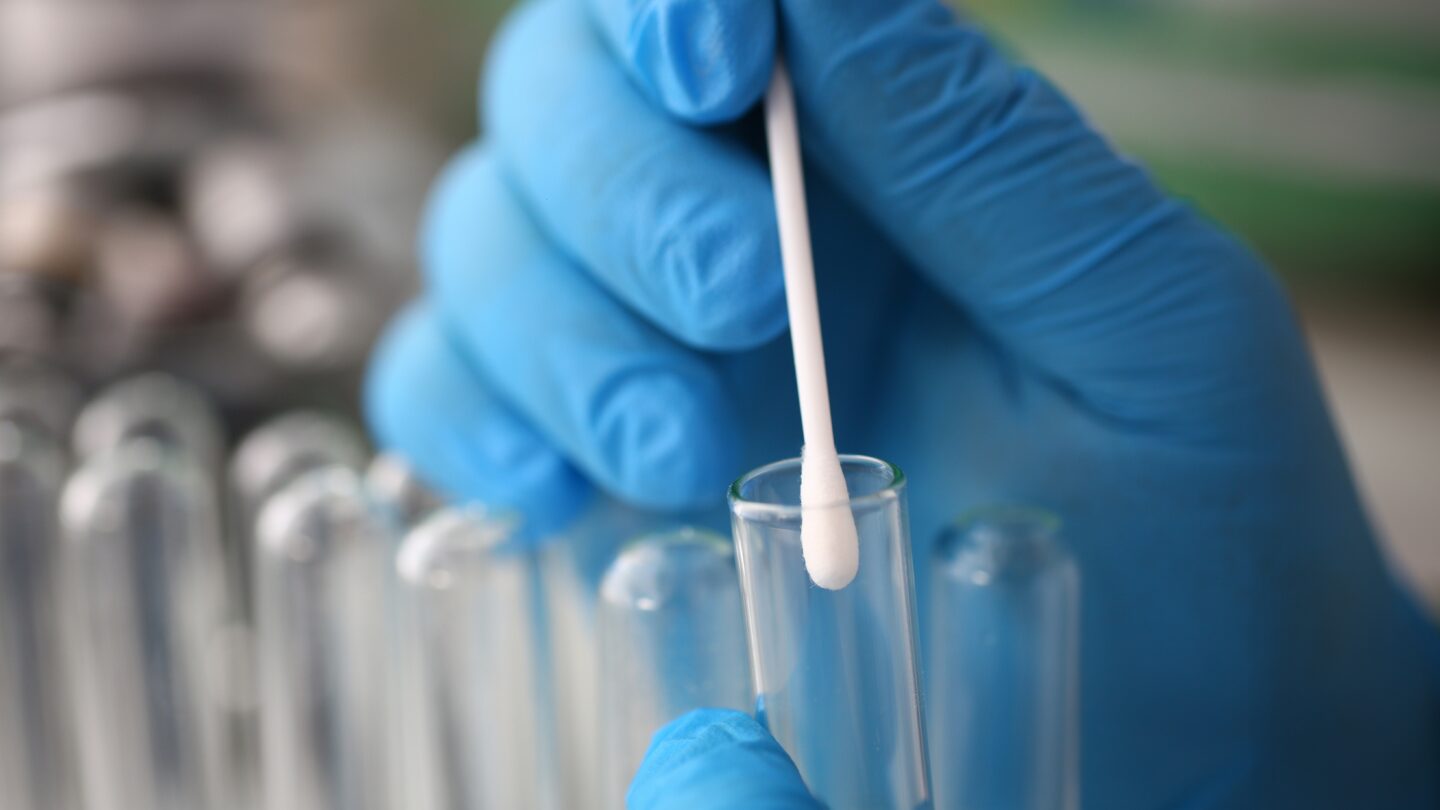
In Maryland v. King, the U.S. Supreme Court in 2013 held that taking a cheek swab from a person lawfully arrested for a serious offense is a reasonable search under the Fourth Amendment. The Court treated the DNA swab as analogous to other routine booking procedures, such as fingerprinting and photographing, because it serves the government’s interest in identifying the person in custody and connecting that person to criminal history or outstanding investigations.
The unambiguous constitutionality of felony arrest DNA collection does not mean privacy concerns should be ignored, however. Fortunately, states that have adopted felony arrest DNA collection have shown that the practice can be done responsibly and protect innocent citizens’ privacy interests. Since the 1990s, the FBI has implemented a tiered national indexing system of DNA records called CODIS, for Combined DNA Index System. This system filters DNA profiles gathered from crime-scene evidence and individuals in local labs through three levels —local, state, and federal —with all other personally identifiable information stripped from the profiles, and quality checks at each tier.
For a profile to be stored in each tier of a CODIS-compliant database, the sample from which that profile was generated must meet rigorous collection and processing standards, which safeguard against testing errors and ensure the privacy of genetic material evaluated by CODIS-compliant laboratories. Access to records in this system is strictly limited to law enforcement and judicial proceedings. And at the federal level, the FBI expunges all samples for which it receives notification that a conviction has been overturned, or where there is an acquittal or no charges were ultimately filed.
Importantly, DNA collection in the context of arrest does not mean that the government stores a person’s entire genetic code. Rather, CODIS profiles use a limited set of noncoding genetic markers used exclusively for identification, not medical prediction or trait analysis. The limited information derived from the DNA swabs taken at arrest is one reason states with broad privacy protections, such as Florida and South Carolina, also have broad arrestee-DNA laws. It was this method, Short Tandem Repeat (STR), whose constitutionality the Supreme Court specifically endorsed in Maryland v. King.
The continued retention of collected DNA profiles without conviction remains a legitimate privacy concern. All arrestee-DNA states provide some mechanism for expunging a profile if the arrest does not lead to conviction, but in most states the burden falls on the individual to initiate that process. In practice, very few eligible people seek expungement, meaning that profiles from people who were never charged, whose charges were dismissed, or who were acquitted may remain in DNA databases. States should seriously consider adopting automatic expungement and periodically compare samples in their DNA databases against court records, and eliminate samples of those whose arrest does not lead to a conviction.
Expanding capacity, clearing backlogs, fulfilling the promise
The strongest practical objection to expanded DNA collection is simply that crime labs are already under-resourced, and many jurisdictions still face serious backlogs in forensic testing. A dynamic map of rape kit backlogs assembled by the Joyful Heart Foundation shows that as of April 2026, tens of thousands of unprocessed rape kits await processing in the United States. Crime labs have struggled with funding, staffing, and an expanding workload over the last few decades. That’s why it’s so important that states build the capacity using targeted funding and technological advancements to make DNA collection useful.
Traditional technology can take well over 24 hours to process a single offender sample, which has contributed significantly to backlogs in many states. But in recent years, “Rapid DNA” testing technology has been developed that can automate many of these processes and produce a valid DNA sample in around 90 minutes.
The FBI approved the first Rapid DNA testing machines for use in law enforcement booking procedures in 2021, but the rollout and integration of this technology has been slow: In July 2025, the FBI updated its quality assurance standards to authorize two models of Rapid DNA testing technology for use at booking for CODIS upload. By 2026, only one state, Louisiana, had managed to fully integrate Rapid DNA into state police booking processes. Maintaining certainty in the CODIS system requires training law enforcement personnel, capital investment in the technology, and continuous oversight including regular audits to ensure correct operation. States should deploy CODIS-compliant Rapid DNA booking systems, which would bypass a major source of capacity issues for state and local crime labs.
Rapid DNA is a big step in the right direction, but it is not a substitute for a well-resourced crime lab system. States still need trained personnel, quality controls, audits, and compliance with CODIS standards, and they should target investments in those areas to ensure the capacity to deter crime and deliver justice. But even without that funding, states can improve the delay between collection and database entry via Rapid DNA, and therefore reduce the strain of system backlogs that neutralize much of DNA’s potential crime reduction value.
To deter crime, reduce recidivism, and to hold criminals accountable for the crimes they commit, every state should adopt DNA collection upon arrest for felonies, pair it with strong privacy protections matching the federal standard and automatic expungement processes, and commit to funding and reforming their crime lab capacities to eliminate backlogs.
Felony arrest DNA collection is exactly the kind of public safety policy that states should adopt. It is cost effective, grounded in strong evidence, reduces victimization without expanding incarceration, and prevents the arrest of the innocent by identifying the correct perpetrator earlier. A person who does not reoffend because the risk of detection has become too high is a person who does not need to be punished, incapacitated, or supervised later. The benefits are not only less crime and fewer victims, but fewer people cycling deeper into the justice system.